1. Introduction
uman resource strategic partner concept is originally from a book written by David Ulrich in 1997: "Human Resource Champions: the next agenda for adding value and delivering results". In this book, human resource business partner partner concept is initiated for the first time, which improves the positioning of human resource function from administrative to the organizational business partner. Ulrich (1997) proposed human resource business partner role included: strategic partner, change agent, administrative expertise and employee champion. It's greatly promotes the development of global human resource management and also a revolutionary concept promotion of human resource management (Shun, 2018). Above these four roles, strategic partner role is a very critical role of business partner. Ulrich though human resource unit should have a transformation from an operationally reactive role to a strategically proactive role then to become the business partner. But, the premise of business partner is that the human resource department has the competencies to help in delivering business results by enabling the organization to align people with the business goals. To succeed in a globalized economy, an organization must invest in human resources enhance skills and competences. Some studies have pointed out that human resource management systems act an important role in the relationship between organizations and employees, and the degree of system construction will affect the organizational performance. . If human resource management practitioners expect to become the strategic partners of enterprise who should have the strategic management mindset thinking, based on the perspective of business operator then to carry out the human resource functional jobs. Therefore, if human resource practitioner wants to become the business partner of an organization, it must have a macro business strategic planning and management thinking, no longer focusing on narrow functional professional areas, that's a very important critical perspective.
2. II.
3. Literature Review and Hypotheses a) Human Resource Strategic Partner
To achieve effective strategy implementation, HR functions should encourage employees to accept strategic requirements and advise them to commit to strategic requirements (Ulrich, 1997).
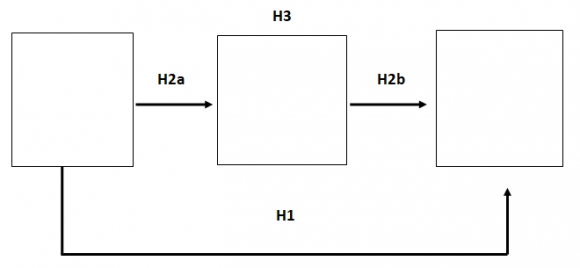
In order to achieve business strategy implementation, human resource functions should encourage and direct employees to accept strategic requirements and advise them to commit to strategic plan. That's what we defined human resource strategic partner role in organization. Katarina et al. (2019) argued human resource strategic partner are certain representatives responsible for the management of people toward internal clients, who help managers fulfill objectives, implement strategies and in cooperation with human resources. Thirumal and Francis (2017) proposed the human resource strategic partner need to have the following abilities: understand business, align stakeholders around a shared purpose, facilitate change in mind-sets, obsessed about development and renewal of people, establish HR as a distinct profession by building appropriate competencies and attract and build a diverse workforce, including those who do not come to office. Dai and Qiu (2016) though human resource business partner is more likely to be a strategic partner to undertake organizational strategy for mission, relying on the ability to build a strong organization to ensure the strategic landing. This requires organizational development human resource business partner to rapidly diagnose pain points, thereby pulling organize projects, processes, and culture change. Chen (2014) mentioned the human resource department should have the concept of customer first, and need to serve all managers and employees in the organization with the awareness of marketing service then become the strategic partner of the organization. Kim and Kang (2013) highlighted when a firm intends to utilize existing strategic resources and/or develop new strategic assets to implement a planned strategy, employee acceptance of and commitment to the strategy is indispensable. Nel et al. (2008) concluded that the strategic partner role focuses on aligning human resource strategies (including policies and procedures) with the business strategies and the execution. Turner (2006) examined the context of the role, the needs and opportunities arising from this context and the challenges of becoming a business strategic partners, which are grouped into business challenges like global competition, advances in technology; organizational challenges like alignment of mission, vision, strategy, structure, systems and values; people challenges like attracting, selecting, assessing, appreciating, motivating, challenging, developing, promoting, listening to, supporting, measuring and rewarding. Goodge (2005) highlighted the reasons for the move to HR partnering and the advantages it can bring. He also suggested three essentials of successful HR partnering: business strategy understanding, resources and credibility, and suggested on judging readiness for partnering, and for putting the key requirements in place. Lawler and Mohrman (2003) asserted that human resources must rethink its functional structure, service, and planning to add value within the structure of new organizational forms and corporate strategy policies in today's economic climate, particularly to increase the contribution of human resource departments to organizational effectiveness in the future. To effectively face new challenges, human resource departments must focus on how to add department value, how to organize, improve their effectiveness, and develop new capabilities. Human resource function plays an active and guiding role in enabling the organization to choose its people well, invest in them, support their growth and respect their needs, while fostering innovations needed to achieve the strategic business objectives. Therefore, the first hypothesis of this study is: H1: Human resource strategic partner role cognition has a positive impact on the job performance.
4. b) Achievement Motivation
Achievement motivation, a primary of personality trait, affects employees' attitude and tendency to actively solve problems within organizations or in social life. Atkinson (1957) believed that achievement motivation is an important factor in determining the level of personal ambition, effort and perseverance, and also a tendency to pursue success and avoid failure. Achievement motivation refers to an internal tendency of an individual to engage in work that is considered important or valuable, and strive to reach a more perfect level (Mc Clelland, 1985). Chen (2007) proposed that achievement motivation has some key dimensions: preferring the challenges and difficult tasks, highly job-oriented, competitive, considering other viewpoints, and a desire to demonstrate and improve one's abilities. Achievement motivation is considered to be the result of an emotional conflict between the hope for success and the fear of failure (Ricarda and Birgit, 2008). Achievement motivation is a highly personal attitude based on accomplishment. (Sharma et al. 2008).
Another very influential achievement motivation theory is the expectancy-value model of Eccles (1983). This model holds that expectancies for future success are the most important motivational determinants of achievement, whereas task values should be less important for achievement but more important for achievement choices. Halbesleben and Bowler (2007) showed that various components of achievement motivation mediate the relationship between job performance and emotional exhaustion. Lin and Li (2019) found that development-oriented HR practices are more positively related to work well-being when individual achievement motivation is high. The results guide the effective design of human resource practices. Generally speaking, achievement motivation consists of a constellation of beliefs that influence patterns of achievement, including expectations and standards for performance, the value placed on learning, and selfperceptions of ability (Deci & Ryan, 1985;Dweck, 2006;Eccles et al., 2006;Weiner, 2005). From the literature review, it was noted that high achievement motivation may depend on role cognitive by others. Whether the human resource strategic partner role cognition is robust also is a function of goal setting and performance presentation of the department unit. So, hypothesis 2a and hypothesis 2b of this study are as follow:
H2a: Human resource strategic partner role has a positive impact on achievement motivation. H2b: Achievement motivation of human resource strategic partner role has a positive impact on job performance.
5. c) Job Performance
Human resource strategic partner role has multiple compounds with its output and businesses linking directly to the performance. Dai and Qiu (2016) research showed the job performance including the effect of project delivery and organizational talent development are in additional to the original basis of job requirements, focusing on quantitative indicators of assessment, such as the key to improving the rate of job losses, indicators of human capital ROI. The business internal and external customers are brought into the evaluators to strengthen customer service awareness of human resource job performance. Kim and Kang (2013) asserted the human resource job performance has the positively influence to the organizational performance, particularly the business core requires the human capital as strategic assets. Chen (2007) research found the human resource practitioners have the higher cognition of strategic partner role, the better job performance of human resource employees. Becker and Huselid (2006) further assert that building key organizational capabilities is an important way in which human resource management impacts performance. Lin (2005) pointed out that in order to cope with the changes in the external environment and industrial competition, human resource practitioner strategic partner role is getting more and more important because only continuous transformation can improve organizational performance. A business does not have a complete human resource management system, daily operations and procedures cannot be carried out smoothly. If the human resource management system construction is good, it will attract talent effectively since the job seekers are often attentive to such issues. (Lievens et al., 2001). Therefore, management system construction is also part of job performance of human resource functions. Wright, McMahan, McCormick and Sherman (1998) found the human resource functional jobs were not directly associated with the firm performance, but HR's involvement has a substantial effect when the firms pursued a product innovation strategy for which skilled employees were critical resource of core competency.
Wright, McMahan, McCormick, and Sherman (1998) found that although HR executives' involvement in strategic management was not directly associated with firm performance, their involvement had a substantial effect when the firms pursued a product innovation strategy for which skilled employees were a critical source of core competence.
Wright, McMahan, McCormick, and Sherman (1998) found that although HR executives' involvement in strategic management was not directly associated with firm performance, their involvement had a substantial effect when the firms pursued a product innovation strategy for which skilled employees were a critical source of core competence.
From the above literature discussion, we documented the importance of human resource strategic partner role to organizational performance and personnel management. The cognition degree of human resource strategic partner also depends on the work performance of human resource departments. The job performance, in turn, depends on the strategic partner cognition and motivation willingness of the human resource practitioners. If the strategic partner selfcognition is good yet achievement motivation is not, the final job performance may not achieve expected goals. Therefore, hypothesis 3 is: H3: Achievement motivation has a mediating effect between the human resource strategic partner role and job performance.
The purpose of this research is to discuss the relationship between the human resource strategic partner and the job performance, examine the achievement motivation of human resource practitioners as a mediating variable. The research framework is shown in Figure 1.
6. Methodology
Due to the requirement of data analysis, samples came from the C HR training consulting firm in Shanghai City, China. We cooperated with C HR company and collected questionnaires during the training program and the questionnaires were distributed by hand and respondents filled out the questionnaires. Respondents were all work in HR related professional fields. The collection period was from July 2019 to the end of January 2020. Three hundred questionnaires were sent out, 223 of which were returned (74.33%). Twenty five invalid questionnaires were eliminated, leaving 198 that were valid (66%). Among the valid sample of 198 respondents came from the different types of companies operating in Shanghai city.
The questionnaire design included three parts. (1) The human resource strategic partner questionnaire refers to the questions used by Ulrich (1997). In this study, five of the questions were used to evaluate human resource strategic partner. Topics were measured by a 6-point Likert's scale with ?6? represent "agrees very much" and "1" represent "disagree very much". The higher the score, the higher human resource strategic partner cognition degree of human resource practitioners. (2) The achievement motivation questionnaire uses the approach of Chen (2007) modified for human resource achievement motivation research. The questionnaire consists of five questions and the respondents answer based on their cognitive survey of the current work. The higher score, the higher achievement motivation intention of HR practitioners. (3) The job performance questionnaire design based on Lin (2004) and consists of eight questions and the respondents answer based on their cognitive survey of the current work. The higher score, the higher job performance of human resource practitioners.
IV.
7. Results and Discussion
8. a) Respondents' Demographic Profiles
Demographic data include: gender, age, education level, organization position, organizational scale, and industry. The basic information of the sample collected from the questionnaire is shown in Table 1.
9. b) Reliability and Validity Analysis
Reliability analysis is using internal consistency (Cronbach's Alpha) to measure the relationship of all included items. After internal consistency analysis, each item's reliability value was ?0.7, suggesting the internal consistency reliability is acceptable (Nunnally, 1978). Here the human resource strategic partner Cronbach's ? value was 0.858, achievement motivation was 0.721, the job performance is 0.774. The results are shown in Table 2. In terms of human resource strategic partner, there were originally five questions, but we deleted questions 5 because the factor loading was not above 0.5; after deletion, the factor loading was above 0.5. The ? value after deleting the questions was 0.934. There were originally five questions about achievement motivation, we deleted questions 1 and 4 because the factor loading did not meet the requirement to be above 0.5. After deletion, the factor loading value reached the 0.5 requirement. The reliability ? value after deleting the questions was 0.918, indicating the internal consistency was maintained after deleting the question. There were originally eight questions of job performance, but we deleted questions 1, 5 and 7 because the factor loading did not meet the requirement to be above 0.5. After deletion, the other factors loading value reached the 0.5 requirement. The ? value after deleting the questions was 0.937, which means that good internal consistency was maintained.
Confirmatory Factor Analysis (CFA) was used to measure the reliability and structural validity of the scale. We performed the CFA to evaluate the composite reliability, convergent validity, discriminant validity and assessment of normality. Each composite reliability (CR) and average variance extracted (AVE) value meets the minimum threshold of 0.7 and 0.5 respectively (Garbarino & Johnson, 1999;Hair, Black, Babin, & Anderson, 2010). The results of convergent validity and Cronbach's ? are well satisfied shown as Table 3. Moreover, according to the Table 4, we found that the AVE of each latent dimension is higher than the highest squared correlation with any other latent dimension; thus, discriminant validity is also satisfied in this study (Fornell and Larcker, 1981). Bollen (1989) proposed a quantitative method to compare the Mardia coefficient with the observed variables. When the Mardia coefficient is less than P (P +2) (P is the number of observation variables), the observation sample is considered to have multiple normality. In this study, the observation variable is 12, and the observation value is 168 (12 (12 + 2) = 168), which is larger than the Mardia coefficient 4.319. Therefore, we though the data sample is considered to have multiple normality and may use the Maximum Likelihood method to do the structural model analysis. There was a significant positive correlation between the HR strategic partner, achievement motivation (0.797**) and job performance (0.759**). There was a significant positive correlation between the achievement motivation and job performance (0.847**).
10. d) Structural Equation Model (SEM)
We used Structural Equation Model to analyze the influence of human resource strategic partner role, achievement motivation and job performance. In this study, structural equation model (SEM) was used to verify the proposed theoretical framework and causal relationship among the variables. We use AMOS 26 statistical software as an analytical tool. Analysis process including three parts: (1) Goodness of Fit test, using multiple indicators to determine the fitness of the framework and (2) Path analysis to test the relationship between variables whether is significant or not; (3) Mediating effect test of achievement motivation between human resource strategic partner and the job performance.
11. 1) Goodness of Fit Test
The measurement model fit the data sufficiently as demonstrated by the common goodness of fit indices as Table 7. (? 2 /df= 2.865, RMSEA=0.097, NFI=0.943, TLI=0.950, AGFI=0.822, CFI=0.962, IFI=0.962, SRMR=0.035). According to the results of Table 7, goodness of fit indicators meets the requirement and appropriate to verify the hypothesis.
12. 2) Path Analysis
The results show that HR strategic partner has a significant relationship with achievement motivation path, which indicates that HR strategic partner has a direct impact on achievement motivation. The path relationship between achievement motivation and job performance is significant which meant achievement motivation has a direct impact on job performance. The results of path analysis are summarized in Table 8. We use Bootstrap method to test the mediating effect. Bootstrap method, which is used widely in statistics, is a very powerful method that can be applied to the analysis of particle size distribution. When bootstrap method is used to test the statistical significance of mediating effect, the confidence interval established by the distribution of the estimated value obtained from the duplicated samples. The judgment is when the confidence interval does not contain zero in the (1 -? %) confidence interval, which means that the statistical significance is reached the significance level of ? %. Here we re-sampling 2000 samples and using Bias-Corrected bootstrap analysis to obtain the confidence interval of each parameter in the model and then determine its significance according to above principles. Analysis results finding as next. 4) The indirect effect estimated was 0.707, 95% confidence interval of bias corrected did not involve zero (0.529~0.916) and P value was less than 0.05. It's indicated that achievement motivation has a significant mediating effect between human resource strategic partner and job performance. 5) The direct effect of human resource strategic partner and job performance is estimated 0.100, 95% confidence intervals of bias-corrected involve zero (-0.140~0.290) and P value is greater than 0.05. It meant the direct effect is not significant. 6) The total effect of human resource strategic partner and job performance is estimated to be 0.807, 95% confidence interval of bias-corrected didn't involve zero (0.703~0.872) and P value is less than 0.05. It meant the achievement motivation exist significant mediating effect between human resource strategic partner role and job performance. It's a complete mediating effect. Analysis results as Table 9 list.
13. Conclusion
This research explored the influence of strategic partner of human resource practitioners on the job performance. The main results included: (1). the higher degree of human resource practitioners strategic partner role cognition, the more positive impact on the job performance, (2). the higher achievement motivation of human resource practitioners, the more positive impact on the job performance, and (3). achievement motivation had a completely mediating effect between human resource strategic partner role and the job performance.
We showed the level of strategic partner role of human resource practitioners has a significant positive impact on job performance. It meant the higher the cognition of strategic partner role, the better of the human resource job performance. In management practices, improving and enhancing professional abilities is one way to reinforce the human resource strategic partner role. The professional competencies of human resource strategic partner included: undertake organizational strategy for mission, transformation quality, formulate management system and policy, cross departmental coordination and so on. The importance of strategic partner comes from the level of professional ability of human resource practitioners, which is finally reflected in the level of job performance. In human resource practices, professional abilities can enhance through the internal and external professional course training, projects implementation plan, job rotation project design, job agent project and so on. The empirical results of this study also prove the higher cognition degree of human resource strategic partner role has a significant positive impact on job performance. Therefore, the HR department manager can carry out the above mentioned ability improvement plans from the daily work arrangement to improve the professional abilities of individual.
Achievement motivation refers to an internal tendency of individuals to engage in work that they think is important or valuable, and strive to reach a high level. People with high achievement motivation seek solutions in their respective areas, like to set moderately difficult goals, and hope to have specific feedback to understand the quality of their work. Most high achievement motivation is performance-oriented. Due to the achievement motivation belongs to the part of deepinside personality traits, which is difficult to be changed through external training. In business practice application, we can evaluate the achievement motivation of candidates through personality test during the recruitment and selection process. Employees with higher achievement motivation can predict that their future job performance will be better than those who with lower achievement motivation. From the empirical results, we see that the level of achievement motivation of HR practitioners has a significant positive impact on the job performance.
Empirical analysis showed that achievement motivation does exist complete mediating effect between human resource strategic partner and the job performance. This means that the level of achievement motivation will affect human resource practitioner job performance. It was showed the higher cognition degree of strategic partner role with higher achievement motivation, the degree of job performance is higher. Therefore, how to increase the achievement motivation degree will be the critical point. In practices application, department manager could set up the specific goal and measurable performance evaluation standards that can effectively raise up individual internal satisfaction. It showed that the higher achievement motivation, the higher internal driving force for the completion of the work.
This research has some limitations. Study takes achievement motivation as the only mediating variable to explore the relationship between human resource strategic partner and job performance; other behavioral motivation variables might be considered in the future. By the way, human resource business partner still have the other three roles: change agent, administrative expert, employee champion. The future research may involve them into the framework then make a deeply discussion. Yet, this research provides a robust framework to study relationships among human resource practitioner strategic partner, achievement motivation, and the human resource job performance.
14. Affiliation
Department of Marketing, School of Economic and Management, Guang Dong University of Petrochemical Technology.
15. Data Available Statement
The data that support the findings of this study are available from the corresponding author upon reasonable request.
| Item | Characteristic | Samples | Percentage |
| Sex | Male Female | 56 142 | 28.3% 71.7% |
| Under 30 | |||
| Age | 31~35 36~40 | 74 58 | 37.4% 29.3% |
| 40 Above | 39 | 19.7% | |
| Senior High School | 4 | 2.0% | |
| Education | College University | 15 133 | 7.6% 67.2% |
| Master Above | 46 | 23.2% | |
| Staff | 11 | 5.6% | |
| Supervisor | 42 | 21.2% | |
| Position | Manager | 86 | 43.4% |
| Director | 43 | 21.7% | |
| VP Above | 16 | 8.1 % | |
| Under 50 | 15 | 7.6% | |
| 51~100 | 59 | 29.8% | |
| Org. Scale | 101~300 | 80 | 40.4% |
| 301~500 | 19 | 9.6% | |
| 501 Above | 25 | 12.6% | |
| Whole sell Service | 57 | 28.8% | |
| Industry | Professional Service | 97 | 49.0% |
| Manufacture | 44 | 22.2% | |
| Under 3 Years | 13 | 6.6% | |
| Operation Years | 3~5 Years 5~10 Years | 52 85 | 26.3% 42.9% |
| 10 Years Above | 48 | 24.2% |
| Variable Name | Dimension | Number | Cronbach's ? |
| HR Strategic Partner | Overall questions | 5 | 0.858 |
| Achievement Motivation | Overall questions | 5 | 0.721 |
| Job Performance | Overall questions | 8 | 0.774 |
| Latent Dimension | Question | Standardized Factor Loading | Composite Reliability | Average Variance Extracted | Cronbach's ? (Delete Items) |
| Human | HRSP1 | 0.87 | |||
| Resource Strategic | HRSP2 HRSP3 | 0.86 0.92 | 0.935 | 0.784 | 0.934 |
| Partner | HRSP4 | 0.89 | |||
| Achievement Motivation | ACVMOT2 ACVMOT3 ACVMOT5 | 0.92 0.85 0.90 | 0.920 | 0.793 | 0.918 |
| JBPMS2 | 0.85 | ||||
| Job Performance | JBPMS3 JBPMS4 JBPMS6 | 0.87 0.86 0.88 | 0.939 | 0.754 | 0.937 |
| JBPMS8 | 0.88 |
| VAR | CR | AVE | HR Strategic Partner | Achievement Motivation. | Job Performance |
| HR Strategic Partner | 0.935 | 0.784 | 0.885 | ||
| Achievement Motivation | 0.920 | 0.793 | 0.797 | 0.890 | |
| Job Performance | 0.939 | 0.754 | 0.759 | 0.847 | 0.868 |
| Variable | Min. | Max. | Skew | C.r. | kurtosis | C.r. |
| JBPMS8 | 1 | 6 | -1.531 | -8.792 | 2.542 | 7.301 |
| JBPMS6 | 2 | 6 | -1.326 | -7.615 | 1.590 | 4.566 |
| JBPMS4 | 2 | 6 | -1.033 | -5.933 | 0.946 | 2.718 |
| JBPMS3 | 2 | 6 | -1.241 | -7.131 | 1.302 | 3.740 |
| JBPMS2 | 2 | 6 | -1.266 | -7.272 | 1.756 | 5.043 |
| ACVMOT5 | 2 | 6 | -1.310 | -7.528 | 1.431 | 4.110 |
| ACVMOT3 | 2 | 6 | -1.412 | -8.114 | 2.210 | 6.346 |
| ACVMOT2 | 2 | 6 | -1.506 | -8.653 | 2.063 | 5.925 |
| HRSP4 | 2 | 6 | -0.889 | -5.107 | 0.507 | 1.456 |
| HRSP3 | 1 | 6 | -1.213 | -6.969 | 1.338 | 3.843 |
| HRSP2 | 1 | 6 | -0.843 | -4.843 | 0.448 | 1.288 |
| HRSP1 | 1 | 6 | -1.190 | -6.839 | 1.431 | 4.111 |
| Multivariate | 11.254 | 4.319 | ||||
| c) Pearson Correlation Analysis | ||||||
| Pearson correlation analysis was shown the results as Table 6. | ||||||
| VAR | Mean | STD | HR Strategic Partner | Achievement Motivation. | Job Performance | |
| HR Strategic Partner | 4.632 | 0.954 | 1 | |||
| Achievement Motivation | 4.673 | 0.847 | 0.797** | 1 | ||
| Job Performance | 4.899 | 0.863 | 0.759** | 0.847** | 1 | |
| Note: +, P<0.1; *, P<0.05; **, P<0.01; ***, P<0.001 | ||||||
| ?Goodness of Fit Test | |||
| Index | Model Value | Recommend Value | Acceptance |
| ? 2 /df | 146.092/51=2.865 | <3,good fit; <5,reasonable fit | good |
| RMSEA | 0.097 | <0.05,good fit; <0.1,reasonable fit | reasonable |
| NFI | 0.943 | Above 0.9 | good |
| TLI | 0.950 | Above 0.9 | good |
| AGFI | 0.822 | Above 0.8 | reasonable |
| Variable Path | Coefficient | t value | |
| HR Strategic Partner | Achievement Motivation | 0.864 | 14.334*** |
| Achievement Motivation | Job Performance | 0.818 | 7.629*** |
| 3) Mediating Effect Test | |||
| Effect Items | Estimate | 95% Confidence Interval Lower Bounds Upper Bounds | P Value | |||
| Indirect Effect HRSP AM | JP | 0.707*** | 0.529 | 0.916 | 0.001 | |
| Direct Effect HRSP JP | 0.100 | -0.140 | 0.290 | 0.373 | ||
| Total Effect HRSP | JP | 0.807*** | 0.703 | 0.872 | 0.001 | |
| Note: HRSP: Human Resource Strategic Partner AM: Achievement Motivation JP: Job Performance | ||||||
| V. | ||||||