1. Introduction
arehouse and logistics Companies are primarily focusing on solving customer service problems by providing effective material storage, handling, and transport (Sulírová et al., 2017). They do this through efficient logistics, productivity and effective tracking of customer order preparation using the realtime application system.
Customers rely so much on warehouses to store and distribute their goods properly. Warehouse operations have to ensure the safe operation of the entire logistical processes and manage every hazard that could put the customer goods, warehouse employees, and business continuity at risk (Sulírová et al., 2017).
One of the challenges in the warehouse processes in Canada is getting workers with the required education, training, and good operating language skills that would follow all the organization procedures and engaged in all the company safety programs. Some workers come from different cultural backgrounds other than North America; they speak and understand other languages. Supervisors do not communicate OHS tips in the native language of most workers, making the implementation of safety policy difficult and impact the organizational safety culture (Premji et al., 2007).
According to the (U.S Bureau of Labor Statistics, 2017), the number of foreign workers related to fatality and injuries is much higher than local-born workers. Canada is a multicultural country. There is a growing number of ethnical diversities due to the Canadian open immigration system (Smith et al., 2009).
Cultural differences would result in opinion differences and differences in beliefs among workers. This would affects individual perception of workplace safety (Arslan et al., 2016).
Cultural differences must be recognized and managed to ensure there is smooth communication among employees and their line supervisors (Arslan et al., 2016). According to (Premji et al., 2007), Cultural and communication differences due to the influx of immigrants are impeding employee engagement in the entire organization's Health and safety programs.
There is a need to assess the impact of employee engagement considering the foreign workers and their engagement barriers on the organization safety culture in the Canadian workplace.
2. II. Organization Safety Culture and Workers Engagement
According to (Boughaba et al., 2014) employee safety behaviors can be grouped as safety participation and safety compliance. The research study conducted by (De Koster et al., 2011) on the factors contributing to accidents using data from past safety performance of the warehouse operation in Dutch warehouses suggested that employee and leadership safety consciousness are important factors of strong safety performance. This implied that positive communication between leadership and workers will improve the overall safety management system of the organization. Workers understand the details of their job, and they are closer to the hazards of the job much more than the leadership and anyone else.
3. W
Author: e-mail: [email protected] This is because they develop more knowledge of the work and understand the inherent risk of their Job far better than their employers. Engaging these workers in safety programs would enhance safety culture and promote employee's trust in the available safety control measures.
According to (Cooper, 2001), the level of employee engagement in safety activities is an indicator of a positive safety culture within an organization. In other words, the organization demonstrated a very poor safety culture whenever most safety responsibilities are majorly shouldered by the safety representatives and the line managers without the involvement of the workers. (Cooper, 2001) referred to proactive safety culture as a culture that incorporates safety observation and intervention into the worker's daily routine activities.
The confidence level of the workers to freely comment on the status of the health and safety within an organization is one of the factors that reveal the level of employee involvement in the health and safety affairs of the organization (HSE, 2005). Workers bring a lot of values to the organization and that involving them in the business activities of the organization would be an avenue to motivate and honed the values and skills they brought.
Workers' involvement provided a good avenue for participation, which is influenced by the organizational culture. (Marching ton et al., 1993) believed that employee participation is just an umbrella under which all forms of worker interactions can be discussed. Participation and involvement were believed to enhance employee senses of belonging and morale (Marching ton et al., 1993).
According to (Armstrong, 2014)Managers have a very strong influence on the worker's engagement because of the roles they play in the employee work schedule and daily decision making. It was remarked that attitudes of the line supervisor with recognizing good employee's performance and setting clear expectations have a lot of impact on the employee's sense of belongings and positive engagement (Armstrong, 2014). The purpose of this approach is to foster acceptance of the line supervisor plans through employee education and orientation. This practice According to (Richer, 1991) deployment of workers' involvement programs was more rapid in the United States than in Canada. The reason for this was attributed to the greater strength of the workers' union in the Canadian workplace than in the United States. Canadian unions have a lot of tendencies to oppose some employer innovations ,and Canadian business owners do not have a lot of privilege to avoid union activities ,unlike the United States counterparts (Richer, 1991). This type of employee involvement can be termed Representative participation.
4. a) Foreign workers Engagement Barriers
Each Canadian province developed its own health and safety legislation. Organizations classified to be out of provincial jurisdiction are governed by the Canada labor code (Liz et al., 2016). Even though there are variations in the Acts and regulations across the country, their principles are not different. Canada's labor code required all organizations to ensure the safety of their workers and the environment where they operate. Likewise, this was also stated in the provincial OHS regulations (Liz et al., 2016). According to (Foster et al.,2018), enforcement of the OHS legislation and employment right are driven by the number and types of the workers' claims and complaints.
According to (Liz et al., 2016), the population of Canadian temporary workers is more than seven hundred thousand. Canadian employers preferred to hire temporary workers in Ontario and Quebec because they can easily avoid the cost of workers' compensation and claims. There are clear policies in Ontario that can make employers liable for health and safety violations than in Quebec but, workers' compensation framework in Quebec meets the need of the temporary workers than that of Ontario (Liz et al., 2016). There are challenges with the Canadian Injury prevention strategies through the Canadian regulatory agencies and workers' compensation board due to the triangular and cascading nature of temporary employments (Liz et al., 2016).
The nature of the on-call jobs and other temporary employments relationships favored Canadian employers because most of the work-related injuries attributed to temporary workers go unreported and limit workers' participation in the workplace health and safety programs (Liz et al., 2016). Transient workers might not have an ample opportunity to express their safety concerns. This was due to the fear of the employer and that they usually believed that filing a concern or claims would hurt their ability to secure future employment with the same employer (Liz et al., 2016). (Biggs et al., 2006)Attributed the reasons why employers would prefer to hire transient workers to the ease of their dismissal and alleviation of managing workers. He further stated that recruitment cost for transient workers is very minimal compared with hiring permanent workers. The research studies conducted by(Hopkins, 2017) on the safety of temporary employees concluded that transient workers experienced worse health and safety. He mentioned that transient workers were experiencing poor quality of personal protective equipment, insufficient safety orientation, and lack of supervisory clarity.
Canadian Statutory employment laws provide a basis for workers to file a claim or complaints whenever their right has been infringed or whenever they believe their work conditions were unsafe (Foster et al., 2018). It is expected that the employee would initiate this by directing their concern to the Canadian employer and to the regulatory agency without any employer retaliation. This implies employees must be able to voice their concerns to get compensation for their injuries and to help the employer to identify hazards and also to enable the Canadian government to drive the employment legislation (Foster et al.,2018).
Social research conducted by (Foster et al.,2018) in one of the provinces in Canada reflected that some minority groups of workers expressed some fear of employer retaliation as one of the reasons for not expressing any work place safety concern. These sets of workers are more vulnerable to workplace safety hazards and bad work conditions (Foster et al.,2018).
5. b) Canadian OHS and Ethnic Diversities
According to (Rumana et al., 2018) twenty percent of the Canadian population comprised of immigrants from different nationalities and Canadian ethnic diversity is vast. Immigrants tend to have better health than their Canadian born counterparts. But, their health condition deteriorates over time in Canada due to workplace injuries, aging, mental health, health-related problem, and daily activities (Rumana et al., 2018).
The research conducted by (Rumana et al., 2018) pointed out that new immigrants do not have all the skills and the networking that could land them a befitting job ,but they are willing to undertake higher risk job as survival job and most of the time they are not fully aware of the hazards and the environmental circumstances of the new job due to lack of training, cultural differences and significant language barriers (Rumana et al., 2018).
6. c) Language barrier as a factor of Health and Safety in Canada
Language barrier was identified as one of the leading factors that cause injury among immigrants in Canada (Rumana et al., 2018). This was because line managers do not communicate in the language that is ensures information dissemination from the line Year 2020 ( )
A © 2020 Global Journalsregulation is not written or communicated in the language of the foreign workers. Immigrants with language deficiency will not be able to completely understand the Government policy.
As a result, important Health and safety tips that may have an implication on the workers' safety were not passed on. Recent research has shown that there is a direct correlation between workplace injury and language issues (Preibisch et al., 2014). He stated that about 75% of the Asian immigrants that had previously reported work-related injuries and participated in his research survey rated their English language level as very poor and that they had Issues communicating with the line managers. (Premji et al., 2007)Also stated that language had some influence on work-related health since it affects employees' ability to communicate and develop work relationships without the assistance of informal interpreters. It was concluded that language is another factor that is contributing to the ethnic inequalities in the Canadian workplace. (Loosemore et al.,2002) concluded his research suggesting that employees with no low proficiency in the country operating language will have issues communicating hazardous conditions to their supervisors. The study has shown that a low level of organization culture commitment was found in some employees who experience some sense of neglect by co-workers on the basis of language barriers (Premji et al., 2007). (Premji et al., 2007) suggested that language barriers may lead to frustration among employees during work-related interactions due to some misunderstanding. Sometimes Immigrants may not be able to communicate effectively in a way that portrayed what they actually meant during work-related conflict resolution (Premji et al., 2007). Despite Canada's labor Code and provincial OHS legislation that obliged all Canadian organizations to ensure employees' safety and manage workplace hazards in a way that prevents workers' exposure to injuries and health problems. Language barriers may prevent immigrant employees from raising any concern that could call the attention of the employer to their work-related health and safety challenges (Rumana et al., 2018)
7. d) Job Mismatch as a factor of Health and Safety in Canada
Another factor that was identified as the leading cause of injury amongst Canadian immigrants was the Job qualification mismatch (Rumana et al., 2018). According to (Premji, et al.,2007) immigrants sometimes remain in jobs that required skills lower than their skills and often exposed them to a variety of health risks. This factor was also observed by (Premji, et al.,2007) using a survey and inferred that 25% of the Canadian worker between the age of twenty-five and fifty-four are over-educated for their jobs. This situation was found higher amongst Canadian workers with the least Canadian working experience.
His quantitative research concluded that incongruence in the skills required for the jobs and the level of education was linked with increases in the repetitive motion injuries in the Canadian workplace and that the condition is about four times higher in the most recent Canadian immigrants than least recent (Premji and Smith, 2013).
8. III.
9. Management Commitment to
Health and Safety
According to (Fernández-Muñiz et al., 2007)management commitment can be described in terms of leaders' behaviors and their attitudes toward workers' safety and toward the implementation of the organization's safety programs. This attitude was described as the value that an organization leader attributed to the safe running of organizational processes without injury or health implication to workers and the environment (Mc Gonagle et al., 2016).
It is the responsibility of the organization leaders to communicate safety as a priority even though there are other competing work demands. This enables workers to follow organization strict safety procedures without fear of reprimand during any challenging situations that needed to be addressed within a little time frame (Mc Gonagle et al., 2016).
IV.
10. Material and Methods
11. a) Pilot Study
The questionnaire which was the source of data gathering for this research was piloted two times by other safety professionals from one of the warehouse locations to ensure there was no misunderstanding and misrepresentation (Kennedy, 2019). Piloting allows error check in the questionnaire. After piloting, the length of the questionnaires was reduced to shorten the respondent response time.
12. b) Questionnaire
The questionnaire was adapted from (Kim et al., 2016), (Boughaba et al., 2014), (Antonsen, 2017), and (Cheyne and Cox, 2000). Questionnaires were distributed to the warehouse employees of the case warehouse industry. Some of the employees were categorized as seasonal or temporary, and they have various national backgrounds.
The research questionnaire consists of 2 openended questions to obtain the research respondent's opinions and 34 closed-ended questions that used a rating scale. These questions were designed using a better understood by the immigrants. Canadian OHS
13. Global Journal of Management and Business Research
Volume XX Issue I Version I Year 2020 ( )
14. A
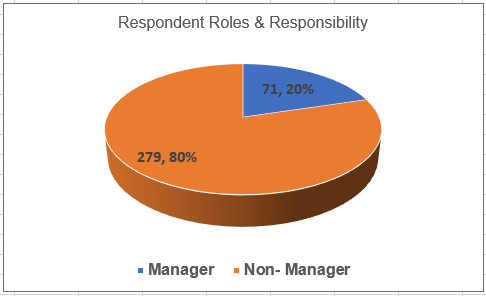
Likert scale. The survey respondents included employees with management responsibilities such as Area Managers, Operation Managers and other workers such as Process assistant, EHS Specialists, pick, stow and receive workers
15. c) Method of Data Analysis
The quantitative data obtained from the questionnaire were analyzed and summarized using the 2016 IBM SPSS statistical software version 24for Windows 64-bit downloaded from the Loughborough University webpage to generate a visualized representation of the information using tables and graphs. This was an attempt to discover whether some patterns exist in the bulk of the data collected from the questionnaire that was meaningful.
The research questionnaire was distributed to about 515 participants with the expectation to receive responses that would be large enough for data analysis. This questionnaire contained measurable safety culture items already mentioned in the literature by (Kim et al., 2016)as the elements of a positive safety culture and these were also used by (Boughaba et al., 2014), (Antonsen, 2017), (Cheyne et al., 2000), and (Vredenburgh, 2002)to access safety culture of an organization.
The surveys were deployed in the 3 warehouse locations of the organization in Canada. Hard copy Questionnaire was deployed due to the limited accessibility of the respondents to the computer system.
16. d) Model testing techniques
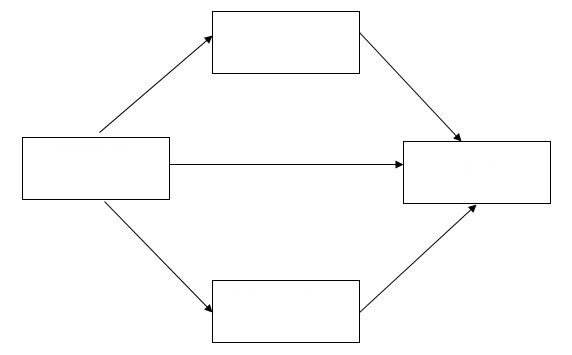
The hypothesis, and the proposed relationship between Leadership commitment, and Workers engagement barriers were tested using Multiple Regression. This was a non-demographics part of the questionnaire. Variables of the workers' engagement barriers were selected as independent variables. The variables of the management commitment were selected as dependent variables. These data were obtained from sections B and C of the Survey.
This method used regression coefficient, and pvalue to simultaneously test the relationship between these variables at a 95% confidence level. This method was used by (Kim and Yang, 2016) to assess the safety culture perception and behavior of workers, and (Brown, et al.,2000) to predict workers' safe behavior in the steel industry.
The co-efficient of regression was obtained on the variables of workers' engagement barriers versus other factors of the research Model such as Leadership commitment, to assess the extent of the relationship.
17. e) Internal and external reliability
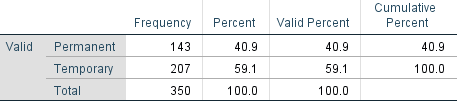
SPSS program was used for this research to verify the reliability of all the factors that were loaded from the questionnaire as reliable using the Cronbach coefficient as test value. Cronbach value of greater than 70% was considered to be a good value for internal consistency (Kevin C. Chung, 1998) According to (Bonett, 2015) Cronbach's alpha can be used to measure the internal consistency of the items of the research questionnaire. It is a technique that was predicated on the principle that all questionnaire items that were calibrated on a Likert scale must satisfied parallel assumptions. This implies that all measurement items must have equal covariance and variance. Cronbach's alpha was estimated for each of the relationship tested on the management commitment variables and workers engagement barriers V. As shown in Table 1 above, the population of foreign workers in Site A was lower than that of local workers called English white in this paper. Foreign workers only represented 42% of the Site Aworker's population and 75.6% of the Site B population, and 76.5% of the Site C population.
18. Research model and Hypothesis a) Research Model
As shown in Figure 8 above, about 59% of the Site A population agreed with survey question LA1 that their Supervisors considered workers involvement and participation were important to health and safety programs as an avenue to reduce work-related injury rate while about 39.9% did not agree with LA1 or have the same opinion in Site A. Similarly, about 57.9% of Site A workers agreed with LA2 and have the opinion that Supervisor considered efficient communication within the organization was essential to understand and implement the company safety policy.
More so, the perception of Site A workers on Managers' behavior was not uniquely different from their perception of the management attitude. 56.8% of the Site A workers agreed with LB1 and have the opinion that Supervisors take responsibility for workers' health and safety as well as productivity while 42.1% disagree. Similarly. 56.9% agreed that Supervisors actively and visibly lead health and safety programs and 39.9% of the worker did not share this opinion. 3.1 % of the people were neutral to the LB2 survey question.
Conversely, this analysis is not the same in Site B and Site C where they have a higher ratio of foreign workers. The percentage number of disagreements with the management commitment survey questions was significantly higher compared with Site A for leaders' attitude and behavior as shown in figure 8. This level of disagreement correlated with the percentage composition of foreign workers in the respective locations.
In Site B, about 72.2% of the worker disagreed with the survey question LA1 asking whether Supervisors considered workers involvement and participation is essential to health and safety programs as an avenue to reduce work-related injury rate. The trend was not different from Site C where they have a 76.9% level of disagreement.
Figure 9 below shows the combined percentage response to the Management commitment survey questions from the three warehouse sites which represented about 350 respondents. About 66% of the respondents which accounted for 231 workers disagreed with the survey question LA1 requesting whether their Supervisors considered workers involvement and participation were important to health and safety programs as an avenue to reduce workrelated injury rate while about 33.1% did not agree or have the same opinion as shown in Figure 9below.
Similarly, about 63.7% of the workers did not have the opinion that Supervisor considered efficient communication within the organization was essential to understand and implement the company safety policy denoted by LA2. Only about 33.4% have a favorable opinion.
The percentage negative opinion on managers' behavior was like the workers' opinion on managers' attitudes. Less than 35% of the workers have a favorable opinion of the managers' behavior LB in support of the workers' health and safety.
19. Workers Engagement Issues
Respondents' disposition to the survey questions on workers' engagement barriers was different from site to site. The number of negative responses to the survey questions was very small at the location where there were more local workers. The level of agreement corresponds to the percentage of local workers who work for the company using their first language which is the operating language of the company.
Figure 10, 11 below shows the percentage responses to each of the survey questions attributed to the workers' engagement issues at each of the operating locations of the warehouse company. It is vital to understand that about 60% of the workers' population in Site A cannot say whether workers were complying with safety rules and procedure denoted by WB1.
20. 58.9% of the Site A respondents agreed with
LGD1 that they always understand the language and instructions of the managers. However, about 45.3% percent of the workers neither agree or disagree on whether they prefer working with a colleague from their The responses gathered from Site B on workers' engagement barriers shows that the level of disagreement on the Job Mismatch and language differences appears to be higher than Site A. About 69.8% of the workers did not agree with JM2 that their qualificationsmatched the current role and 63.8% did not agree with JM3 that have the right experience to work well in their role as shown in Figure 11 Similarly, about 22.7% of the workers did not have an opinion on whether they prefer working with a colleague from their original nation denoted by CB3. However, about 63% of the workers did not know whether workers were complying with company safety rules and work according to job procedures denoted by WB1. 71.4% of the Site B respondents disagreed with LGD1 that they always understand the language and instructions of the managers. 71.4% of the population does not have a communication relationship with coworkers. Data gathered from this location on workers engagement barriers appear to be also like the data obtained from Site B the slight increase in the level of disagreement to the worker's engagement survey questions in Site C can be attributed to the higher ratio of foreign workers in Site C more than Site B.
21. c) Summary of workers Engagement Issues within the company
As shown in Figure 13 below, about 63.5% of the workers were not happy working in their current role denoted by JM1 and 64.5% of the workers believed their qualifications did not match the job denoted by JM2. Also, 63.7% did not agree that their experience matched the current role denoted by JM3. About 62% of the workers have the opinion that they do not frequently understand the language and the instructions of the managers denoted by LGD1. Similarly, 57.1% of the population does not have a communication relationship with co-workers.
As shown in Figure 13 below, about 30.3% of the workers did not have an opinion on whether they prefer working with a colleague from their original nation. However, about 63.4% of the workers did not know whether workers were complying with company safety rules and work according to job procedures denoted by WB1. Result and Test of the Hypothesis
22. barriers and management commitment
At 95% confidence level and P-value less than 5%, If the combined optimum regression coefficient obtained for each of the management commitment variables and workers engagement barriers is greater than 0.4, we concluded that some strong relationship exists between the Workers engagement barriers and the management commitment in the organization. This implied that Worker engagement issues such as Job Mismatch, language barrier, cultural difference, and workers' behavior give a meaningful effect on the management committee or otherwise.
As shown in Table 3below, a p-value less than 0.05 obtained for each of the regression coefficients shows that the model fit for this relationship was significant and that most workers' engagement barriers mentioned in Figure 13give a meaningful effect on the commitment of the management team to the organization health and safety. At a 95% confidence level, there were higher F-value for each of the variables and the standard error was very small.
As shown in Table 3, there was a strong relationship between management commitment and workers engagement barriers such as a language, job mismatch, cultural background, at P-Value less than 5% and regression coefficient greater than 40%. Therefore, the first hypothesis that a relationship exists between workers' engagement issues and leadership commitment was true and accepted.
23. b) Response to the open-ended questions
From figure14 below, 70% of the respondents mentioned Language barriers were contributing to the workers' involvement issues. 65% of the respondents mentioned workers were not engaged due to the cultural differences that exist within the company. About 61% of the workers believed discrimination exists within the company and it was preventing workers from participating in the safety programs. Similarly, 58% mentioned there were fewer social interactions among workers and 55% of respondents indicated managers' attitudes and behavior were the issues. They believed the company leaders were not visibly leading the safety programs. 30% of the workers indicated they do not have knowledge of how they can participate in the safety programs and that the participation orientations were not enough.
24. Global
25. Discussion
Management commitment was described in terms of their behaviors and their attitudes toward workers' safety(Fernández-M uñiz et al., 2007). It is the management's responsibility to create a safe working environment for all employees. This aligned with the Canadian Labour law. Each provincial OHS regulation in Canada made this a compulsory term for all employers (Liz et al., 2016).
Managers create a safe working environment in partnership with the employees through a robust administrative system that ensures workers report any condition or situations that can put their life at risk directly to the line supervisors without fear of reprimand. This type of system was opined by (Boughaba et Communication can be formal or non-formal. It can be in the form of weekly safety meetings, JSA Reviews, toolbox meetings, and posters. Two-way communications with the workers avail management team an opportunity to discuss and resolve safety-related concerns. This level of interaction between managers and workers enhances mutual trust and encourage workers involvement in safety according to (Thomas et al., 2009) Workers' response to the survey question on whether Supervisors consider efficient communication within the organization is essential to understand and implement the company safety policy was not perceived favorably as shown in Figure 9 Conversely, figure 8 shows that the survey question on the Leadership attitudes LA2 was perceived more favorably in one of the sites where there was a higher percentage of the local workers that speaks the operating language of the company as their first language which accounted for about 57.9% of Site A respondents which agreed with this survey questions.
This implies there was a better mutual trust between the management team and workers in Site A than the rest of the organization due to the higher mutual understanding of company operating language in that Site. Even though the sites were operating under the same production characteristics and use the same management system, the number of negative responses to the workers' engagement barrier survey questions were higher in Site C and Site B than Site A shown in Figure 10,11,12.This brought the percentage positive perception of the survey question down in the company.
As shown in workers' engagement barriers across the company operating sites.
At a 95% confidence level, whenever the regression co-efficient between each variable of management commitment and variable of the workers' engagement barriers is greater than 40% at P-value less than 5%, we concluded that a strong relationship exists between them.
It was observed that the value of the regression coefficient reduces as the number of negative responses to the survey questions increases across the sites.
Although, a better agreement exists between these variable sat Site A than the rest of the sites with a higher value of regression co-efficient at p-value less than 5%. According to (Kim et al., 2018) job fit can be defined as how well a particular job corresponds to the characteristics of the individual taken into consideration the workers' academic background, job competence, and the psychological factor which is aptitude and attitude.
Management commitment was described in terms of the manager's attitude and behavior according to (Boughaba et al, 2014). The dispositions of the workers to the managers' behavior survey questions LB1, LB2 was not different from their dispositions to the survey question on Managers' attitude LA1 and LA2 as shown in figure 9.
Similarly, Table3 also demonstrated a strong relationship between the leaders' behavior and workers' engagement barriers such as a language, job mismatch, cultural background, and workers behaviors like Managers 'attitude LA1 and LA2 at P-Value less than 5% and the combined regression coefficient greater than 40%.
26. XI.
27. Conclusion
Some scholars have linked and established a relationship between the organization's safety culture and productivity, injury rate, and qualities of production. This research linked elements of the safety culture with the engagement issues faced by foreign workers in Canada and established the extent of their relationship using regression and descriptive statistics.
It was discovered there was some relationship between management commitment to safety and workers' engagement barriers as shown in Table 3. The relationship implies a stronger safety culture can be achieved if the workers' engagement issues can be managed and addressed since the spate of foreign workers will continue to rise in the high-income country like Canada. Immigrants will continue to participate in the Canadian labor market regardless of their barriers.
Safety management practices can be implemented in a way that puts workers at the centre of the entire organization system. This will promote workers' engagement in organizational safety programs. This is a concept of human performance approach as described by (Wachter et al., 2014). This is a system that puts transient workers and foreign workers into consideration during the design and implementation of the safety management system.
The organization needs to create an association, sporting activities, and other social activities that will bond the inter-racial workers together in order to foster communication and workplace interactions.
| Country of origin | Site A | Site B | Site C |
| African | 5 | 6 | 7 |
| Asian | 15 | 35 | 36 |
| White English | 55 | 29 | 32 |
| Indian | 13 | 42 | 55 |
| Hispanic | 5 | 4 | 3 |
| White Non-English | 2 | 3 | 3 |
| Total | 95 | 119 | 136 |
| Respondents Educational Background | ||||||||||
| University Degree | 54% | |||||||||
| College Diploma | 25% | |||||||||
| High School Diploma | 17% | |||||||||
| Vactional | 4% | |||||||||
| 0% | 10% | 20% | 30% | 40% | 50% | 60% | ||||
| Total Foreign Worker | 40 | 90 | 104 | |||||||
| Foreign Temporary worker | 29 | 74 | 86 | |||||||
| Foreign Permanent worker | 11 | 16 | 18 | |||||||
| VII. | Management Commitment to Health and Safety | |||||||||
| 120.0% | ||||||||||
| 100.0% | ||||||||||
| 80.0% | ||||||||||
| 60.0% | ||||||||||
| 40.0% | ||||||||||
| 20.0% | 21.0% 57.1% 61.0% | 21.0% 51.3% 58.8% | 22.1% 52.1% 60.3% | 64.7% 46.0% 27.3% | ||||||
| 0.0% | ||||||||||
| LA1-Site A Completely Disagree LA1-Site B LA1-Site C | LA2-Site A | LA2-Site B Disagree LA2-Site C | LB1-Site A Neutral | LB1-Site B | LB1-Site C Agree | LB2-Site A Completely Agree LB2-Site B LB2-Site C | ||||
| LA | Leaders/Managers Attitude | |||||||||
| LB | Leaders/Managers Behaviour | |||||||||
| Year 2020 |
| ( ) |
| Workers engagement barriers from all the three sites | |||||||||||||
| 120.0% | |||||||||||||
| 100.0% | |||||||||||||
| 80.0% | |||||||||||||
| 60.0% | 12.6% 15.1% 14.6% 7.1% 14.9% | 16.0% 7.1% | 18.3% | ||||||||||
| 40.0% | 63.4% | ||||||||||||
| 20.0% | 50.9% 49.4% 49.1% 55.1% 50.6% | 30.3% | 46.0% | 50.0% | 44.9% | ||||||||
| 0.0% | 5.4% 5.7% | 3.4% 4.6% | |||||||||||
| JM1 | JM2 | JM3 | CB1 | CB2 | CB3 | LGD1 | LGD2 | WB1 | WB2 | ||||
| Completely Disagree | Disagree | Neutral | Agree | Completely Agree | |||||||||
| Workers Engagement Barriers Regression Co-efficient | P-value | ||||||||||||
| JM1 (Job Mismatch) | 0.90 | 0.67 | 0.73 | 0.79 0.000 | |||||||||
| JM2 | 0.84 | 0.73 | 0.66 | 0.76 0.000 | |||||||||
| JM3 | 0.82 | 0.66 | 0.60 | 0.72 0.000 | |||||||||
| CB1 (Cultural Background) | 0.80 | 0.78 | 0.73 | 0.80 0.000 | |||||||||
| LA1 | CB2 | 0.82 | 0.70 | 0.74 | 0.77 0.000 | ||||||||
| LGD1 (Language Differences) 0.89 | 0.79 | 0.73 | 0.81 0.000 | 0.93 | |||||||||
| LGD2 | 0.85 | 0.79 | 0.57 | 0.72 0.000 | |||||||||
| WB1 (Workers Behavior). | -0.63 | 0.58 | 0.57 | 0.29 0.000 | |||||||||
| WB2 | 0.81 | 0.73 | 0.63 | 0.73 0.000 | |||||||||
| JM1 (Job Mismatch) | 0.93 | 0.59 | 0.67 | 0.75 0.000 | |||||||||
| JM2 | 0.84 | 0.62 | 0.61 | 0.71 0.000 | |||||||||
| JM3 | 0.83 | 0.59 | 0.54 | 0.68 0.000 | |||||||||
| CB1 (Cultural Background) | 0.82 | 0.66 | 0.67 | 0.75 0.000 | |||||||||
| LA2 | CB2 LGD1 (Language Differences) 0.94 0.88 | 0.60 0.74 | 0.67 0.66 | 0.74 0.000 0.79 0.000 | 0.92 | ||||||||
| LGD2 | 0.90 | 0.74 | 0.53 | 0.70 0.000 | |||||||||
| WB1 (Workers Behavior). | -0.65 | 0.48 | 0.55 | 0.24 0.000 | |||||||||
| WB2 | 0.83 | 0.64 | 0.62 | 0.71 0.000 | |||||||||
| Workers Involvement Barriers from the three sites | ||||||||
| Others | 5% | |||||||
| Insufficient policy information | 30% | |||||||
| Interaction Issues | 58% | |||||||
| Managers attitudes/Behaviors | 55% | |||||||
| Descrimination | 61% | |||||||
| Cultural issues | 65% | |||||||
| Language Barrier | 70% | |||||||
| Insufficent participation Orientation | 30% | |||||||
| 0% | 10% | 20% | 30% | 40% | 50% | 60% | 70% | 80% |