1.
The Profitability of Fish Production by Co-Operative Society Members in Rivers State, Nigeria
George, Sotonye M. D.
Abstract-Fishing is predominantly the major occupation of Rivers State people, and there is the general belief that it has the prospects of booming their welfare. Unfortunately, the vibrancy and growth of the sector are yet to be realized due to certain constraints. Thus, most fishermen had to join the various cooperative societies as a way of mitigating the challenges of fishing business in order to harness the profitability of the sector. This study investigated the profitability of fish production among members of cooperative societies in Rivers State, Nigeria. The study is based on survey research design where data were collected using questionnaires as the instrument of data collection. A total of 400 copies of the questionnaire were distributed to cooperative fish farmers in Sixteen (16) LGAs of four (4) Agric zones in Rivers State. Based on data from the field survey, the study employed the Cost and Return Analysis as well as Descriptive Statistics to determine the profitability of fish production, the Pearson Product Moment Correlation Analysis to establish the strength and direction of relationship between fish profitability and fish output, while inferential (OLS regression) statistical method was used to analyse data in line with the objectives of the study. The results show that fish production among members of cooperative societies in Rivers State is a highly profitable venture, and that fish profitability and fish output are positively correlated to a higher degree.
The study further shows that fishery investment and revenues contribute positively to the profit of cooperative fish farmers, whereas high cost of fishing inputs; lack of sufficient capital; poor catch; poor sales and oil/industrial pollution are the major fish production constraints in the area. Based on these findings, the study recommends among other things that the government of Rivers State should make provisions for fish production subsidies such as fund and some strategic modem fishing inputs while encouraging investment in fishery business through the provision of low-interest loans to the cooperatives.
2. Introduction a) Background of the Study
Fisheries constitute an important sector in Nigerian agriculture, providing valuable food and employment to millions and also serving as a source of livelihoods mainly for rural dwellers in coastal communities. Fishing is also an important contribution to world protein as it serves as a supplement for animal protein especially as the cost of affording animals seems to be beyond the reach of an average income earner (Kimathi, Ibuathu & Guyo, 2013). Nigeria has a coastline of 3,122km (Earth trends, 2003) shared by 8 states (Lagos, Ogun, Ondo, Delta, Bayelsa, Rivers, Akwa-Ibom and Cross River) out of a total of 36 states in the country, and this coastal fisheries are important and contribute at least 40 percent of fish production from all sources in Nigeria between 1995 and 2008 (FAO, 2010).
According to the Fisheries Society of Nigeria (2013), small scale fisheries provide more than 82 percent of the domestic fish supply, giving livelihoods to one million fishermen and up to 5.8 million fisher folks in the secondary sector comprising processing, preservation, marketing, and distribution. The total contribution of fisheries to Nigeria's gross domestic product is estimated at about US $1 billion (CBN, 2015). In any case, the demand for fish in Nigeria mostly outstrips the local production. Nigeria is the largest fish consumer in Africa and among the largest fish consumers in the world with over 1.5 million tons of fish consumed annually. Yet, Nigeria imports over 900,000 metric tons of fish while its domestic catch is estimated at 450,000 metric tons/year (Ozigbo, Anyadike, Forolunsho, Okechuckwu & Kolawole, 2013). nland and marine small-scale fisheries provide over one-third of the world's food fish supplies. They offer employment and livelihood to millions of fishermen, their families and associated workers. In contrast to company-owned and other large-scale industrialized fisheries, they use more indigenous resources and demand less expenditure in energy, equipment, infrastructure, and foreign currency. They often show a better cost/benefit ratio than the large-scale fisheries, more effectively contribute to national self-reliance and the national economy and, in most cases, produce more social benefits (George, 2020).
3. I
The fishery activities in Nigeria are mainly done by the artisanal sector, the coastal and the brackish water constitutes the major areas of production, followed by the inland rivers and lakes. Aquaculture production and industrial fishing are still at its very low ebb (William, 2006). Consequent to this, domestic fish supply usually fell short of demand, accounting for a high import of about 50 percent fish consumed in Nigeria. In actual fact, since 1987, there has been a yawning gap between domestic demand of 1.5 million metric tons and domestic supply of 0.5 million metric tons (CBN, 2015). Initially, this demand-supply gap was not noticeable when the economy was buoyant as a result of the importation of frozen fish. However, the present economic recession and scarcity of foreign exchange to pay for imports have necessitated the need to step-up production through aquaculture. The huge import bill on frozen fish by the Federal Government of Nigeria which amounted to N30 billion ($400m) in the year 2002 alone calls for urgent attention in the area of artisanal and aquaculture. In the same vein, the growing urbanization, improved market integration and the concurrent supply crises from capture fisheries, small and larger-scale investment are gaining interest in aquaculture production which provides a source of income rather than simple subsistence, and can be incorporated into local agricultural systems to diversify production base (Baruwa, Tijani & Adejobi, 2012).
However, the needed vibrancy and growth in the sector have not been realized due to certain constraints. Easily identifiable here are poor infrastructures, high level of rural poverty (over 80% of rural poor live below the poverty line), environmental problems (e.g. pollution in coastal areas arising from gas flaring, oil spills and industrial wastes), civil unrest in the Niger Delta, climate change effects (sea-level rise, coastal erosion and flooding, increased environmental temperatures and wind storms) and degradation of coastal areas through human action (e.g. sand filling that destroys breeding grounds). Indeed, these may have been responsible for the reluctance of investors to move into the sector. However, high prices of the various fish species such as catfish and tilapia and the size of the fish consuming population are indicators that fish farming could still be a viable and worthwhile investment. Attempts made to identify constraints affecting the aquaculture subsector in Nigeria (FAO, 2000) revealed the tendency to consider fish farming as a foreign donor-driven technology, characterized by multi-dimensional in-built constraints. Similarly, In yang (2001) noted that these purported constraints were sitespecific and that the envisaged solutions to them were deemed to be above the ability and circumstances of the largely small-scale fish farmers who were more familiar with artisanal and inland fishing activities.
It is against this background that the study examines the profitability of fish production among members of cooperative societies in Rivers State, Nigeria.
4. b) Statement of the Problem
The Nigerian government has recognized the importance of the fishery sub-sector and has, over the years, made several attempts to increase its fish output and productivity of fishermen through institutional reforms and various economic measures aimed at addressing challenges bedevilling the sub-sector. Indeed, there is a subsisting policy of the government to make fishery and fishing in the country profitable. However, in spite of these efforts, there is a paucity of investments and a low level of fish production (FAO, 2014). Many believe that the low level of fish production is due to resource use constraints such as feed supplies, low managerial skills, low start-up capital, etc, which have retarded the pace of development in the fish farming sub-sector. Other constraints include poor infrastructures, high level of rural poverty (over 80% of rural poor live below the poverty line), environmental problems (e.g. pollution in coastal areas arising from gas flaring, oil spills and industrial wastes), civil unrest in the Niger Delta, climate change effects (sea-level rise, coastal erosion and flooding, increased environmental temperatures and wind storms) and degradation of coastal areas through human action (e.g. sand filling that destroys breeding grounds). Also, attempts made to identify constraints affecting the aquaculture subsector in Nigeria (FAO, 2000) revealed the tendency to consider fish farming as a foreign donor-driven technology, characterized by multi-dimensional in-built constraints. Similarly, Inyang (2001) noted that these purported constraints were site-specific and that the envisaged solutions to them were deemed to be above the ability and circumstances of the largely small-scale fish farmers who were more familiar with artisanal and inland fishing activities.
Fishing is traditionally the major occupation of Rivers people, and there is the general belief that it has the prospect of booming the welfare of the youths in the area. However, the needed vibrancy and growth in the sector have not been realized due to certain constraints. The most prominent constraints are the perish ability of fresh fish and lack of information about the management of the industry by the artisans (Sarch & Allison, 2000). For instance, small-scale fishers may not have the financial management skill to adequately manage their resources to optimize their revenue, and hence their profit. Indeed, these constraints may have been responsible for the reluctance of investors to move into the sector. However, high prices of the various fish species such as catfish and tilapia, as well as the size of fish consuming population are indicators that fish farming could still be a viable and worthwhile investment. Taking this situation into consideration, there is no doubt that Nigeria needs to rise beyond the level of subsistence to a higher level of profitability through more efficient use of its productive resources. Interestingly, a platform for this is presently being offered by the plethora of fishery cooperatives in the area. Many people joined cooperative as a means of mitigating the challenges of fishing business and there is the conventional belief that fishery cooperatives have a big role to play in raising the profitability of artisanal fishers.
Since many fishermen joined cooperative as a means of increasing their profitability, there is a need to investigate the profitability of fish production among members of cooperative societies in Rivers State. However, a number of studies have been carried out on the profitability of fish production in some states in Nigeria like Abia, Kwara, Ogun, Oyo, Imo, Osun, Kano, Delta, and Kaduna states (see Iheke Kudi, Bako & Atala, 2008), but there seems to be dearth of studies on fish production among cooperative societies, especially in Rivers state. Hence, the present study is considered timely and important because of the limited literature on fish farming among cooperatives in River state. More importantly, a study of this nature has not been done in Rivers State despite its peculiar fishing context.
5. c) Objectives of the Study
The broad objective of the study is to determine the profitability of fish production among members of cooperative societies in Rivers State, Nigeria.
The specific objectives are to: i.
Analyse the socioeconomic characteristics of cooperative fish farmers in Rivers state. ii.
Determine the profitability of fish business among cooperative fish farmers in Rivers state. iii.
Examine the influence of fishery investments and revenues on the profit of the fish farmers in Rivers state. iv. Evaluate the influence of members' socioeconomic characteristics on the profit of the fish farmers in Rivers state. v. Ascertain the effect of fish production constraints on the profit of the fish farmers in Rivers state.
6. d) Research Questions
This study was guided by the following research questions:
i.
What are the socioeconomic characteristics of the cooperative fish farmers in Rivers state? ii.
What is the profitability of fish business among cooperative fish farmers in Rivers state?
iii.
To what extent is profit margin influenced by fishery investments and revenues in Rivers state? iv.
To what extent is profit margin influenced by the socio-economic characteristics of members in Rivers state? v.
To what extent is profit margin affected by fish production constraints in Rivers state?
7. e) Study Hypotheses
The following hypotheses were formulated to guide the study.
H 0 : Fish business does not significantly generate profit to cooperative fish farmers in Rivers state. H 1 : Fish business significantly generates profit to cooperative fish farmers in Rivers state. H 0 : Fishery investments and revenues have no significant influence on profit margin in Rivers state. H 1 : Fishery investments and revenues have a significant influence on profit margin in Rivers state. H 0 : Members' socio-economic characteristics do not have a significant effect on profit margin in Rivers state. H 1 : Members' socio-economic characteristics have a significant effect on profit margin in Rivers state. H 0 : Fish production constraints do not have a significant effect on profit margin in Rivers state. H 1 : Fish production constraints have a significant effect on profit margin in Rivers state.
8. f) Significance of the Study
The study tries to determine the profitability of fish production among cooperative members in Rivers State, Nigeria. The study is of both theoretical and empirical significance. Theoretically, the study is expected to add to what is already known about the theory of collaboration and its direct implication for cooperative fishery societies. Empirically, the study is relevant since it collected and analysed data on fish production and its relationship with cooperative membership which shows the efforts of cooperatives in promoting fishing in Rivers State.
The study is considered to be useful to individuals, including policymakers, lenders, and researchers. It serves as reference material for policymakers who are looking for a more effective way of promoting fish production among smallholder fishers. Also, researchers and scholars will benefit from it since it will add to the existing literature on fishing and cooperative activities.
9. g) Scope of the Study
The study is focused on the determination of profitability of fish production among cooperative and non-cooperative fishermen with an emphasis on profitability indicators and socioeconomic variables that influence fishing investment. The geographical scope is Rivers State. The period scope is restricted to fishing records of fishermen from 2017 -2018.
10. h) Limitations of the Study
One of the major problems facing this study is the problem of finance. A Study of this nature requires adequate finance to cover its field survey. Another problem encountered is the usual uncooperative attitudes of the respondents especially in filling the questionnaires. This problem was solved by putting calls across to the respondents to get their opinion on the questions that were not properly filled. Most of the fishermen are less than ten years as members of the cooperative society and some are migrant fishermen who migrate from one fishing settlement to another.
11. II.
Review of Related Literature a) Conceptual Review
12. i. Concept of Profitability
When a seed is planted, it germinates the reason for it germinating is increase potential that is inside the seed. In the same way, when money is committed to a project or business it is expected to germinate. The element of germination inside the committed money is profit.
Profitability is the primary goal of all business ventures. Without profitability, the business will not survive in the long run. So, measuring current and past profitability and projecting future profitability is very important.
Profitability is measured with income and expenses. Income is money generated from the activities of the business. For example, if crops and livestock are produced and sold, income is generated. However, money coming into the business from activities like borrowing money does not create income. This is simply a cash transaction between the business and the lender to generate cash for operating the business or buying assets. Expenses are the cost of resources used up or consumed by the activities of the business. For example, seed corn is the expense of a farm business because it is used up in the production process. Resources such as a machine whose useful life is more than one year are used up over a period of years. Repayment of a loan is not an expense, it is merely a cash transfer between the business and the lender Profitability is measured with an "income statement"
Whether you are recording profitability for the past period or projecting profitability for the coming period, measuring profitability is the most important measure of the success of the business. A business that is not profitable cannot survive. Conversely, a business that is highly profitable has the ability to reward its owners with a large return on their investment According to Ezeh (2006), Profit is the addition to resources when it is committed to the business or investment; it is realized after accounting for all expenses that helped to generate the income. Normally when money is invested there is an expectation of return which is the expected return or income and it is from here the profit is derived. It determines the performance of the business and project. Sometimes it is added to the capital to increase revenue; this is the capital structure of a firm.
In order to make profits, the firm must create more cash flow than it uses. In other words, the cash coming in from the various activities must be more than the money invested by the firm. This increase in the cash flow over a period of time is called profit, which is usually calculated over one-year, half-year or a quarter of a year (Olagunju, Adesiyan & Ezekiel, 2017).
In order to generate more profits, the firm can take up what is called cost reduction. In cost reduction, by using new machinery, or new ways of production, the firm tries to reduce the cost of production to the extent possible. Cost reduction is considered to be one of the best techniques for profit maximization.
In order that cost reduction and increased production take place, a firm must utilize highly economic ways of production such as the utilization of efficient techniques in production and procurement of materials in bulk from suppliers, etc. All these techniques are known to decrease the cost of production and increase the profitability of the firm (Kimathi, Ibuathu & Guyo, 2013).
However, the profitability of fish farming can be measured through several economic methods such as partial measures, production function, profit function, and linear programming. Profit function can be determined by budgetary analysis in ascertaining cost and returns in fish marketing. Additionally, we will look at the contribution of cooperative and their role in the return of the fishing group.
13. ii. Fishery and Fish Resources
Generally, a fishery is an entity engaged in raising or harvesting fish which is determined by some authority to be a fishery. According to the FAO, a fishery is typically defined in terms of the "people involved, species or type of fish, area of water or seabed, method of fishing, class of boats, the purpose of the activities or a combination of the foregoing features. The definition often includes a combination of fish and fishers in a region, the latter fishing for similar species with similar gear types.
A fishery may involve the capture of wild fish or raising fish through farming or aquaculture. Directly or indirectly, the livelihood of over 500 million people in developing countries depends on fisheries and aquaculture. Overfishing, including the taking of fish beyond sustainable levels, is reducing fish stocks and employment in many world regions.
The fishery sector is crucial to food security, poverty alleviation and well being. In 2008 the world consumed 115 million tons of fish and demand is expected to rise, fish and fishery products are a vital and affordable source of food and high-quality protein (FAO, 2010). They also stated that fish as food reaches an alltime high of nearly 17kg per person supply over 3 billion people with at least 15 percent of their annual protein intake. Today fish is the only imported food source that is still primarily gathered from the wild rather than farm with marine culture. Historically accounting for greater than 80% of the world's fish supply recently, however, capture fishery has not been able to keep pace with the growing demand and many marine species have already overfished. Nearly half of the known ocean is completely exploited (FAO, 1999) and 70% are in need of urgent management.
Basically, Fish production in Nigeria is either by capture fisheries, artisanal fish farming (fish farming) or by importation. Capture fisheries involve the harvesting of naturally existing stocks of wild fish. This can be done either by small scale/artisanal fishers or by industrial/commercial trawlers. In artisanal fisheries, production is achieved by an individual or by small groups by the use of labour-intensive gears. Characteristically artisanal fishers operate from the dugout, wooden canoes that are more often than not unmotorized (Coates, 2000; Anene, Eze and Oputa, 2010). Artisanal fishing accounts for more than 80 percent of the total fish production in Nigeria. According to Matthew (2001), 'traditional', 'small-scale' or artisanal fisheries are used to characterize those fisheries that were mainly non-mechanized with a low level of production. The term particularly applies to coastal or island ethnic groups using traditional techniques such as rod and tackle, arrows and harpoons, throw nets and drag nets and traditional fishing boats.
14. iii. Method of Fishing
The method of fishing can be single fishing, paired fishing and group fishing. They go individually, in two or group of 3 or more; generally, one is the leader and he takes the largest share. The use gears such as net, hook, basket, spear therefore Method of Fishing can be the approach to the fishing, and the gear they use that is to say we also have method which could be the use of net and hook which can cast net, drift net , stationed hook and drift hook which are applicable on deep sea, river, creek and stream. Any of the procedure has its unique features which the people living in coastal area always apply as they go out in search of fish.
The method includes throwing net, dragging net along the current flow or against it, they throw spear, they sink hook either singly or as a group of hook line iv.
Single Approach This is when a single fisherman goes out for fishing without any company. He can use any of the gear whether net or hook with boat and paddle using his experience to observe the breeding pattern of fish.
15. v. Group Approach
Here, fishermen go out to fishing in groups which could be group of two, three or four or even more and one must be the leader of the group who will be responsible for the group the leader sometimes is the owner of the boat. In the traditional setting fishermen observe the fish breeding method, it's movement and movement of the river to make the capture, they waiting for fish to move into the net or hook before they can drag them.
16. vi. The Net Method
The net is used to trap the fish; this method can be divided into cast net and drift net. a) Cast net: the net is thrown on on-coming fish for capture. b) Drift net: this method is used to cover a wide area for the fish to flow into, the drift net flows with the water and on-coming fish are trapped between the tread of the net. dragging net along the current flow or against it
17. vii. The Hook Method
The hook is like a trap which are submerged with bait for the fish to eat, and this can be divided into stationed hook and drift hook; they throw spear to big fish that tries to give them tough time. a. Stationed hook: the hook is submerged with bait for the fish and the fisherman wait patiently for the fish to eat the bait. b. Drift hook: here the hook kept in the river and allowed to flow while the fisherman return back later to check on the hooks.
18. viii. Fish timing method
There is another important aspect of fishing method; this is fish timing. Most of the fishermen take long trip into the coastal area in search for fish; sometimes they stay days, weeks or even month and when they return, they sell their catch to waiting women. They study the tide and the period fish will be available. The knowledge of this makes fishermen to make fishing exploit.
19. ix. Women in Fish Production
Women in fish production had been mainly in the marketing of fishery products than processing or active fishing. Their involvement includes picking of shell fishes such as oyster, periwinkle at low tide than fishing in creeks and rivers. Fish processing in these communities are done mostly by smoking using a standing oven which can dry a lot of fish at a time. The marketing strategies adopted by most women in selling their fishery products in the area are open market display and hawking, although, some sell their catch at landing jetties to buyers. Lack of credit facilities, poor transportation network and upsurge in criminal activities have been identified as major constraints facing women involvement in fishery activities in these areas. There is therefore, the need to empower the women fisher folks in these areas through granting of loans and credit facilities, capacity building, introduction of new technologies and improved transport network systems. These will go a long way in boosting fish production, improve their livelihood and enhance socio-economic status of the women fisher folks in the coastal communities.
The fisheries sub-sector is a significant source of fish food and livelihood for many people living in the coastal communities, as it supplies animal protein necessary for growth and income for many households in these rural communities (Akinrotimi et al., 2007). According to Akinrotimi, et al (2015) Women have been reported to play a vital role in fishery related activities around the world, especially in the coastal environment, where these activities are classified majorly in three ways; fishing, processing and marketing (Olufayo, 2012). Though, fish production is customarily considered as masculine venture, women role in fish related activities is though supportive, is imperative and indispensable (Cliffe et al., 2011); their role in food production, like coastal fishery has become more relevant as a way of reducing poverty and enhancing food security (Akinrotimi, et al 2015).
This had been noted in fishing communities of how women participate actively in fisheries and also play a part in the maintenance of their families (Nwabeze et al., 2013) and in many parts of the world, that women have engaged actively in fish business even in European countries for instance, women control 39% of the fish industry, making a huge amount of money for themselves and their families (Aquilar, 2002).
However, their role is repeatedly being ignored and relegated, consequent of primordial systems of social setting, that is prevalent in the rural areas of many developing countries like Nigeria (Ibrahim et al., 2011).
Fisheries is an important activity, that is predominant in the coastal areas of Rivers State, the role of women in fisheries related activities in these areas are very crucial and critical to the overall economy of the state but policy maker usually overlook the important role that women play in fisheries activities.
20. x. Marketing of Fish Product
Fish marketing is to ensure the flow of fish from fish farmers to consumer in the form, time and place that will be convenient. This involves some other players along the fish distribution channel especially the middlemen (Lawal and Idege, 2004). According to Kottler (2002) marketing is a societal process through which individual and group obtain what they need and want through creating offering and freely exchanging of product and services of value with others. Adekanye (1988) opined that marketing is a method used to bring the interpersonal forces of demand and supply together irrespective of the location of the market. This can be sustained by the application of various pricing criteria on sales of fish which depends on efficiency with which the marketing system transit information among fish mongers as it passes through middlemen Marketing of fish passes through market participation in some exchange arrangement to reach the final consumer; the participant are the wholesaler and retailer who are market intermediaries. These are agent of distribution who plays a major role in the marketing system as they tend to pack the fish or unpack it to meet consumer's demand. In spite of the importance of fish and the fishery industry; fish is an extremely perishable product as it get spoilt immediately the fish dies due to enzymatic and microbial action, resulting in disagreeable taste, smell and texture, thereby reducing consumer acceptability (Brigitte et al, 1994; Garrow and James, 1994). To them a high ambient temperature of the topic is a major environmental factor promoting rapid spoilage of fish. While Maddison et al (1993) suggest that refrigerating is a means of preventing the fast rate of deterioration in fish. To them careful handling is an essential step to overcoming the problem of rapid fish spoilage. Therefore, to maintain freshness the fish need to be preserved or processed. There are several fish processing methods which include fermentation, drying, frying, canning, salting and smoking.
xi. Cost of Fishing Olomola (1991) found out that the costs of capture of fisheries in Nigeria were higher than those of aquaculture except for the opportunity cost of family labour. Therefore, capture fisheries are more labour intensive than aqua culture. Availability of fish to consumer at right time and place requires an effective marketing system.
The cost of fishing includes the effort, the fishing gears and the craft. However, strength of searching for fish is an un imputed cost that had not been recognized. The cost of fishing can be separated into capital and variable as the craft and gear is the major capital cost while the food they eat and use as bait as well as maintenance cost are the variable cost. These costs fluctuate with time and it depends on the fishermen.
Though their cost had limited their effort but fishery occupies a unique position in the agricultural sector in Nigeria economy. In terms of Gross Domestic Product (GDP) the fishery sub-sector has recorded the fastest growth rate in agriculture to the GDP. The contribution of fishery sub-sector at 2001 current factor cost rose from N76.76 billion to N162.61 billion in 2005 (CBN, Report, 2005). Nigeria has vast network of inland water like rivers flood plain, natural and manmade Lake Reservoirs (Shimang, 2005). According to him the inland waters mass is estimated to be about 12.5 million hectares of inland water capable of producing 512,000 metric ton of fish annually. The cost are as follows; fish craft and gear cost.
21. xii. Fish Craft
Like fishing gear craft have passed through many development stage from trunk to wood, floating calabash and papyrus raft to woody dugout craft, planked craft and canoes made up of fibre. All these are attempt to increase the efficiency match water condition and types of gear engaged in fishing (Ambrose et al, 2001). Consequently, craft are designed to match water current, shore landing, ability to keep afloat and stabilize on the water as well as accommodate catch or capture. It also depends on the size of crew, gear and distance covered.
22. a. Fishing Gears
Fishing gear include the net such as seine net, gill net, drift net, hook, basket. All these gears are very important in fishing and they pose a cost to fishing effort. There description is as follows: b. Seine net This is a kind of net in which one end of the net is fixed to an anchorage while the free end is moved along to surround certain area. The net is then pulled to close the fish within the area.
23. c. Gill net
This is a fabricated net. It is a type of fishing gear (net) used in catching fishes in the river. It is like a surrounding net but that of surrounding net is very large and it has a bag net and towing lines. Gillnet is a rectangular piece of netting fixed with a head line on top and usually a foot-rope at the bottom. The headline is lifted with floats while the foot-pole is weighed with lead, stones and the combination of floats and weights makes it possible for the net to stay upright in water.
24. d. Trap net
This is a type of net used mainly for catching shrimps, small fishes and crabs. The fishes are usually caught in wicker baskets containing baits. These baskets are usually lowered into swallow coastal water and left for one or two days before they are hauled up. Salmons which are returning to breed in rivers are sometimes caught by traps placed in the mouth of rivers.
A trap net consists of a line of wooden stakes driven into the sea bed at the end of which is the trap. A platform is usually built over the trap to enable fishermen to haul the catch.
25. e. Bag net
These consist of bags of netting materials usually synthetic with the mouth of the bag kept open through total or partial tanning. Nets of this kind vary from the small hard or scoop net used in removing fishes from drained ponds and drying up flood plains to the advanced mechanically propelled trawl nets used in industrial fisheries.
26. f. Cast net
This type of fishing net is conical in shape and mainly used on fishes that are easily baited e.g. Tilapia and surface swimming fishes. In using this net, cassava roots are put in several locations in water and these locations are pegged to the bottom water with sticks. The net is then cast in the locations where the bait (cassava roots) are put.
27. g. Drift net
This is another type of gill net. It normally hangs vertically in the water and weighted along the bottom edge and supported along the top edge by floats. Drift net are usually set without anchors and they drift with the water currents. Fishes are caught by their gill becoming entangled in the mesh of the nets.
28. h. Hook and lines
There is a decline in the use of this method, but fishermen who use this method only engage in it mostly to catch fish for domestic consumption. The fishermen numbering about 3-4 are in a relatively small boat which have attached hooks at intervals of short distances to a line. Baits like earthworms, rotten fish are attached firmly to the hooks for the attraction of the fish. Any fish trying to swallow the baits attached to the hooks gets itself hooked up.
29. i. Surrounding net
This is fabricated like a set net (gill net) but is very large and has bag net and towing lines. When a good fishing ground is located, the net is set to surround such a spot in form of a closed ring. This net is operated by 20-30 fishermen. The float line is pulled by some group of fishermen and the headline is pulled by another group of fishermen while they go into their closure to pulse at the bottom of the net. After pulsing, any fish within the surrounded enclosure will be caught through the bag net. It takes about 3-4 canoes to operate the surrounding net.
30. j. Trawlers
A trawler is a large wide mouthed net which is dragged along the bottom of the sea. Trawlers are very expensive thus they are not commonly owned by individual or small companies. They are mostly purchased by State or Federal Fisheries Boards e.g. Lagos State Fisheries Board. The largest conventional trawlers owned by Lagos State Fisheries Board do not exceed 100 ft in length. On these trawlers are large fish holds for keeping the fishes. These vessels can travel several miles away from their home base holding big fishes like tilapia, cat fish, etc.
31. xiii. Types of Fishing
There are many types of fishing they include three types: a. Up-country fishing in rivers and lakes Nigerian rivers and lakes abound in a large variety of fishes which have different local names. They are caught either with fishing nets or lines. The catch is sold locally since the coastal supply does not always arrive fresh in land; the local catch from the main source of fresh fish supplies the interior.
32. b. Fishing creeks
The local fishing industries depend on creeks. The Okrika fishermen are well known in this industry. They use trap, nets and hooks while waiting for the fish to run into their gears; using mixture of method sometimes gives them cooperative advantage put bait on hooks and net in the water appear to be a trap for the fish which becomes easy prey for the fishermen. The catch is either eaten locally or smoked in special fish ovens for commercial purposes.
33. c. Lagoon and offshore fishing
Since fishing in the lagoon is carried out by the same people, fishing in the lagoon and Open Ocean go hand in hand. The fishermen stay in the lagoon during the day and go to the sea after the super. They return the following morning with their vessel loaded with the catch. The mid-morning visitors can buy fish directly and more cheaply from the fishermen than they can in the town. Vessels equipped with refrigerators are used in this type of fishing.
34. xiv. Implication of Fishing Techniques and Effects of crude techniques
As earlier discussed, crude method was the main fishing technique used by traditional or local fishermen in catching their fishes from the water. However, both the technique and the fishing gears employed pose some hazards to the fishes, the aquatic environment and the society at large. The use of poisons or chemicals like gamalin 20, Didimore 25 and poisonous leave, roots and fruits of some toxic plants cause water pollution thereby making the water unsafe for human use.
The use of hooks, spears, cutlasses inflicts physical damage on the fishes and this accelerates the rate of decay of the fishes as a result of bacterial invasion on the damage parts.
The volume of catch is also reduced by the use of hook and line method. It is also time-consuming as fishermen have to spend a long time on boat only to catch few fishes.
The use of local fish nets whose mesh sizes are not regulated or nets with undersized meshes poses dangers for small young fishes especially the fingerlings, which may likely be scooped out of water prematurely.
35. xv. Effects of modern techniques
This method involves the use sophisticated modern equipment as fishing gears. It includes the use of fishing nets with regulated mesh sizes, motor propelled machines, diesel marine engines, trawlers and ships for commercial fishing. With the use of these modern fishing equipment a. More catch is registered at faster rate. b. The fishes caught are safe for human consumption. c. The purity or quality of water is not affected since the water is not polluted. Thus, the water is safe for drinking and for other domestic uses. d. Fishes can be stored for longer period and well preserved in mobile refrigerator fishing vessels.
36. xvi. Investments in fishery
Investment is using the money to purchase assets in the hope that the asset will generate income over time or appreciate over time. Consumption, on the other hand, is when you purchase something with the immediate intent of personal use and with no expectation that it will generate money or increase in value. Investment also helps grow the economy because it creates economic activity, such as the buying and selling of goods and services and employing people. Employed people get paid and either save, invest, or spend their money. If they spend their money, businesses make more profits. Businesses can then reinvest the profits in further business activities that expand the economy.
Of course, too much of a good thing can be bad. If everyone is investing, then no one is consuming. If no one is consuming, consumer-orientated businesses, such as restaurants and retail establishments, will suffer. This may lead to layoffs. The key is to find the proper balance between investment and consumption.
The fishing industry is evolving and for most fishermen, knowing how to catch is no longer enough. New regulations, growing demand from consumers to know where their food comes from, rising fuel prices, and increasing globalization have changed the business dynamic of fishing. At the same time, with many fisheries in decline, fishermen must develop new ways to fish without depleting the resource on which they depend. They must innovate to survive. To be successful, they need to focus on developing their businesses as well as fishing techniques. This then calls for an appropriate investment response from fishermen, especially in the marine capture fisheries sub-sector.
Marine capture fisheries support a vital economic sector that generates significant value, employment, and food security, as well as many other non-financial benefits. From an economic perspective, wild fisheries contribute more than US$270 billion to global GDP, which increases by a further US$160 billion per year when related activities, such as fish processing and boat building, are included (World Bank, 2012). This amounts to approximately 1% of global GDP. At the national level, the economic value of fisheries can be much higher, representing 30% of GDP in Seychelles for example. Fish is a highly traded commodity and as such generates valuable foreign exchange, particularly in developing countries. Fisheries also contribute to economies through tax revenue both at the production level and through the activity of supporting sectors such as canning, processing, and distribution. Globally, fisheries employ approximately 260 million people, both directly as fishers and within the value chain (Teh and Sumaila, 2013). Furthermore, given the role of fishing as an important subsistence and safety-net activity for many of the world's poorest communities, it is likely that millions of more people are involved in, or indirectly dependent on, fishing activities than appear in official statistics. In addition to their economic importance, fisheries are critical for food security, providing approximately three billion people worldwide with at least 20% of their total animal protein (FAO, 2014). In some countries where there is a lack of alternatives, or where a preference for fish has developed, the relative importance of fish is much higher. For example, in Japan, nearly 40% of animal protein consumed is from seafood products (FAO, 2013) and the catching and eating of fish plays a significant role within culture and society. Similarly, in the Maldives, a country where the marine exclusive economic zone (EEZ) is over 3,000 times larger than the available landmass, fish play a vital role in society, contributing over 70% of animal protein consumed (FAO, 2014). The ability of wild fisheries to continue to produce fish is predicated on the continued viability of the marine ecosystems in which they exist and the appropriate management of fish stocks to ensure their sustainability. The wider marine environment supports fish stocks by providing breeding and nursery grounds and stable 11 food webs. Healthy ecosystems are critical for the maintenance of fishing activity and, in turn, where fishing takes place, sustainable management is essential for the maintenance of healthy ecosystems. In addition, healthy marine ecosystems also directly benefit global populations in many other ways -for example, through regulation of climate, flood defence, and tourism revenue -and therefore the importance of maintaining their health through sustainable practices goes further than just fish production (Pauly, Alder, Bakun, Heileman, Kock, Mace, and Worm (2005). However, despite their importance, global fisheries are an underperforming asset. The economic, social and ecological functions they provide are threatened by widespread mismanagement of fishing activity. According to the Food and Agriculture Organization of the United Nations (FAO), overexploitation of fish stocks has depleted 30% of the world's assessed fisheries to an unproductive state (FAO, 2014). Another study estimates that as the majority of fisheries have not been formally assessed, it is possible that as much as two-thirds of all global fisheries are overfished (Costello, Ovando, Hilborn, Gaines, Deschenes & Lester, 2012). The effects of mismanagement have already materialised in many places: communities have suffered a loss of food and livelihoods; local economies have declined and the marine environment has experienced fundamental changes to ecosystem functioning. For example, the collapse of the iconic cod fishery of the Canadian Grand Banks, a fishery once thought to be limitless, resulted in a fundamentally changed ecosystem where it is unlikely cod will recover to its historic abundance without significant intervention. As a result, the region experienced a significant economic downturn and a loss of over 20,000, directly and indirectly, related jobs (Gien, 2000), as well as the disappearance of a unique element of Newfoundland's cultural heritage. In the Philippines, a recent study has shown that only 10% of the fish stocks remain compared to 40 years ago. This has implications for millions of people who depend on fishing and are already on the poverty line. Multiple international treaties and agreements recognise unsustainable fishing practices as a major global issue1 and there is a growing response taking place to encourage the transition to sustainability in multiple regions. This effort is primarily (although not exclusively) being coordinated and undertaken by NGOs 1. For example, major agreements include the UN Code of Conduct for Responsible Fisheries and the UN International Plan of Action for the Management of Fishing Capacity. Key treaties include the UN Convention on the Law of the Sea and UN Agreement on Straddling and Highly Migratory Fish Stocks, and many activities are also carried out through regional treaties. and governmental and intergovernmental organisations that have developed extensive knowledge around the types of intervention that are needed to establish sustainable fisheries. It is, however, clear that regulation and governance alone cannot solve the global issue of fisheries sustainability (McClurg, 2014). The transition to sustainable fisheries will not only prevent the further deterioration of fish stocks, but it can also help global fisheries reset to a higher, more productive and more profitable level. Research indicates that the global harvest from wild-caught fish could be up to 40% higher and that global fish abundance could increase by 50% if sustainable management were introduced and marine capture fisheries were allowed to recover (Costello et al., 2012). According to The World Bank (2010), global fisheries could be worth an additional US$50 billion annually. In other words, the upside benefit of sustainable fisheries is huge and should be considered a 'no-regrets option.' Clearly, this a justification for sustained investments in the sector.
37. xvii. Fish Production in Nigeria
Nigerians are large consumers of fish and it remains one of the main products consumed in terms of animal protein. Investors have the opportunity to establish fish farming businesses in several locations across the country. Only around 50% of the demand for fish is currently being met by local supply. The fisheries sector is estimated to contribute 3.5% of Nigeria's GDP and provides direct and indirect employment to over six million people (Adeola 2006). Nigeria has many rivers and water bodies which would serve as good locations to set-up fish farms. Opportunities exist in various areas of the fishing sub-sector, these include the production of stable fish, construction of fish farms, storage, processing and preservation of captured fish, fish seed multiplication, transport, and financing. It was stated that early fish farmers in Nigeria raised their fish in burrow pits, abandoned minefields and in earthen ponds on an extensive production system (Oresegun et al 2007). The introduction of concrete tanks allows for manageable pond size and modification of the environment through a water flow-through system and supplementary feeding thus allowing for higher fish yield. The advent of the indoor water re-circulatory system (WRS) has ushered in a new prospect for aquaculture. The introduction of WRS has created a turning point in the production of fish in Nigeria especially catfish.
A recirculatory system (RAS) is an intensive fish farming system that incorporates the treatment and reuse of water with less than 10% of the total volume of water replaced per day. As a result, less water is needed for the aquaculture operation system. There is also complete environmental control of the system and allyear availability of controlled harvested fish. The basic concept of RAS is to reuse a volume of water through continual treatment and delivery to the organisms being cultured. Although the re-circulatory system requires high initial investment, high risk and compels technical skills, its offers a number of potential advantages for aquaculture including: Production of fish in locations where limited water is available, Bio-security, Ability to locate the operation close to markets to reduce product transport time and costs, Improved feed conversion, and Year-round production. Ponds are essential components of most fish and aquaculture farms. Lowlands or valleys less suited to other agricultural development are usually selected as sites for these ponds and this is often the decisive consideration in selecting the site for the entire project. The ponds are normally shallow, cover relatively large areas and are surrounded or impounded in the majority of cases by low earth dykes or dams. The ponds are usually filled and drained through open canals; other methods, such as filling through a pipeline, being exceptional.
38. xviii. Cooperative and Fishery Cooperative
Working alone or in isolation can be dangerous and disadvantageous as one may not be able to observe the whole area but working with someone both can share the responsibility to observe different areas; thus, giving more advantages. The need to work together cannot be overemphasized; this has been a component of man from time immemorial as man is a social being; as he likes to associate, share views, ideas, and resources in a form of cooperation. One single individual cannot have all the resources needed to complete a process as well as the challenges confronting one cannot be solved alone but when there is cooperation among individual' limitations can be overcome that is sharing resources with another, in way of ideas, money, material can be very supportive and strengthens your limitation; this is the brain behind cooperative society.
The prevailing challenges in marine fish capture which include the changing environment, fishing habit, fish breeding pattern and their movement as well as inability to raise fund to acquire fishing gear and the destruction of fishing gear on the sea by sea truck; it has become necessary to pull resources together to confront these challenges. Consequently, the prevailing reduction of individual fish capture in the riverine community had put them under pressure in their fishing exploited, especially due to low income, low yield, and shrinkage of agricultural labour (Franklin et al, 2014). According to them, these difficulties can be addressed by the collective effort of farmers coming together and pool resources to achieve the common goal of productivity.
Co-operative societies had touched the lives of local farmers and fishermen alike. As they had support by contributing resources in acquiring gears, marketing, raise money for a project and reach out to support groups like government and non-profit organisations on behalf of their members. They also confront issues of an accident on the sea especially as boats do hit down their canoe and destroy their gears. Also, they encourage group fishing as they can corroborate to apprehend people confronting them while discouraging the bad practice and apart from satisfying members' needs, co-operative members share risk and profit (Igben&Eyo, 2002). This is the idea that led the founding father of co-operative to activate the need to work in cooperative association to relieve individuals of their challenges and oppression. Since then co-operative societies have continued to touch lives by eliminating and reducing the suffering of people as well as bad practices.
39. xviii. Constraints to fishery
Sustainability of smallholder fishery in Nigeria appears to be threatened by both macro and micro-level constraints. Macro-level constraints include degradation of the natural base stimulated by heavy dependence on natural resources by the majority of the population in the country, as well as other natural and economic environmental factors such as climate change. However, there are also constraints of a micro-level nature that smallholder farmers continue to face. These include limited access to credit and information; unavailability and poor access to fishing inputs and fishing gears.
Lassen (1998) has reported that fisheries in Africa and Nigeria, in particular, are constrained by the processes in each subsystem of biological or economic constraints' while other constraints related to the social structure of the fishing sector and others again are defined politically.
These latter constraints are often specific to the fishery.
Examples of constraints and their interdependence are (Lassen, 1998 Social structures: The type of fishery possible is related to the fishing communities in the region. If there is a surplus of fishing possibilities, there may be distant water fleets operating in the fishery.
The social structure depends on the economy of the fisheries but also on the technology available, e.g. the maximum duration the vessels can operate. a. Technological subsystem: Technical interactions between the catch of the different species depends both on the technology (selective vs unselective gears) and on how fish are mixed in the sea (biological subsystem). The available technology may leave certain species uneconomical to exploit, e.g. widely dispersed small pelagic like myctophids.
The constraints have in many instances been defined as limitations given by the subsystem. This has been very clear for the biological subsystem, where the attitudes largely have been to allow status quo fishing as long as there were no signs of recruitment failure. The basic attitude in the "precautionary approach" is to more actively ascertain that exploitation is kept within certain limits, such limits being defined as to avoid recruitment failure at least recruitment failures, caused by too low Spawning Stock Biomass. Strictly speaking, this is not the biological constraint but the limit is below the biological constraint (where the stock fails to reproduce) and the level is politically defined. Amire (2008) in his lead paper to a conference of the Fisheries Society of Nigeria asserted that Nigerian marine fishing industry has faced great challenges including rising operational cost due to the prohibitive price of Automotive Gas Oil (AGO), and the high incidence of sea armed robbery and pirate attacks on fishing vessels. In the year 2004, there were also pirate attacks on fishing vessels; in 2005, 34 nos. cases were reported; in 2006, 53 cases were reported; while in 2007, 107 nos. cases were reported. So far, in 2008 no cases have been reported. The level of sophistication of the attacks on fishing vessels at fishing grounds is getting higher leading to loss of lives, communication equipment, fish and shrimp products, etc. The losses are not easily quantifiable. Most of the attacks take place at the eastern sea-board of the Nigerian coastline.
Indeed, the challenge of piracy in the marine sector of the Nigerian fishing industry is a key hindrance to the viability of investments. In the past months, there have been confirmed reports of attacks by pirates on fishing and shrimping vessels at fishing grounds. Lives and properties have been lost thus creating fears and apprehension amongst fishing vessel operators. There are reported cases of pirates hijacking fishing vessels and using them to attack oil tankers and merchant's vessels. This is very disturbing and a great threat to the growth of the Nigerian marine fishing industry. In fact, the level of new investments in the industry is dwindling. Unless urgent steps are taken by the Federal Government of Nigeria and other stakeholders to address the issue, the industry may collapse thereby leading to food insecurity, unemployment, loss of livelihoods, deeper poverty, and greater restiveness in the coastal communities including the Niger Delta.
40. b) Empirical Review
A number of studies have been reported on fish production in Nigeria and around the world. Elhendy and Alzoom (2001) assessed the cost of tilapia farming in the central region of Saudi Arabia. The study showed that the minimum average cost of production occurs for 201 tons of tilapia per year per farm and profit is maximized for a production of 300 tons annually per farm. All farms operate at less than a profit-maximizing scale and most operate at less than a minimum efficient scale.
Also, Yesuf, Ashiru, and Adewuyi (2002) assessed the economics of fish farming in Ibadan Metropolis, Nigeria. The study revealed that most farmers with secondary education and above operate at a small-scale level with an average of three (3) ponds. Fish farmers practised polyculture fish farming. Clariasspp is the most raised fish species followed by Heteroclariasspp. The gross margin analysis revealed that medium-scale farmers derived the highest return of N1.55 for every one naira expended. This is followed by large-scale farmers at N1.52 for every one Naira compared with only N1.34 for every 1Naira spent by small-scale farmers. On a productive level, Ajao (2006), found that 80% of fish farmers in Oyo State, Nigeria, operated less than two (2) ha which could not capture the economy of size. More than 90% of the respondents distributed their fish at the site while 60% had little access to extension agents. Meanwhile, fish farming was found to be profitable. Gill, Mcconney, and Mahon (2007) conducted a study on the socio-economic profile of fishers in the Grenadine Islands. The study utilized survey design, and data was gathered through extensive interviews at all of the major fishing villages in the Grenadines. During this stage, 267 fishers were interviewed. Over 75% of the fishers interviewed in the study rely on fishing as their major income source and less than half have an alternative livelihood. The findings showed that handling for demersal is by far the most widely practised fishing technique in the Grenadines. Again, the most common boat type is the small wooden bow and stern. Boats are not specific and are used in many types of fishery in the area. It was also revealed that due to lack of a reliable source of income, many continue to fish well beyond retirement age. This suggests a possible vulnerability within the fishing community, especially within the older population.
Kudi, Bako, and Atala (2008) examined the resources, cost and returns and other factors affecting fish production in Kaduna State, Nigeria. The study revealed that land, water, labour, and capital were the main resources employed in fish production. The costs and returns analysis indicated that variable cost constituted 97.63% of the total cost of fish production in the study area, while the fixed cost constituted 2.37%. Amongst the variable inputs, fingerlings/juveniles (42.82%) and feed (34.70%) constituted the highest (77.52%) to the cost of production, while hired labour constitutes 16.91%. The cost of production was N571, 231.79, the total revenue of N5, 853, 625.64 and the net income was N5, 282, 393.85 indicating that fish production was highly profitable.
El-Naggar, Nasr-Alla, and Kareem (2008) examined the economics of fish farming in Behera Governorate of Egypt. They found out that, high prices of fish feed; declining fish prices and lack of finance were the top-ranking serious constraints facing fish farmers in that area. Feed costs per kg of fish were LE 3.87, representing 58.9% of the production costs. The break-even analysis showed that average production costs of LE 6.57 per kilogram of fish while the sales price is LE 7.5 /kg. The findings also reveal that the quantity of fish seeds is a notable and significant factor contributing to the fish farming enterprise in the study area. That is, combining rice and fish farming is complimentary.
Raufu, Adepoju, Salau, and Adebiyi (2009) adopted of simple random sampling in selecting the respondents to examine the determinant of yield performance in small scale fish farming. A structural interview schedule was used to obtain information from eighty (80) respondents. Descriptive analysis was used to analyse the socio-economic characteristics, while budgetary analysis was used to determine the profitability, and multiple regression analysis was the inferential statistic used. The result showed that about 70.0 percent of the fish farmers produce above 5000 kilograms per year, while a mean of 5150.75 kilograms per year was obtained. The budgetary analysis revealed that the average total cost of production per annum was N3, 694, 586. 00 while the total revenue was N12, 680, 490. 00; which gives a net farm income of N8, 985, 904. 00per annum. The profitability ratio gives a benefit-cost ratio of 3.43, and a gross margin ratio of 1.41. This indicates the profitability of small-scale fish farming in the study area. The significant variables of sex and age are positively related to output resulting in more than a tone and 13 tonnes increase respectively in output difference in male to female fish farm and an older fish farmer's pond while educational level of the respondents, family and hired labour were negatively related to output, each resulting in not less than 2 tonnes decrease in output with their unit increase. The study, therefore, recommends, among others, that seminars and training should be held at intervals so as to update small scale fish farmers' knowledge on fish farming procedures and practices.
Nieves, Pelea, Bradecina, Pereyra, Morooka, Shinbo and Rivero (2009) conducted a study that was designed to evaluate the socio-economic conditions, the status of the fisheries and adaptive capacities of households and communities in the Kuroshio province of Philippines. The study was carried out in 2007. The random sampling technique was used to draw 1,035 fishing household respondents in San Miguel Island, Philippines. Participatory resource assessment (PRA) methods and multi-stakeholder processes (MSP) tools were used in data collection from a cross-section of all sectors in the community. Key findings showed that the island economy depends largely on agriculture (44%) and fisheries (28%). Forty-six percent (46%) of the population are actively earning while about 68% of wives are unemployed, some 17% are earning an average of Php. 6,200 per annum from mat making. The per capita income distribution corresponds to 79% poverty incidence with 66% of the surveyed population falling below the food threshold. Using the international standard of a dollar a day per capita, 86% of the population earns less than a dollar a day. The mean household size is 5.7 with a relatively higher dependency ratio of 60% and the majority of the population has only reached an elementary level of education. Again, about 84% fishers are fulltime, 57% own boats that are either motorized (43%) or nonmotorized (57%) and the remaining 43% are renter-borrowers. Fishing is affected by southwest (November to March) and northeast monsoons (June to October) and is generally good from April to May. Fishing is characterized by low catch per unit effort.
Adewuyi, Ayinde, and Akerele (2010) analysed the profitability of fish farming in Ogun State Nigeria. The study made use of both primary and secondary data. The main instrument for collecting the primary data was structured questionnaire. The descriptive analysis showed that a large proportion (68%) of the fish farmer had formal (tertiary) education and financed their fish production through personal savings. Equally evident from the result is that an average total cost of N394, 380 was incurred per annum by fish farmers while gross revenue of N715030.30 was realized with a gross margin of N574314 and a profit of N320650. The rate of return on investment of 0.55 implies that for every one naira invested in Fish production by farmers, a return of N1.55 and a profit of N0.55 were obtained. The multiple regression results revealed that fish output was significantly determined by pond size, labour used, cost of feeds, cost of lime and cost of fingerlings. The coefficient of determination, R2 value of 0.462 indicates that 46.2% of the variation in the value of fish output was explained by pond size, quantity of labour used, cost of feed, cost of lime and cost of fingerlings The degree of responsiveness of the value of fish output to changes in the independent variables shows that a percent increase in the values of pond size, labour, feeds, fertilizer, lime, fixed input, and fingerlings will lead to 0.029%, 0.057%, 0.005%, 0.534%, 0.007%, 0.79% and 0.001% in the value of fish produced respectively. The study concluded that fish production in the study area is economically rewarding and profitable. It is capable of creating employment, augmenting income and improving the standard of living of the people. Therefore, it recommended government participation in fish farming to boost the quantity of fish available for consumption.
Awoyemi and Ajiboye (2011) investigated the profitability of fish farming among women in Osun State. A simple random sampling technique was employed to selecting 62 farmers from the sampling frame obtained from the list of Agricultural Development Programme (ADP) contact farmers in four Local Governments Areas (LGAs) of Egbedore, Olorunda, Ede South and Ife Central, which made up the study area. The main instrument for collecting the primary data was structured questionnaire. It is evident from the result that an average total cost of N371486.35 was incurred per annum by fish farmers while gross revenue of N791242.52 was realized with a gross margin of N574314 and a profit of N419756.17. The rate of return on investment of 0.58 implies that for every one naira invested in Fish production by farmers, a return of N1.5 and a profit of 58k were obtained. The multiple regression results revealed that fish output was significantly determined by pond size, labour used, cost of feeds, cost of lime and cost of fingerlings. The study concluded that fish production in the study area is economically rewarding and profitable.
Also, Kassli, Baruwa, and Mariama (2011) analysed the economics of inland fishing, aquaculture and fish marketing in Niamey and Tillabery areas of Niger Republic. The study showed that both the aquaculture and inland fish production was profitable with a rate of return of 61% and 320% respectively while two types of fish marketing channels were identified.
Adewumi, Ayinde, Adenuga, and Zacchaeus (2012) investigated the profitability of artisanal fishing in river Asa in Asa Local Government Area of Kwara State, Nigeria. A total of 80 respondents were randomly selected for the study. Data were collected by the use of a structured set of questionnaires. Three research questions guided the study. Results of profitability analysis showed that an average fisherman makes a Gross Margin of ?52883.99/fisherman/month. The problems of artisanal fishing included lack of storage facilities, lack of government support and seasonal change in the volume of the river. The study recommends among others; fishermen should be given adequate training and the required assistance on modern fishing techniques and the use of modern fishing equipment to ensure sustainability. There is also the need to organize the farmers into cooperatives to enable them to have better access to government programmes and credits. It is also recommended that the government should build mini cold rooms with good storage facilities to help the fishermen overcome the problem of fish spoilage which reduces the quality of their products.
Adeogun, Alimi, and Adeyemo (2012) summarized the aquaculture practices in Nigeria and compares productivity, costs, and benefits across various types of enterprises. The study was based on a field survey conducted between 2008 and 2009, with data drawn from 700 fish farmers. More than half (58.3 %) of the fish farmers raised fish in concrete tanks. Monoculture of Clarias species was the most dominant culture practice by 75.0% of fish farmers in the study area. Economic analysis of the production systems using various farming enterprises revealed that the profit margin was found to be as low as N207.92 per kilogram of fish inflow techniques to N314.00 per kilogram in the stagnant system. The mean overall profitability was 4.7. The F-value (6.08) showed a significant difference in the profitability ratio of different fish farming enterprises. This shows that fish farming in Lagos State achieved on the average some levels of profitability that should guarantee its economic sustainability.
Aheto, Asare, Quaynor, Tenkorang, Asare, and Okyere (2012) carried out a study that tried to assess the sustainable fishing livelihoods in coastal communities of Ghana. The study gathered data through interviews that were conducted among 60 fishermen between February and March 2010. Economic assessment of small-scale fishing activities was done using questionnaires based on direct market pricing and contingent valuation methods. The results indicate that highly profitable fish species include Epinephelusaeneus, Sparus caeruleostictus, Dentex angolensis and Lutjanusgoreensis valued at US$2.97, US$2.87, US$2.85 and US$2.63 per kilogram respectively. The less profitable species include Dasyatis margarita, Caranxcrysos and Sardinella aurita valued at US$0.34, US$0.66 and US$ 0.85 per kilogram respectively. Although Sardinella aurita was among the less valuable fish species, it was the main species driving profits for the fishermen due to its high share volume among the fish catches. Findings from this study suggest high rates of exploitation, in that stocks generally cannot provide for increased economic return in the face of increased investment. This is a clear indicator that the open-access nature of Ghanaian fisheries is not sustainable, and management reform is well overdue.
Olaoye, Ashley-Dejo, Fakoya, Ikeweinwe, Algbeleye, Ashaolu and Adelaja (2013) assessed the socio-economic analysis of fish farming in Oyo State, Nigeria. A multistage random sampling technique was used to select 222 fish farmers from all the four agricultural zones in the state. Data collected were analysed using descriptive statistics, budgetary analysis, and profitability ratios. The study revealed that the mean age, household size, and fish farming experience were 46 years, 6 persons per household and 9.3 years respectively. The result of the budgetary analysis shows that the average total cost (TC) of N2,883, 515.08 was incurred, total revenue (TR) of N4,873,521.29 was realized and a returning gross margin (GM) of N2,376,616.36. The profitability ratio gave a benefit-cost ratio of 1.69, rate of return of 0.69 gross revenue ratios (GRR) of 0.59 and expense structure ratio (ESR) of 0.15. This is an indication that fish farming is profitable in the study area. Constraints perceived by most of the farmers include the high cost of fish feed and market price fluctuation. The significant level of profit obtained from the study is evidence that it has the potential in alleviating household poverty in the country thus; government should provide credit facilities with the small interest rate to fish farmers.
Nandu, Gunn, Adegboye, and Mongalaku (2014) conducted a study on the assessment of fish farmers' livelihood and poverty status in Delta state. Their findings suggest that the livelihood status of the farmers has improved in terms of socio-economic conditions, quality of food consumed, housing condition and savings among others, yet, the farmers are relatively poor. The positive social and environmental attributes of aquaculture make it an attractive entry point to improve the livelihoods and exterminate poverty among the poor rural fishing households. Adequate fishing can ease under-nutrition, improve income status and serve as a means of agricultural diversification to alleviate poverty and ameliorate standard of living. Even though the study found that improvement in the livelihood status of fishing households was recorded, their livelihood status is still below the annual minimum income of an average Nigerian, with a high poverty gap. It is adjudged that the poverty alleviation programmes targeting fish farmers have not impacted positively on the livelihood status of fish farmers. With the high level of petroleum exploration in the State, the government and other organizations have not provided many basic facilities to enhance livelihood status and expunge poverty in the area.
Iheke and Nwagbara (2014) analysed the profitability and viability of catfish farming in the Abia state of Nigeria. The study used a structured questionnaire and personal interview methods to collect data from a sample of 50 catfish farmers. The data were analysed using net profit analysis and benefit-cost ratio (BCR). The results show that on the average, an initial capital of N779, 200 was used in setting up each of the catfish business and the average farm size is 0.25 ha. An average annual gross revenue of N1, 325,000 and an average annual profit of N545, 800 accrued to the catfish farmers, indicating that catfish farming is a profitable business in the area. The study further shows that catfish farms are viable enterprises in the area given the BCR of 1.33.
Issa, Abdulazeez, Kezi, Dare and Umar (2014) analysed the profitability of small-scale catfish farming in Kaduna State, Nigeria. Sixty respondents were randomly selected and interviewed using an interview schedule to elicit information through a multistage sampling technique. The data were analysed using frequency percentages, mean and ranking while budgetary analysis (gross margin) was used to determine the profitability of catfish farming. The result shows that the majority (70%) used the concrete pond of an average of 200m 2 . The source of their capital was mainly from personal savings (48.3%). The number of fingerlings raised ranges from 500 -6000 at 20 fingerlings/m 2 . The majority (55%) of the, raised between 3000 and 6000 fish per cycle at 6 to 8 tons/ha year. Quantity of fish raised and consumed had contributed positively to respondents' household income. However, savings from catfish farming has contributed about 20 to over 75% of the total income of the respondents. The result of profitability reveals that respondents had an average of about ?774,223.05 and a net gross percentage of 73.4% per production cycle. Inadequate capital, scarcity of fingerlings, and inadequate extension services were the major problems facing catfish farmers. The study recommended that catfish farmers should be encouraged to form and manage functional cooperatives as a way to pool their resources for individual development within the fish farming industry.
Okpeke and Akarue (2015) assessed the profitability of fish farming in the Warri South Local Government Area of Delta State, Nigeria. A purposively sampling technique was used to select fifty (50) fish farmers from the study area. Data collected were analysed using descriptive statistics-frequency, percentages, while budgetary and gross margin was used to determine Farm Net Income (FNI). The study indicated that variable cost accounted for (72.95%) of the total cost while the fixed cost of production accounted for 27.05%. The result shows that a total cost (TC) of N592, 316 was incurred by a respondent per farming season while total revenue (TR) of N976, 622 was realized with a returning gross margin (GM) of N544, 528 and a net farm income (NFI) of N384, 306 per farmer per annum, thus indicating that fish farming is profitable in the study area. Constraints encountered by the farmers include insufficient funds, high cost of feed, lack of processing/preservation/storage facilities and market price fluctuation. The study recommended that government and other stakeholders should help provide cheap sources fish feed, while also making funds available amongst others.
Tunde, Kuton, Oladipo, and Olasunkanmi (2015) examined the economic analysis of fish farming in the Saki-East Local Government Area (LGA) of Oyo State, Nigeria. A structured questionnaire was administered to randomly selected respondents to represent the fish farming community in the study area. Data collected were analysed using descriptive statistics, costs and budgetary analysis and multiple regression analysis. The results of a Cost and Return Analysis of the fish farming in the study area showed that the total revenues were N244364.30 per cycle, whereas the total cost was N129379.52 per cycle. This implies that fish farming was profitable and is expected to continue to operate. In addition, Benefit-Cost Ratio (BCR) was 1.9, the fish farming is therefore considered to be profitable. The rate of Return on Investment was 0.8887, meaning, for every N1 invested; there will be a return of 88.8.
Yisa, Adebayo, Mohammed and Anaweta (2015) conducted a study in the Suleja Local Government Area of Niger State to assess the profitability of catfish production. Forty (40) catfish farmers were selected from the study area using simple random sampling techniques. A structured questionnaire was used to collect data from the respondents. The analytical tools used include descriptive statistics, net farm income analysis, and profitability ratios and multiple regression functions. The result of the analysis showed that the average total cost per kilogram of fish was N321.23k and the average total revenue per kg of fish was N501.31. This gives a net farm income of N180.08k per kilogram of fish farming. The study also showed that the sum total of elasticity of variables was less than one (0.994), this indicates that catfish farming in the study area is in stage II, which is the rational stage of production. Double-log functional model was chosen as the lead equation. The value of R 2 was 0.998. The number of ponds (X 1 ) and the number of fingerlings (X 3 ) was significant at 1%, while labour(X 5 ) was significant at 5% levels of significance. The F-ratio of 2964.370 was significant at P (< 0.01). The study noted that the major problems faced by catfish farmers include; water, high cost of feed and capital.
Omobepade, Adebayo, Amos, and Adedokun (2015) utilized primary data collected from 80 respondents selected via a multistage sampling procedure to analyse the cost and return of aquaculture production in Ekiti State, Nigeria. A predictive multiple regression model was estimated to determine the influence of the cost of inputs on the farmer's revenue. Profitability parameters such as Gross margin, Benefit-Cost Ratio (BCR), Return on Investment (ROI) and Percentage Profitability (PP) were used to estimate the profitability of aquaculture. The result revealed personal savings (42.50%) as the major source of working capital and about 91.60 % of the production cost is incurred on feed, fingerlings, and labour. Also, about 69% of the variation in net revenue in aquaculture production was accounted for by the costs of water, feed, fuel, labour, fingerlings, and other costs. The values of the Gross Margin (N390, 942.80), Benefit-Cost Ratio (1.74), Return on Investment (0.74) and Percentage Profitability) (74.38) indicated that aquaculture is profitable in the study area. The result further revealed that 40.00 % of the respondents made a profit within the range of N201,000 to N300,000. Based on the findings, it is recommended that aqua culturists should learn how to formulate quality feeds from locally available ingredients to complement their usual supply Aqua culturists should also endeavour to organize themselves into cooperatives to facilitate their access to credit facilities. Public awareness is needed to further arouse the interest of individuals, especially youth to consider fish farming as a wealth creation venture in the state.
Dambatta, Sogbesan, Tafida, Haruna & Fagge (2016) conducted research that assessed the profitability and constraints of fishermen in three selected zones of Kano State in accordance with the existing Agricultural Development programme (ADPs) Zones. Purposive sampling technique was used for sampling the respondents in the study area. Primary data were collected from 30 fishermen, 30 processors and 20 consumers using questionnaires and analysed statistically. The result of the study showed that maledominated fishing (52.3%), while female processing (47.5%). The gross margin analysis showed profitability values of N74,350 for fishermen during the raining period. The study also revealed that both male and female were involved in all activities of fishing such as fishing, processing, marketing and consumption with the male having the majority (52.5%), while female constitute (47.5%) of the respondents; although female participate in processing and marketing than other activities.
Setsoafia, Owusu, and Danso-Abbeam (2017) evaluated the profit efficiency of artisanal fishing in the Pru District of Ghana by explicitly computing profit efficiency levels, identifying the sources of profit inefficiency, and examining the constraints of artisanal fisheries. Cross-sectional data were obtained from 120 small-scale fishing households using a semi-structured questionnaire. The stochastic profit frontier model was used to compute the profit efficiency level and identify the determinants of profit inefficiency while the Garrett ranking technique was used to rank the constraints. The average profit efficiency level was 81.66% which implies that about 82% of the prospective maximum profit was gained due to production efficiency. That is, only 18% of the potential profit was lost due to the fishers' inefficiency. Also, the age of the household head and household size increase the inefficiency level while experience in artisanal fishing tends to decrease the inefficiency level. From the Garrett ranking, access to credit facility to fully operate the small-scale fishing business was ranked as the most pressing issue followed by unstable prices while perish ability was ranked last among the constraints. The study, therefore, recommends that group formation should be encouraged to enable easy access to loans and contract sales to boost profitability.
Agu-Aguiyi, Onyia, Umebali, and Sotonye (2018) appraised the performance of fishery cooperative societies in Rivers State. Data were obtained from 360 cooperative fishermen, from 12 purposively selected Local Government Area of Rivers State. Data obtained were analysed with both descriptive and inferential statistics. The findings revealed that the respondents were of low educational qualification as such affected their initiative to improve the technique in the fish production as well as management of the fishing experience, had a significant influence on the fishermen return as fishermen who went for more catch. Also, the findings from the study gave evidence that; there are three major sources used in the fishing exploit namely: deep-sea approach, the riverside, and the creek. The study showed that more fishermen prefer the creek as fishes tend to hide at the creek followed by the riverside approach with few exploiting the deep sea. The study added that fishermen are faced with various degrees of challenges which range from pollution, climate change/bad weather, financial challenge; storage and processing facility; as well as the high cost of fishing tools.
Busari (2018) carried out an economic analysis of homestead aquaculture in Olorunda local government area, Osun State, Nigeria. A multistage sampling procedure using a random sampling technique was used to select one hundred and twenty (120) aquaculture farmers as a representative sample for the study. Data were collected through a personal interview with the aid of a structured interview schedule. The results of descriptive analysis showed that the aquaculture farmers were middle-aged, smallholder catfish farmers, married males, with tertiary education. The indicators used to measure the economic performance were gross margin (GM) net farm income (NFI), rate of return on investment (RRI) and operating profit margin ratio (OPMR). The result revealed that GM and NFI were ?475342.51 and ?468451.18 respectively. The rate of return on investment was 71.02% showing that homestead fish farming is a profitable venture in the study area. Results of regression analysis showed that the cost of fingerlings and pond maintenance were significant determinants of gross margin from homestead aquaculture production in the study area. The study concluded that although homestead aquaculture is a profitable venture in the study area, there is still the need for the farmers to increase their scale of production in order to maximize their gross margin.
Iruo, Onyeneke, Eze, Uwadoka and Igberi (2018) used farm and household level data gathered from 360 randomly selected smallholder fish producers to analyse the economics of smallholder fish farming as relates to poverty reduction in the Niger Delta area. Using enterprise budgeting, Foster-Greer-Thorbecke and Tobit regression models, the study found that fish farming in the region is profitable and the depth of poverty on fish farming households is high. The effects of socioeconomic variables, farm size, and assets on poverty were generally negative, indicating several interactions between poverty and the variables analysed. Fish production significantly reduced poverty in the region. They found out that, high prices of fish feed; declining fish prices and lack of finance were the top-ranking serious constraints facing fish farmers in that area. The break-even analysis showed that average production costs of LE 6.57 per kilogram of fish while the sales price is LE 7.5 /kg. The findings also reveal that the quantity of fish seeds is a notable and significant factor contributing to the fish farming enterprise in the study area. That is, combining rice and fish farming is complimentary. Raufu, et al.
(
)2009To examine the determinant of yield performance in small scale fish farming.
41. Survey Design/Intervie w Descriptive Method/ Multiple Regression
The result showed that about 70.0 percent of the fish farmers produce above 5000 kilograms per year, while a mean of 5150.75 kilograms per year was obtained. The budgetary analysis revealed that the average total cost of production per annum was N3,694,586.00 while the total revenue was N12,680,490.00; which gives a net farm income of N8,985,904.00 per annum. The profitability ratio gives a benefit-cost ratio of 3.43, and a gross margin ratio of 1.41. This indicates the profitability of small-scale fish farming in the study area. The significant variables of sex and age are positively related to output resulting in more than a tone and 13 tonnes increase respectively in output difference in male to female fish farm and an older fish farmer's pond while educational level of the respondents, family and hired labour were negatively related to output, each resulting in not less than 2 tonnes decrease in output with their unit increase. The descriptive analysis showed that a large proportion (68%) of the fish farmer had formal (tertiary) education and financed their fish production through personal savings.
Equally evident from the result is that an average total cost of N394,380 was incurred per annum by fish farmers while gross revenue of N715030. 30 The study showed that both the aquaculture and inland fish production was profitable with a rate of return of 61% and 320% respectively while two types of fish marketing channels were identified. The results show that on the average, an initial capital of N779,200 was used in setting up each of the catfish business and the average farm size is 0.25ha. An average annual gross revenue of N1,325,000 and an average annual profit of N545,800 accrued to the catfish farmers, indicating that catfish farming is a profitable business in the area.
The study further shows that catfish farms are viable enterprises in the area given the BCR of 1.33. Issa, et al.
(
)2014To analyse the profitability of small-scale catfish farming in Kaduna State, Nigeria.
42. Survey/Intervie w Descriptive Method/BCR Analysis
The result shows that the majority (70%) used the concrete pond of an average of 200m The result of the analysis showed that the average total cost per kilogram of fish was N321.23k and the average total revenue per kg of fish was N501.31. This gives a net farm income of N180.08k per kilogram of fish farming. The study also showed that the sum total of elasticity of variables was less than one (0.994), this indicates that catfish farming in the study area is in stage II, which is the rational stage of production. Doublelog functional model was chosen as the lead equation. The value of R 2 was 0.998. The number of ponds (X 1 ) and the number of fingerlings (X 3 ) was significant at 1%, while labour(X 5 ) was significant at 5% levels of significance. The F-ratio of 2964.370 was significant at P (< 0.01). The result of the study showed that maledominated fishing (52.3%), while female processing (47.5%). The gross margin analysis showed profitability values of N74,350 for fishermen during the raining period. The study also revealed that both male and female were involved in all activities of fishing such as fishing, processing, marketing and consumption with the male having the majority (52 Fish farming in the region is profitable and the depth of poverty on fish farming households is high. The effects of socioeconomic variables, farm size, and assets on poverty were generally negative, indicating several interactions between poverty and the variables analysed. Fish production significantly reduced poverty in the region.
43. Source: Researcher's Compilation c) Gap in the Literature
Clearly, a modest number of research works exist in the literature, both conceptually and empirically. There are studies on both pond fish production and activities of artisanal fishermen in different parts of the world and Nigeria. There are also studies on the profitability of fishing and pond fish production in different parts of the world. However, there is the paucity of studies that have focused on the economics of fish production and/or profitability of fish production among cooperative societies Rivers State. Also, none of the studies reviewed captured the effect of investment and revenues on profitability of fish production, as well as identify the various constraints to fish production. This presents a gap in knowledge and therefore necessitates the need for the present study.
44. d) Theoretical Framework
The present study will be anchored on the theory of collaboration. Collaboration is a promising mode of human engagement but in order to become more than a passing fad, a theoretical structure and framework are needed to guide individuals and groups toward successful collaboration (John-Steiner, 2002). Conceptually, collaboration is a recursive process where two or more people or organizations work together in an intersection of common goals -for example, an intellectual endeavour that is creative in nature -by sharing knowledge, learning and building consensus. Most collaboration requires leadership, although the form of leadership can be social within a decentralized and egalitarian group. In particular, teams that work collaboratively can obtain greater resources, recognition, and reward when facing competition for finite resources. Collaboration is also present in opposing goals exhibiting the notion of adversarial collaboration, though this is not a common case for using the term.
Collaboration has of recent assumed increasing attention following the advocacy by many for cooperative engagements as a means of solving many global challenges including poverty eradication, growth promotion, and job creation. The rationale behind the use of the theory of collaboration is basically to evaluate the credit repayment behaviour of cooperative members. The theory will enhance our understanding and analysis of the reason why farmers endeavour to repay the credits they sourced from their cooperatives. Indeed, members understand that when they repay borrowed funds, it affords another member of the collaborative group to have his own access to credit. A cooperative society as conventionally known is an autonomous association of persons united voluntarily to meet their common economic, social and cultural needs and aspirations through a jointly-owned and democratically-controlled enterprise (ICA, 1995). Thus, cooperative organizations, including fish farmers' cooperatives have all the attributes of collaborative institutions. Therefore, our knowledge of cooperatives would be enhanced when examined from the perspectives offered by the theory of collaboration.
The theory of collaboration can be used to predict and influence member behaviours, analyse member perceptions of equity, provide an insight into reasons for the cooperative spirit and improve member participation in the cooperative institution, and in particular on why credit productive usage and repayment are prioritized by members.
45. e) Other Relevant Theories of Profit
i.
46. The Frictional Theory of Profits
This theory was propounded by Prof. G.J. Stigler, according to which, there exists a normal rate of profit which is a return on capital that must be paid to the owners of capital as a reward for saving and investment of their funds rather than to consume all their income or hoard them. In a static economy where no unanticipated changes in demand or cost conditions occur, in long-run equilibrium the firms would be earning only normal rate of profit on their capital and entrepreneurial talent.
Under these conditions economic profits would not accrue to the firms. Frictional theory of profit explains that shocks or disturbances occasionally occur in an economy as a result of unanticipated changes in product demand or cost conditions which cause disequilibrium conditions. It is these disequilibrium conditions that brings into existence positive or negative economic profits for some firms. Thus, according to frictional theory, economic profits exist for some time because of frictional factors which prevent an instantaneous adjustment of the system to the new conditions. When economic profits are made in the short run, more firms will enter the industry in the long run until all economic profits are driven down to zero (that is, firms will be making only normal return or profits on their capital investment). On the other hand, when firms are making losses (i.e. negative profits), some firms will leave the industry. This will cause price of the product to rise so that losses are eliminated and the remaining firms make only normal profits.
47. ii. Monopoly Theory of Profits
This theory was propounded by Robinson, J., Chamberlin, E. H. and Kalecki, M. where they associated super-normal profits with monopoly power enjoyed by some firms. According to this theory, firms with monopoly power restrict output and charge higher prices than under perfect competition. This causes above-normal profits to be earned by the monopolistic firms, because of strong barriers to the entry of new firms, monopoly firms can continue to earn economic profits even in the long run. Monopoly power may arise due to sole control over some essential raw material required for the production of a commodity, from economies of scale, from legal sanction or from ownership patents, from Government restrictions on the import of a commodity.
48. iii. Innovations Theory of Profits
This theory was propounded by Joseph Schumpeter. The theory explains that economic profits arise because of successful innovations introduced by the entrepreneurs. According to the theory, the main function of the entrepreneur is to introduce innovations in the economy and profits are reward for his performing this function. Innovation, as used by Schumpeter, has a very wide connotation. Any new measure or policy adopted by an entrepreneur to reduce his cost of production or to increase the demand for his product is an innovation. Thus, innovations can be divided into two categories. First types of innovations are those which reduce cost of production. In this first type of innovations are included the introduction of a new machinery, new and cheaper technique or process of production, exploitation of a new source of raw materials, a new and better method of organising the firm, etc.
Second types of innovations are those which increase the demand for the product. In this category are included the introduction of a new product, a new variety or design of the product, a new and superior method of advertisement, discovery of new markets etc. If an innovation proves successful, that is, if it achieves its aim of either reducing the cost of production or increasing the demand for a product, it will give rise to profits. Profits emerge because due to successful innovations either cost falls below the prevailing price of the product or the entrepreneur is able to sell more and at a better price than before. It is here worth mentioning that profits caused by a particular innovation tend to be competed away as others imitate and also adopt it. An innovation ceases to be new or novel, when others also come to know of it and adopt it. When an entrepreneur introduces a new innovation, he is first in a monopoly position because the new innovation is confined to him only, He therefore makes large profits. When after some time others also adopt it in order to get a share, profits will disappear.
49. III. esearch ethodology
This study is based on the survey and analysis of the profitability of fish production among members of cooperative societies in Rivers State, Nigeria. The chapter describes the design of the study, area of the study, population, sample size determination and sampling techniques, the research instrument, and method of data analysis.
50. a) Research Design
The study used a descriptive survey research design. The choice of this design is because it enables the gathering of data from a large number of respondents who constituted the sample which is representative of the population of interest. The generated data helped to understand better facts and events, give interpretation and explanation as well as make predictions about variables easy. Research design is the framework or plan that is used as a guide in collecting and analysing the data for the study (Baridam, 2001).
51. b) Area of the Study
The Rivers State currently consists of 23 Local Government Areas, all of which handle local administration under an elected Chairman. The state has maintained its importance as a leading supplier of wealth to the nation for centuries. In 2007 the State ranked 2 nd nationwide with a Gross Domestic Product (GDP) of $21.07 billion and per capita income of $3.965m. Rivers is famous for its vast reserves of crude oil and natural gas. It was perhaps the richest and most important section of the African zone of the British Empire. Rivers State has two major oil refineries, two major seaports, airports, and various industrial estates spread across the land. More than 60% of the country's output of crude oil is produced in the State. Other natural resources found within its boundaries are silica sand, glass sand, and clay.
Prior to the discovery of oil in commercial quantity in 1951, agriculture was the primary occupation of the good people of Rivers State. Around the 19 th century when the industrial revolution reached its peak in England, the area was then referred to as Oil Rivers Protectorate. This was due to its abundant palm oil and kernel which basically constituted the main revenue source of the country. In a sample survey carried out by the Federal Ministry of Agriculture and Natural Resources, about 40% of the rural inhabitants were committed to farming in 1983. Rivers State is one of the leading states in the production of yam, cassava, cocoyam, maize, rice, and beans. About 39% (760,000 hectares) of the State's total landmass, particularly in the upland area is suitable for cultivation. Major cash crops produced are oil palm products, rubber, coconut, raffia palm, and jute. Other crops grown for food include vegetables, melon, pineapples, mango, pepper, banana, and plantain. The fishing industry is an important sector in Rivers State. Besides being lucrative, fishing is also a favourite activity of many. There are approximately 270 species of fish existing; with many artisanal fishermen in the riverine areas. The State provides valuable seafood such as crabs, oysters, shrimps, and sea snails, among others. Vertebrates like birds, mammals, and reptiles are also found in the region.
52. c) Population of the Study
The population of the study is 21,282 cooperative members from 206 registered cooperative societies in the state. This data was obtained from the Rivers State Ministry of Agriculture and the State's Department of Cooperative Societies ([RMASDCS], 2018).
53. d) Sample Size Determination and Sampling Procedure
The sample size of the study is 400 fishermen of cooperative societies. This was generated from the population using Taro Yamane (1967) formula, which is stated thus; You may note that each co-operative society has a minimum of fifteen (15) active members and five members are selected from each co-operative society.
The study adopted multistage sampling techniques. Stage one involved the selection of 16 out of the 23 LGAs in the state. The selection and choice of the 16 LGAs were purposive, based on the advice of the Rivers State Fisheries Department, due to the high concentration of fishing activities and accessibility of the fishing communities in the LGAs. In stage two, the five most viable fishery cooperative societies in each LGA were also purposively selected based on their 2018 revenue figures (RMASDCS, 2018). This gave a total of 80 cooperative societies. Finally, the researcher used a simple random sampling procedure to select five fishermen from each of the selected cooperative societies totalling 400 which served as the study sample.
54. e) Sources of Data
Data were collected through primary and secondary sources. The primary source was based on structured questionnaire. On the other hand, the secondary information was from textbooks, journals, conference papers, and internet publications.
55. f) Method of Data Collection
Data were collected through a structured questionnaire that was designed for this purpose.
Copies of the questionnaire were distributed to the 400 cooperative fishermen who served as the sample. The questionnaire has three sections. Section A contains socioeconomic information about the respondents, while section B focus on data relating to fishery investments, fish output, revenue, cost of production and overhead cost. Section C obtained information relating to fish production constraints that affect the members.
56. Akuku-Toru
Ogu/Bolo Ikwerre Obio-Akpo Fishery production constraints were identified and assessed through the use of five-point Likert scale types that ranged from 'Very severe' with a score of 5; 'severe '= 4; undecided = 3; 'not severe' = 2; to 'not very severe '= 1. A factor is considered severe when it's mean score ? 3.00 and otherwise if it was ? 3.00. The weighted score of 3.00 was determined as follows: [(5+4+3+2+1) ÷5].
The instrument was administered by the researcher and four research assistants.
57. g) Validation of the Research Instrument
The questionnaire was validated (face and content) by issuing copies to the measurement and research specialists at the Faculties of Education and Management Sciences, Nnamdi Azikiwe University, Awka for their comments and suggestions. Their views on the extent to which the items addressed the issues of interest in the research were taken into consideration and necessary modifications made on the questionnaire.
58. h) Reliability of the Instrument
The reliability of the research instrument was verified by distributing twenty copies of the questionnaire to twenty members of a fishery cooperative in Port Harcourt Municipal Council for them to complete and return. The completed forms were thereafter subjected to Cronbach Analysis. A Cronbach Alpha of 0.848 (Table 3.1) was obtained, thereby attesting to the reliability of the research instrument.
59. i) Tools of Data Analysis
Data obtained from respondents were analysed using the descriptive statistics such as frequency distribution, means, percentages, and tables. The costreturn analysis was undertaken to determine the profitability of fish production in the area. In addition, inferential statistics such as regression analysis was employed to address and test the postulated hypotheses.
60. j) Cost and Return Analysis
Cost and return analysis were carried out to assess the profitability of fish production by the respondents. The procedure involves the determination of gross margin, return to fishery investment by respondents and operating ratio.
Gross margin is the difference between the gross value of fish revenue (GFR) and the Total Variable Cost (TVC). Gross margin is a useful planning tool in situations where fixed capital is just a negligible portion of the farming enterprises (Olukosi, Isitor & Ode, 2006; Omotesho, Falola, Muhammad-Lawal & Oyeyemi, 2012). GM = GFR -TVC Where GM = Gross Margin, GFR = Gross Fish Revenue (gross value of fish output in Naira), TVC = Total Variable Cost in Naira.
Operating Ratio is directly related to the farm variable input usage (Okeowo, Agunbiade&Odeyem, 1999). The lower the value of OR, the higher the profitability of fish business. The Profitability of Fish Production by Co-Operative Society Members in Rivers State, Nigeria Two multiple regression models of the Ordinary Least Square (OLS) type were used to analyse the extent to which members' socio-economic characteristics influence profit margin, and to analyse the effect of fish production constraints on profit margin. The choice of the OLS technique is built on the premise that OLS among other estimators is efficient such that it provides the study with unique estimates of the parameters of economic relationship that have the smallest standard errors. The OLS method is also unique and simple, and is preferred to other estimators because of its properties of Best, Linear and Unbiased Estimates (BLUE) and consistency.
The necessary models in ii above are functionally specified as: PM = f (AG, GD, ED, LM, IV, TI) ??????????????? Equation 1PM = f (FI, SC, SP, SF, PC, PS, OP) Equation 2Independent Variables are: .Equation 4where ? = intercept term showing the value of y when each of the values of the independent variables is zero. That is, the value of the dependent variable in each of the equations is predicted to have when all the independent variables are equal to zero.
b 1 to b 7 = the coefficients or multipliers that describe the size of the effect the independent variables are having on the dependent variable y.
The tests of hypotheses were accomplished through an examination of the t-statistics and F-ratios of the multiple regression estimates and the decision rule was based on the 5% level of significance.
All the calculations and estimations of the regression models will be done using version 25 of the Statistical Package for Social Sciences (SPSS).
61. IV.
62. Data Presentation, Analysis and Discussion of Findings
This section is dedicated to the presentation, analysis and discussion of findings based on data collected from the field study, using descriptive and inferential statistical methods. The data were analysed, and presented on the basis of the objectives earlier formulated for the study. This chapter is discussed under different subsections such as socioeconomic characteristics of the cooperative fish farmers in Rivers State; profitability of fish business among cooperative fish farmers in Rivers State; influence of fishery investments and revenues on the profit of the fish farmers in Rivers State; influence of members' socioeconomic characteristics on the profit of the fish farmers in Rivers State, as well as the effect of fish production constraints on the profit of fish farmers in Rivers State.
63. a) Data Presentation and Analysis
In carrying out the field survey, a total of 400 questionnaires were distributed to randomly selected cooperative fish farmers in Rivers state. The data for analysis were retrieved from 400 valid respondents which is 100% return-rate. The data collected were analysed using SPSS version 25 presented below.
64. i. Socioeconomic Characteristics of Cooperative Fish Farmers
It is part of the objectives of this study to examine the socioeconomic characteristics of cooperative fish farmers in Rivers State. In this subsection, we present, with the aid of charts, the distribution of respondents by age group, gender, marital status, educational attainment, years in fishing, years in cooperative and income group. belong to the income group that earn N60,001 -N100,000 per month. This is followed by 142 (35.5%) cooperative fish farmers who earn less than N60,000 monthly income. It was gathered that very few cooperative fish farmers, 17 representing 4.25% of the total earn between N100,001 and N150,000 per month. It could be inferred that majority of the cooperative fish farmers earn less than N100,000 per month, meaning that most of the cooperative fish farmers belong to the middle-income group.
65. ii. Profitability of Fish Business among Cooperative Fish Farmers in Rivers State
One of the major objectives (second objective) of this study is to determine the profitability of fish business among cooperative fish farmers in Rivers State. As earlier outlined in the previous chapter, cost and return analysis was used for this purpose, and this is based on obtaining that gross margin (difference between the gross fishery revenue and total variable Based on the calculation above, it could be inferred that fish business among cooperative in Rivers State is highly profitable. This is because the coefficient of the Operating Ratio (OR) which is defined by the ratio of the Total Operating Cost (TOC) to Gross Fishery Revenue (GFR) is significantly less than 1 (i.e. 0.32 < 1). As a confirmatory analysis, this finding was supported by the coefficient of the Return to Fish Investment (RFI) which is defined by the ratio of the Gross Margin to Total Variable Cost (TVC) that is significantly greater than 1 (i.e. 2.99 > 1).
66. iii. Results of Multiple Regression Analyses
As part of the objectives of this study, the Ordinary Least Squares (OLS) regression was carried out to determine: (i) the influence of fishery investments and revenues, as well as the members' socio-economic characteristics on the profit of the fish farmers in Rivers state (see results in Table 4.1), and (ii) the effect of fish production constraints on the profit of the fish farmers in Rivers state (see results in Table 4.2). This was done in two distinct multiple regression models using SPSS version 25 as reported in Tables 4.1 and 4.2. The OLS results in Tables 4.1 and 4.2 are considered robust and do not suffer any econometric problem such as autocorrelation, heteroskedasticity, multicollinearity and weak explanatory powers. This is because the estimated models each has considerably high coefficient of determination, defined by the values of the R-squared and Adjusted R-squared. The R-squared measures how well the actual data is fitted to the specified model which translates to goodness of fit, as well as the percentage of total variations in the dependent variable that was accounted for by variations in the independent variables. The Durbin-Watson statistic is another important test-statistic for estimated model diagnostic and justification. This test-statistic is used to test for the presence of serial correlation problem (autocorrelation) in an estimated model. One of the assumptions of the OLS technique is that the residuals of the estimated model are not serially correlated, meaning that the violation of this assumption implies that an estimated model may not be relied upon for drawing inferences.
In the case of this study, the values of the Rsquared for the estimated models in Tables 4.1 and 4.2 are 0.803 and 0.743 respectively, meaning that the explanatory variables accounted for about 80.3% (see Table 4.1) and 74.3% (see Table 4.2) of the total variations in the dependent variable (profit margin). This is an evidence of a good fit in each model which implies that the estimated models are robust for making inferences. Additionally, the values of Durbin-Watson (DW) statistic for the two models (2.069 for Table 4.1 and 1.885 for Table 4.2) were satisfactory and suggestive of no autocorrelation in the estimated models. This is because both 2.069 and 1.885 are proximate to 2, and a DW value of 2 means absence of autocorrelation in the residuals of the estimated model. This also suggests that the estimated models are robust for prediction and forecasting. Thus, we can safely report the estimated coefficients in line with the objectives of the study. SPSS 25 iv.
67. Influence of Fishery Investments and Revenues on Profit of Cooperative Fish Farmers
The third objective of this study is to examine the influence of fishery investment and revenues on profit cooperative fish farmers in Rivers State. With regards to Table 4.1, the standardized coefficients of total investment and total revenue were 0.020 and 0.897 respectively. These coefficients were both positive and statistically significant at 5% since their p-values were both less than 0.05. This suggests that more investment in fish business would significantly result to more profit to the cooperative fish farmers in Rivers State, and more revenue from fish business leads to more profit in the state. The implications of these findings are that those who invest more on fish business have higher profit than those who invest less, and similarly, those who make higher revenue also have higher profit margin. Thus, any policy action of the Rivers State government geared towards encouraging more investment and revenue from fishery business is expected to translate to more profit to cooperative fish farmers in the state.
68. Influence of Members' Socioeconomic Characteristics on Profit of Fish Farmers
The fourth objective of this study is to evaluate the influence of cooperative members' socioeconomic characteristics on profit of the fish farmers in Rivers State. The relevant socioeconomic characteristics for this purpose are age, gender, educational level and length of cooperative membership (years in cooperative). The results in Table 4.1 show that all the aforementioned socioeconomic characteristics of cooperative fish farmers have positive coefficients, meaning that they all relate positively with profit margin. However, only the age bracket is statistically significant at the 5% level since its p-value is less than 0.05. The positive influence of age of members on their profit margin is theoretically meaningful since older farmers have more experience in the business and are more likely to learn from past experiences and tend to take correct their past mistakes for a better performance. Other socioeconomic attributes of cooperative fish farmers such as gender, educational qualification and years in cooperative have positive, but not significant determinants of the level of profit margin for the cooperative fish farmers in Rivers state. Thus, age bracket is the only socioeconomic attribute of the cooperative fish farmers that positively and significantly influence their profit margin in the state.
69. vii. Effect of Fish Production Constraints on the Profit of Fish Farmers in Rivers State.
The fifth and last objective of this study is to ascertain the effect of fish production constraints on the profit of fish farmers in Rivers state. Based on field survey, the study identifies high cost of fishing inputs, lack of sufficient capital, storage problem, spoilage of fish, poor catch and oil/industrial pollution as the major fish production constraints to the cooperative fish farmers in the state. In order to draw meaningful conclusions regarding the significance of the aforementioned fish production constraints, a model of the profit margin of the cooperative fish farmers was specified and estimated as a function of these constraints and the results are reported in Table 4 As shown in Table 4.2, all the identified fish production constraints have negative effect on the profit of the cooperative fish farmers and this is consistent with the theoretical expectation of the study, meaning that the more these constraints persist, the lesser the profit accruable to the cooperative fish farmers in the state. Also, with the exception of storage problems and spoilage of fish, the rest of the constraints are individually statistically significant at the 5% level of significance. This suggests that storage problems and spoilage of fish are not serious constraints to fish production among cooperative fish farmers in the state. Therefore, fish production among cooperative fish farmers are significantly constrained by factors such as high cost of fishing inputs, lack of sufficient capital, poor catch, poor sales, and oil/industrial pollution in Rivers State.
70. b) Evaluation of Research Hypotheses
In the beginning of this study, some testable hypotheses were formulated to guide the study towards addressing the research problems. In this subsection, we evaluate these hypotheses based on the results of empirical investigation presented earlier.
H 0 : Fish business does not significantly generate profit to cooperative fish farmers in Rivers State. H 1 : Fish business significantly generates profit to cooperative fish farmers in Rivers State.
Based on the result from the Cost and Return Analysis, the coefficient of OR and RFI were 0.32 and 2.99 respectively. Recall that when the value of OR is small and reasonably less than one, we conclude in favour of high profitability of the business and vice versa. On the other hand, when the value of RFI is greater than one, we conclude in favour of high profitability of the business. In the case of this study, we therefore reject the null hypothesis, and conclude that fish business significantly generates profit to cooperative fish farmers in Rivers State. H 0 : Fishery investments and revenues have no significant influence on profit margin in Rivers State. With regards to Table 4.1, it was found that the coefficients of fishery investment and revenues are positive and statistically significant at the 5% level of significance since their corresponding p-values are less than 0.05. Thus, we reject the null hypothesis and conclude that fishery investment and revenues have a significant influence on profit margin in Rivers State.
H 0: Members' socio-economic characteristics do not have a significant effect on profit margin in Rivers State. H 1 : Members' socio-economic characteristics have a significant effect on profit margin in Rivers State.
Following from the results in Table 4.1, only the coefficient of age of members is statistically significant at the 5% level, while the coefficients of other members' socioeconomic characteristics are statistically insignificant at the 5% level of significance. Thus, we could not reject the null hypothesis that members' socioeconomic characteristics do not have a significant effect on profit margin, rather we posit that only age bracket of members have a significant effect on their profit margin, while other socioeconomic attributes do not have a significant effect on profit margin in the State.
H 0 : Fish production constraints do not have a significant effect on profit margin in Rivers State. H 1 : Fish production constraints have a significant effect on profit margin in Rivers State.
With reference to the results in Table 4.2, all fish production constraints as revealed by the cooperative fish farmers have a significant effect on profit margin, except storage problems and spoilage of fish. Thus, we reject the null hypothesis and conclude that fish production constraints such as high cost of fishing inputs, lack of sufficient capital, poor catch, poor sales, and oil/industrial pollution have a significant effect on profit margin in Rivers State.
71. c) Discussion of Findings
This study empirically examined the profitability of fish production among cooperative fish farmers in Rivers State. Based on data from field survey, the study employed Cost and Return Analysis to determine the profitability of fish production, as well as descriptive The Profitability of Fish Production by Co-Operative Society Members in Rivers State, Nigeria (charts) and inferential (OLS regression) statistical methods to determine the influence of fishery investments and revenues on the profit of the fish farmers; the influence of members' socio-economic characteristics on the profit of the fish farmers, as well as the effect of fish production constraints on the profit of fish farmers in Rivers state.
The results of the socioeconomic characteristics of the cooperative fish farmers, using descriptive method, show that majority of them (84%) are of middle age. This finding is consistent with the finding by Busari (2018) who concluded that majority of aquaculture farmers in Olorunda local government area of Osun State, Nigeria was middle-aged. The study also found that majority (93.75%) of the cooperative fish farmers in Rivers State is male. This finding also supports that of Dambatta, et al. (2016) who concluded that fishing is a male dominated venture. Consistent with the finding by Busari (2018) that majority of aquaculture farmers are married males, the study revealed that majority (57.5%) of the cooperative fish farmers, who are mostly male, are married persons. It was also discovered that majority of the cooperative fish farmers do not have formal education, while some of them have either primary or secondary education, and very few have tertiary. While this finding supports that of Agu-Aguiyi, et al. ( 2018), it stands in contrast to that of Adewuyi, et al. (2010) who disclosed that a large proportion (68%) of fish farmers in Ogun State have formal (tertiary) education. The study further revealed that majority (91.5%) of the cooperative fish farmers have spent 1 -10 years in the business, while majority (88%) of them have spent 1 -5 years in cooperatives.
The result of the Cost and Return Analysis led to the rejection of the null hypothesis that fish business does not significantly generate profit to cooperative fish farmers in Rivers State. Hence, the study concludes that fish business in Rivers is a highly profitable venture. This conclusion stands in supports of the finding by Raufu 2015) whose conclusions affirmed the profitability of fish business in their respective case studies. This finding underscores the need to encourage fish production among cooperative fish farmers in Rivers State.
The OLS regression results revealed that fishery investment and revenues have significant positive influence on profit margin, implying that more investment and revenues would bring about more profit to the cooperative fish farmers in Rivers State. This led to the rejection of the null hypothesis that fishery investment and revenue do not significantly influence the profit margin. Incidentally, none of the previous studies reviewed had any information regarding the influence of fishery investment and revenue on profit margin, and this is another way this study has contributed to knowledge. The implication of this finding is that if investment in fish business is encouraged by the government, then the cooperative fish farmers would make more profit. On the other hand, higher revenue can be made possible through the creation of market for fish farmers by the government. Thus, the cooperative fish farmers are expected to make more profit when they make higher revenues.
The study could not totally reject the null hypothesis that members' socioeconomic characteristics do not significantly influence profit margin, rather the study posits that only the age bracket of members influences profit margin. In other words, ages of cooperative members has positive and significant effect on profit margin. This finding seems not peculiar to us as it is theoretically plausible to note that the older the cooperative fish famer, the more experienced he becomes, and tends to adjust his operations based on past mistakes. Thus, the more experienced cooperative fish farmers are more likely to perform better than those with less experience and new to the business. This information was not captured in the previous studies as reviewed in this study, and thus forms another contribution to knowledge by this study.
In determining the major fish production constraints, the study found that high cost of fishing inputs; lack of sufficient capital; poor catch; poor sales, and oil/industrial pollution are the major fish production constraints in Rivers State. High cost of inputs has always been a problem to virtually every business in Nigeria. Even Busari (2018) concluded in affirmative that the cost of fingerlings and pond maintenance were significant determinants of gross margin from homestead aquaculture in Olorunda local government area, Osun State, Nigeria. Lack of sufficient capital had been a major problem of both small and medium-scale businesses around the world, and in the case of this study, lack of sufficient capital has significant negative effect on profit margin. This implies that the cooperative fish farmers are severely constrained by lack of sufficient capital, meaning that if the government of Rivers State can make provision for low-interest credit facilities, the cooperative fish farmers would make more profits. Poor catch and poor sales are serious impediment to the ability of the cooperative fish farmers to maximize profit. This could be due to lack of adequate fishing instruments that will facilitate their catches, as well as poor market for their products due to higher prices. Another serious constraint to fish production in Rivers state is oil/industrial pollution. It is in no doubt that Rivers State is a place of strong industrial and oil production activities which tend to spill over to those Rivers where fishing activities are taking place. Pollution, especially from oil spillage and industrial gas emission, could be poisonous to fishes in the river and tend to kill and reduce their sizes, leading to scarcity of fishes, and hence the poor catch. Incidentally, the previous studies as reviewed in this study did not capture the effect of other fish production constraints on profit margin, except for the high cost of inputs found in Busari (2018).
V.
72. Summary of Findings, Conclusion and Recommendations
This section summarizes the main findings of the study followed by the conclusion and the recommendations which is drawn from the findings.
73. a) Summary of Findings
The main aim of this study is to evaluate the profitability of fish production among cooperative fish farmers in Rivers State, Nigeria. Some specific objectives were stated such as to: analyse the socioeconomic characteristics of the cooperative fish farmers; determine the profitability of fish business among cooperative fish farmers; examine the influence of fishery investments and revenues on the profit of the fish farmers; evaluate the influence of members' socioeconomic characteristics on the profit of the fish farmers, as well as to determine the effect of fish production constraints on the profit of fish farmers in Rivers state. In line with these objectives, some testable hypotheses were formulated to guide the study towards addressing the research questions.
The study made adequate review of conceptual, theoretical and empirical literature from where the knowledge gaps were identified, as well as gaining useful insights into the core issues around the subject matter. The study is based on survey research design where data were collected through primary source using questionnaire as the instrument of data collection. A total of 400 copies of questionnaire were distributed to cooperative fish farmers in 16 LGAs of 4 agric zones in Rivers State. Based on data from field survey, the study employed Cost and Return Analysis to determine the profitability of fish production, as well as descriptive (charts) and inferential (OLS regression) statistical methods to analyse data in line with the objectives of the study. On the course of this study, the following findings were made:
Majority of cooperative fish farmers in Rivers State are male (93.75%), who are in their middle age (84%), married (57.5%) but mostly illiterates (with no formal education or have only primary education), and have spent between 6-10 years in fishing business and 1-5 years in cooperatives.
Majority (60.25%) of the cooperative fish farmers earn between N60,001 -N100,000 per month from the fishing business.
The profitability analysis based on Cost and Return Analysis revealed that fish production among cooperatives fish farmers is a profitable venture.
Fishery investment and revenues contribute positively to the profit of cooperative fish farmers in Rivers State.
Older cooperative fish farmers are more likely to earn more profit than the younger ones in Rivers State.
High cost of fishing inputs; lack of sufficient capital; poor catch; poor sales, and oil/industrial pollution are the major fish production constraints in Rivers State.
74. VI.
75. Conclusion
The study examined the profitability of fish production among cooperative fish farmers in Rivers State, Nigeria. Some specific objectives were stated such as to: analyse the socioeconomic characteristics of the cooperative fish farmers; determine the profitability of fish business among cooperative fish farmers; examine the influence of fishery investments and revenues on the profit of the fish farmers; evaluate the influence of members' socio-economic characteristics on the profit of the fish farmers, as well as to determine the effect of fish production constraints on the profit of fish farmers in Rivers state. The study is based on survey research design where data were collected through the primary source using questionnaire as the instrument of data collection. A total of 400 copies of questionnaire were distributed to cooperative fish farmers in 16 LGAs of 4 agricultural zones in Rivers State. Based on data from field survey, the study employed Cost and Return Analysis to determine the profitability of fish production, as well as descriptive (charts) and inferential (OLS regression) statistical methods to analyse data in line with the objectives of the study. Based on its findings, the study concludes that majority of cooperative fish farmers in Rivers state are male, who are in their middle age, married but mostly illiterates with either no formal education or have only primary education, and have spent between 6-10 years in fishing business and 1-5 years in cooperatives; fish production among cooperatives fish farmers is a profitable venture in Rivers state; fishery investment and revenues contribute positively to the profit of cooperative fish farmers in the state, and high cost of fishing inputs; lack of sufficient capital; poor catch; poor sales, and oil/industrial pollution are the major fish production constraints in Rivers State.
76. VII.
77. Recommendations
Based on the findings of this study, the following recommendations are proffered: Fish production by the cooperative fish farmers is a profitable venture where farmers earn between N60,001 and N100,000 per month, averaging The instrument was administered by the researcher and four research assistants.
78. Global Journal of Management and Business Research
Volume XX Issue X Version I Year 2020
( ) B © 2020 Global JournalsThe Profitability of Fish Production by Co-Operative Society Members in Rivers State, Nigeria
79. a) Validation of the Research Instrument
The questionnaire was validated (face and content) by issuing copies to the measurement and research specialists at the Faculties of Education and Management Sciences, Nnamdi Azikiwe University, Awka for their comments and suggestions. Their views on the extent to which the items addressed the issues of interest in the research were taken into consideration and necessary modifications made on the questionnaire.
80. b) Reliability of the Instrument
The reliability of the research instrument was verified by distributing twenty copies of the questionnaire to twenty members of a fishery cooperative in Port Harcourt Municipal Council for them to complete and return. The completed forms were thereafter subjected to Cronbach Analysis. A Cronbach Alpha of 0.848 (Table 3.1) was obtained, thereby attesting to the reliability of the research instrument.
81. c) Tools of Data Analysis
Data obtained from respondents were analysed using the descriptive statistics such as frequency distribution, means, percentages, and tables. The costreturn analysis was undertaken to determine the profitability of fish production in the area. In addition, inferential statistics such as regression analysis was employed to address and test the postulated hypotheses.
82. d) Cost and Return Analysis
Cost and return analysis were carried out to assess the profitability of fish production by the respondents. The procedure involves the determination of gross margin, return to fishery investment by respondents and operating ratio.
Gross margin is the difference between the gross value of fish revenue (GFR) and the Total Variable Cost (TVC). Gross margin is a useful planning tool in situations where fixed capital is just a negligible portion of the farming enterprises (Olukosi, Isitor& Ode, 2006; Omotesho, Falola, Muhammad-Lawal & Oyeyemi, 2012). GM = GFR -TVC Where GM = Gross Margin, GFR = Gross Fish Revenue (gross value of fish output in Naira), TVC = Total Variable Cost in Naira. Operating Ratio is directly related to the farm variable input usage (Okeowo, Agunbiade & Odeyem, 1999). The lower the value of OR, the higher the profitability of fish business. OR = TOC/GFR Where OR = Operating Ratio, TOC = Total Operating Cost in Naira and GFR = As earlier defined Return to Fishery Investment is defined as gross margin divided by total variable cost RFI = GM/TVC Where RFI = Return to fishery investments GM = as earlier defined, and TVC = as earlier defined Multiple Regression Analysis Two multiple regression models of the Ordinary Least Square (OLS) type were used to analyse the extent to which members' socio-economic characteristics influence profit margin, and to analyse the effect of fish production constraints on profit margin. The choice of the OLS technique is built on the premise that OLS among other estimators is efficient such that it provides the study with unique estimates of the parameters of economic relationship that have the smallest standard errors. The OLS method is also unique and simple, and is preferred to other estimators because of its properties of Best, Linear and Unbiased Estimates (BLUE) and consistency. For all the equations above we assumed that there are approximately linear relationships between the dependent variables and the independent variables. Therefore, equations 1 and 2 are explicitly specified as: 4where ? = intercept term showing the value of y when each of the values of the independent variables is zero. That is, the value of the dependent variable in each of the equations is predicted to have when all the independent variables are equal to zero. b 1 to b 7 = the coefficients or multipliers that describe the size of the effect the independent variables are having on the dependent variable y.
PM = ? + ? 1 AG + ? 2 GD + ? 3 ED + ? 4 LM + ? 5 LC+ ? 6 TI + ? ???????. .Equation 3 PM = ? + ? 1 FI + ? 2 SC + ? 3 SP + ? 4 SF + ? 5 PC + ? 6 PS + ? 7 OP + ? ?????. .EquationThe tests of hypotheses were accomplished through an examination of the t-statistics and F-ratios of the multiple regression estimates and the decision rule was based on the 5% level of significance.
All the calculations and estimations of the regression models will be done using version 25 of the Statistical Package for Social Sciences (SPSS).
83. VIII. Data Presentation, Analysis and Discussion of Findings
This section is dedicated to the presentation, analysis and discussion of findings based on data collected from the field study, using descriptive and inferential statistical methods. The data were analysed, and presented on the basis of the objectives earlier formulated for the study. This chapter is discussed under different subsections such as socioeconomic characteristics of the cooperative fish farmers in Rivers state; profitability of fish business among cooperative fish farmers in Rivers state; influence of fishery investments and revenues on the profit of the fish farmers in Rivers state; influence of members' socioeconomic characteristics on the profit of the fish farmers in Rivers state, as well as the effect of fish production constraints on the profit of fish farmers in Rivers state.
84. a) Data Presentation and Analysis
In carrying out the field survey, a total of questionnaires were distributed to randomly selected cooperative fish farmers in Rivers state. The data for analysis were retrieved from 400 valid respondents which is 100% return-rate. The data collected were analysed using SPSS version 25 presented below.
85. b) Socioeconomic Characteristics of Cooperative Fish Farmers
It is part of the objectives of this study to examine the socioeconomic characteristics of cooperative fish farmers in Rivers state. In this subsection, we present, with the aid of charts, the distribution of respondents by age group, gender, marital status, educational attainment, years in fishing, years in cooperative and income group. (5.75%) had tertiary education. This shows that the respondents to a large extent are illiterates since 247 representing 61.75% of the respondents are either with no formal education or had only the basic primary education, while the remaining 153 cooperative fish farmers representing 38.25% had either secondary education, advanced or tertiary education. The distribution shows that most of the cooperative fish farmers did not attain higher level of education. Fig. 4.7 shows the distribution of the respondents by monthly income group. It is evident that majority of the cooperative fish farmers, 241 (60.25%) belong to the income group that earn N60,001 -N100,000 per month. This is followed by 142 (35.5%) cooperative fish farmers who earn less than N60,000 monthly income. It was gathered that very few cooperative fish farmers, 17 representing 4.25% of the total earn between N100,001 and N150,000 per month. It could be inferred that majority of the cooperative fish farmers earn less than N100,000 per month, meaning that most of the cooperative fish farmers belong to the middle-income group.
86. c) Profitability of Fish Business among Cooperative Fish Farmers in Rivers State
One of the major objectives (second objective) of this study is to determine the profitability of fish business among cooperative fish farmers in Rivers State. As earlier outlined in the previous chapter, cost and return analysis was used for this purpose, and this is based on obtaining that gross margin (difference between the gross fishery revenue and total variable Based on the calculation above, it could be inferred that fish business among cooperative in Rivers State is highly profitable. This is because the coefficient of the Operating Ratio (OR) which is defined by the ratio of the Total Operating Cost (TOC) to Gross Fishery Revenue (GFR) is significantly less than 1 (i.e. 0.32 < 1). As a confirmatory analysis, this finding was supported by the coefficient of the Return to Fish Investment (RFI) which is defined by the ratio of the Gross Margin to Total Variable Cost (TVC) that is significantly greater than 1 (i.e. 2.99 > 1).
87. d) Results of Multiple Regression Analyses
As part of the objectives of this study, the Ordinary Least Squares (OLS) regression was carried out to determine: (i) the influence of fishery investments and revenues, as well as the members' socio-economic characteristics on the profit of the fish farmers in Rivers state (see results in Table 4.1), and (ii) the effect of fish production constraints on the profit of the fish farmers in Rivers state (see results in Table 4.2). This was done in two distinct multiple regression models using SPSS version 25 as reported in Tables 4.1 and 4.2. The OLS results in Tables 4.1 and 4.2 are considered robust and do not suffer any econometric problem such as autocorrelation, heteroskedasticity, multicollinearity and weak explanatory powers. This is because the estimated models each has considerably high coefficient of determination, defined by the values of the R-squared and Adjusted R-squared. The R-squared measures how well the actual data is fitted to the specified model which translates to goodness of fit, as well as the percentage of total variations in the dependent variable that was accounted for by variations in the independent variables. The Durbin-Watson statistic is another important test-statistic for estimated model diagnostic and justification. This test-statistic is used to test for the presence of serial correlation problem (autocorrelation) in an estimated model. One of the assumptions of the OLS technique is that the residuals of the estimated model are not serially correlated, meaning that the violation of this assumption implies that an estimated model may not be relied upon for drawing inferences.
In the case of this study, the values of the Rsquared for the estimated models in Tables 4.1 and 4.2 are 0.803 and 0.743 respectively, meaning that the explanatory variables accounted for about 80.3% (see Table 4.1) and 74.3% (see Table 4.2) of the total variations in the dependent variable (profit margin). This is an evidence of a good fit in each model which implies that the estimated models are robust for making inferences. Additionally, the values of Durbin-Watson (DW) statistic for the two models (2.069 for Table 4.1 and 1.885 for Table 4.2) were satisfactory and suggestive of no autocorrelation in the estimated models. This is because both 2.069 and 1.885 are proximate to 2, and a DW value of 2 means absence of autocorrelation in the residuals of the estimated model. This also suggests that the estimated models are robust for prediction and forecasting. Thus, we can safely report the estimated coefficients in line with the objectives of the study. The third objective of this study is to examine the influence of fishery investment and revenues on profit cooperative fish farmers in Rivers State. With regards to Table 4.1, the standardized coefficients of total investment and total revenue were 0.020 and 0.897 respectively. These coefficients were both positive and statistically significant at 5% since their p-values were both less than 0.05. This suggests that more investment in fish business would significantly result to more profit to the cooperative fish farmers in Rivers State, and more revenue from fish business leads to more profit in the state. The implications of these findings are that those who invest more on fish business have higher profit than those who invest less, and similarly, those who make higher revenue also have higher profit margin. Thus, any policy action of the Rivers State government geared towards encouraging more investment and revenue from fishery business is expected to translate to more profit to cooperative fish farmers in the state.
88. f) Influence of Members' Socioeconomic Characteristics on Profit of Fish Farmers
The fourth objective of this study is to evaluate the influence of cooperative members' socioeconomic characteristics on profit of the fish farmers in Rivers State. The relevant socioeconomic characteristics for this purpose are age, gender, educational level and length of cooperative membership (years in cooperative). The results in Table 4.1 show that all the aforementioned socioeconomic characteristics of cooperative fish farmers have positive coefficients, meaning that they all relate positively with profit margin. However, only the age bracket is statistically significant at the 5% level since its p-value is less than 0.05. The positive influence of age of members on their profit margin is theoretically meaningful since older farmers have more experience in the business and are more likely to learn from past experiences and tend to take correct their past mistakes for a better performance. Other socioeconomic attributes of cooperative fish farmers such as gender, educational qualification and years in cooperative have positive, but not significant determinants of the level of profit margin for the cooperative fish farmers in Rivers state. Thus, age bracket is the only socioeconomic attribute of the cooperative fish farmers that positively and significantly influence their profit margin in the state.
89. g) Effect of Fish Production Constraints on the Profit of
Fish Farmers in Rivers State.
The fifth and last objective of this study is to ascertain the effect of fish production constraints on the profit of fish farmers in Rivers state. Based on field survey, the study identifies high cost of fishing inputs, lack of sufficient capital, storage problem, spoilage of fish, poor catch and oil/industrial pollution as the major fish production constraints to the cooperative fish farmers in the state. In order to draw meaningful conclusions regarding the significance of the aforementioned fish production constraints, a model of the profit margin of the cooperative fish farmers was specified and estimated as a function of these constraints and the results are reported in Table 4 As shown in Table 4.2, all the identified fish production constraints have negative effect on the profit of the cooperative fish farmers and this is consistent with the theoretical expectation of the study, meaning that the more these constraints persist, the lesser the profit accruable to the cooperative fish farmers in the state. Also, with the exception of storage problems and spoilage of fish, the rest of the constraints are individually statistically significant at the 5% level of significance. This suggests that storage problems and spoilage of fish are not serious constraints to fish production among cooperative fish farmers in the state. Therefore, fish production among cooperative fish farmers are significantly constrained by factors such as high cost of fishing inputs, lack of sufficient capital, poor catch, poor sales, and oil/industrial pollution in Rivers State.
90. h) Evaluation of Research Hypotheses
In the beginning of this study, some testable hypotheses were formulated to guide the study towards addressing the research problems. In this subsection, we evaluate these hypotheses based on the results of empirical investigation presented earlier.
H 0 : Fish business does not significantly generate profit to cooperative fish farmers in Rivers state.
H 1 : Fish business significantly generates profit to cooperative fish farmers in Rivers state.
Based on the result from the Cost and Return Analysis, the coefficient of OR and RFI were 0.32 and 2.99 respectively. Recall that when the value of OR is small and reasonably less than one, we conclude in favour of high profitability of the business and vice versa. On the other hand, when the value of RFI is greater than one, we conclude in favour of high profitability of the business. In the case of this study, we therefore reject the null hypothesis, and conclude that fish business significantly generates profit to cooperative fish farmers in Rivers State.
H 0 : Fishery investments and revenues have no significant influence on profit margin in Rivers state. H 1 : Fishery investments and revenues have a significant influence on profit margin in Rivers state.
With regards to Table 4.1, it was found that the coefficients of fishery investment and revenues are positive and statistically significant at the 5% level of significance since their corresponding p-values are less than 0.05. Thus, we reject the null hypothesis and conclude that fishery investment and revenues have a significant influence on profit margin in Rivers State.
H 0: Members' socio-economic characteristics do not have a significant effect on profit margin in Rivers state. H 1 : Members' socio-economic characteristics have a significant effect on profit margin in Rivers state.
Following from the results in Table 4.1, only the coefficient of age of members is statistically significant at the 5% level, while the coefficients of other members' socioeconomic characteristics are statistically insignificant at the 5% level of significance. Thus, we could not reject the null hypothesis that members' socioeconomic characteristics do not have a significant effect on profit margin, rather we posit that only age bracket of members have a significant effect on their profit margin, while other socioeconomic attributes do not have a significant effect on profit margin in the State. H 0 : Fish production constraints do not have a significant effect on profit margin in Rivers state. H 1 : Fish production constraints have a significant effect on profit margin in Rivers state.
With reference to the results in Table 4.2, all fish production constraints as revealed by the cooperative fish farmers have a significant effect on profit margin, except storage problems and spoilage of fish. Thus, we reject the null hypothesis and conclude that fish production constraints such as high cost of fishing inputs, lack of sufficient capital, poor catch, poor sales, and oil/industrial pollution have a significant effect on profit margin in Rivers State.
91. i) Discussion of Findings
This study empirically examined the profitability of fish production among cooperative fish farmers in Rivers State. Based on data from field survey, the study employed Cost and Return Analysis to determine the profitability of fish production, as well as descriptive (charts) and inferential (OLS regression) statistical The Profitability of Fish Production by Co-Operative Society Members in Rivers State, Nigeria methods to determine the influence of fishery investments and revenues on the profit of the fish farmers; the influence of members' socio-economic characteristics on the profit of the fish farmers, as well as the effect of fish production constraints on the profit of fish farmers in Rivers state.
The results of the socioeconomic characteristics of the cooperative fish farmers, using descriptive method, show that majority of them (84%) are of middle age. This finding is consistent with the finding by Busari (2018) who concluded that majority of aquaculture farmers in Olorunda local government area of Osun State, Nigeria was middle-aged. The study also found that majority (93.75%) of the cooperative fish farmers in Rivers State is male. This finding also supports that of Dambatta, et al. (2016) who concluded that fishing is a male dominated venture. Consistent with the finding by Busari (2018) that majority of aquaculture farmers are married males, the study revealed that majority (57.5%) of the cooperative fish farmers, who are mostly male, are married persons. It was also discovered that majority of the cooperative fish farmers do not have formal education, while some of them have either primary or secondary education, and very few have tertiary. While this finding supports that of Agu-Aguiyi, et al. ( 2018), it stands in contrast to that of Adewuyi, et al. (2010) who disclosed that a large proportion (68%) of fish farmers in Ogun State have formal (tertiary) education. The study further revealed that majority (91.5%) of the cooperative fish farmers have spent 1 -10 years in the business, while majority (88%) of them have spent 1 -5 years in cooperatives.
The result of the Cost and Return Analysis led to the rejection of the null hypothesis that fish business does not significantly generate profit to cooperative fish farmers in Rivers State. Hence, the study concludes that fish business in Rivers is a highly profitable venture. This conclusion stands in supports of the finding by Raufu The OLS regression results revealed that fishery investment and revenues have significant positive influence on profit margin, implying that more investment and revenues would bring about more profit to the cooperative fish farmers in Rivers State. This led to the rejection of the null hypothesis that fishery investment and revenue do not significantly influence the profit margin. Incidentally, none of the previous studies reviewed had any information regarding the influence of fishery investment and revenue on profit margin, and this is another way this study has contributed to knowledge. The implication of this finding is that if investment in fish business is encouraged by the government, then the cooperative fish farmers would make more profit. On the other hand, higher revenue can be made possible through the creation of market for fish farmers by the government. Thus, the cooperative fish farmers are expected to make more profit when they make higher revenues.
The study could not totally reject the null hypothesis that members' socioeconomic characteristics do not significantly influence profit margin, rather the study posits that only the age bracket of members influences profit margin. In other words, ages of cooperative members has positive and significant effect on profit margin. This finding seems not peculiar to us as it is theoretically plausible to note that the older the cooperative fish famer, the more experienced he becomes, and tends to adjust his operations based on past mistakes. Thus, the more experienced cooperative fish farmers are more likely to perform better than those with less experience and new to the business. This information was not captured in the previous studies as reviewed in this study, and thus forms another contribution to knowledge by this study.
In determining the major fish production constraints, the study found that high cost of fishing inputs; lack of sufficient capital; poor catch; poor sales, and oil/industrial pollution are the major fish production constraints in Rivers State. High cost of inputs has always been a problem to virtually every business in Nigeria. Even Busari (2018) concluded in affirmative that the cost of fingerlings and pond maintenance were significant determinants of gross margin from homestead aquaculture in Olorunda local government area, Osun State, Nigeria. Lack of sufficient capital had been a major problem of both small and medium-scale businesses around the world, and in the case of this study, lack of sufficient capital has significant negative effect on profit margin. This implies that the cooperative fish farmers are severely constrained by lack of sufficient capital, meaning that if the government of Rivers State can make provision for low-interest credit facilities, the cooperative fish farmers would make more profits. Poor catch and poor sales are serious impediment to the ability of the cooperative fish farmers to maximize profit. This could be due to lack of adequate fishing instruments that will facilitate their catches, as well as poor market for their products due to higher prices. Another serious constraint to fish production in Rivers state is oil/industrial pollution. It is in no doubt that Rivers State is a place of strong industrial and oil production activities which tend to spill over to those Rivers where fishing activities are taking place. Pollution, especially from oil spillage and industrial gas emission, could be poisonous to fishes in the river and tend to kill and reduce their sizes, leading to scarcity of fishes, and The Profitability of Fish Production by Co-Operative Society Members in Rivers State, Nigeria hence the poor catch. Incidentally, the previous studies as reviewed in this study did not capture the effect of other fish production constraints on profit margin, except for the high cost of inputs found in Busari (2018).
IX.
92. Summary of Findings, Conclusion and Recommendations
This section summarizes the main findings of the study followed by the conclusion and the recommendations which is drawn from the findings.
93. a) Summary of Findings
The main aim of this study is to evaluate the profitability of fish production among cooperative fish farmers in Rivers State, Nigeria. Some specific objectives were stated such as to: analyse the socioeconomic characteristics of the cooperative fish farmers; determine the profitability of fish business among cooperative fish farmers; examine the influence of fishery investments and revenues on the profit of the fish farmers; evaluate the influence of members' socioeconomic characteristics on the profit of the fish farmers, as well as to determine the effect of fish production constraints on the profit of fish farmers in Rivers state. In line with these objectives, some testable hypotheses were formulated to guide the study towards addressing the research questions.
The study made adequate review of conceptual, theoretical and empirical literature from where the knowledge gaps were identified, as well as gaining useful insights into the core issues around the subject matter. The study is based on survey research design where data were collected through primary source using questionnaire as the instrument of data collection. A total of 400 copies of questionnaire were distributed to cooperative fish farmers in 16 LGAs of 4 agric zones in Rivers State. Based on data from field survey, the study employed Cost and Return Analysis to determine the profitability of fish production, as well as descriptive (charts) and inferential (OLS regression) statistical methods to analyse data in line with the objectives of the study. On the course of this study, the following findings were made:
Majority of cooperative fish farmers in Rivers state are male (93.75%), who are in their middle age (84%), married (57.5%) but mostly illiterates (with no formal education or have only primary education), and have spent between 6-10 years in fishing business and 1-5 years in cooperatives.
Majority (60.25%) of the cooperative fish farmers earn between N60,001 -N100,000 per month from the fishing business.
The profitability analysis based on Cost and Return Analysis revealed that fish production among cooperatives fish farmers is a profitable venture.
Fishery investment and revenues contribute positively to the profit of cooperative fish farmers in Rivers State.
Older cooperative fish farmers are more likely to earn more profit than the younger ones in Rivers state.
High cost of fishing inputs; lack of sufficient capital; poor catch; poor sales, and oil/industrial pollution are the major fish production constraints in Rivers State.
X.
94. Conclusion
The study examined the profitability of fish production among cooperative fish farmers in Rivers State, Nigeria. Some specific objectives were stated such as to: analyse the socioeconomic characteristics of the cooperative fish farmers; determine the profitability of fish business among cooperative fish farmers; examine the influence of fishery investments and revenues on the profit of the fish farmers; evaluate the influence of members' socio-economic characteristics on the profit of the fish farmers, as well as to determine the effect of fish production constraints on the profit of fish farmers in Rivers state. The study is based on survey research design where data were collected through the primary source using questionnaire as the instrument of data collection. A total of 400 copies of questionnaire were distributed to cooperative fish farmers in 16 LGAs of 4 agric zones in Rivers State. Based on data from field survey, the study employed Cost and Return Analysis to determine the profitability of fish production, as well as descriptive (charts) and inferential (OLS regression) statistical methods to analyse data in line with the objectives of the study. Based on its findings, the study concludes that majority of cooperative fish farmers in Rivers state are male, who are in their middle age, married but mostly illiterates with either no formal education or have only primary education, and have spent between 6-10 years in fishing business and 1-5 years in cooperatives; fish production among cooperatives fish farmers is a profitable venture in Rivers state; fishery investment and revenues contribute positively to the profit of cooperative fish farmers in the state, and high cost of fishing inputs; lack of sufficient capital; poor catch; poor sales, and oil/industrial pollution are the major fish production constraints in Rivers State.
95. XI.
96. Recommendations
Based on the findings of this study, the following recommendations are proffered: i.
Fish production by the cooperative fish farmers is a profitable venture where farmers earn between N60,001 and N100,000 per month, averaging N80,000 per month in a country where the minimum wage is N18,000 per month. However, fish production among cooperative fish farmers is The Profitability of Fish Production by Co-Operative Society Members in Rivers State, Nigeria severely constrained by high cost of fishing inputs. Thus, the government of Rivers State should make provision for fish production subsidies such as provision of fund and some strategic fishing inputs to the cooperative fish farmers in the state.
ii.
Investment in fishery contributes to the profit of the cooperative fish farmers in Rivers State, and there are usually high returns to fishery investment, but fish production in the state is highly constrained by lack of sufficient capital to invest in the business. Therefore, there is need for the government of Rivers State to collaborate with the various fish production cooperative societies to encourage investment in fishery through the provision of lowinterest loans since it is usually difficult to obtain loans from the conventional banking institutions. iii.
Revenues from the sale of fishery products contribute to the growth of profit in fish production in Rivers State, but fish production is heavily constrained by poor sales. Revenues can be enhanced through the creation of market for the sales of fishery products. Thus, the government should set up a specific marketing board for fish production in order to engender rapid sales and turnover in fish production. iv. There is need for the provision of adequate modern instruments to encourage bumper catch. The various cooperatives can unite and collaborate with the state government to secure enough modern fishing instruments so as to overcome the problem of poor catch. Poor catch may have also been caused by scarcity of fish in the river due to oil/industrial pollution that may have killed and reduced the quantity of fish in the river. In this case, the government should properly regular oil and industrial production activities in the state to reduce pollution. v.
80,000 per month in a country where the minimum wage is N18,000 per month. However, fish production among cooperative fish farmers is severely constrained by high cost of fishing inputs. Thus, the government of Rivers State should make provision for fish production subsidies such as provision of fund and some strategic fishing inputs to the cooperative fish farmers in the state. vi.
Investment in fishery contributes to the profit of the cooperative fish farmers in Rivers state, and there are usually high returns to fishery investment, but fish production in the state is highly constrained by lack of sufficient capital to invest in the business. Therefore, there is need for the government of Rivers State to collaborate with the various fish production cooperative societies to encourage investment in fishery through the provision of lowinterest loans since it is usually difficult to obtain loans from the conventional banking institutions. vii. Revenues from the sale of fishery products contribute to the growth of profit in fish production in Rivers state, but fish production is heavily constrained by poor sales. Revenues can be enhanced through the creation of market for the sales of fishery products. Thus, the government should set up a specific marketing board for fish production in order to engender rapid sales and turnover in fish production. viii.
There is need for the provision of adequate modern instruments to encourage bumper catch. The various cooperatives can unite and collaborate with the state government to secure enough modern fishing instruments so as to overcome the problem of poor catch. Poor catch may have also been caused by scarcity of fish in the river due to oil/industrial pollution that may have killed and reduced the quantity of fish in the river. In this case, the government should properly regular oil and industrial production activities in the state to reduce pollution.
97. Appendix one
98. General
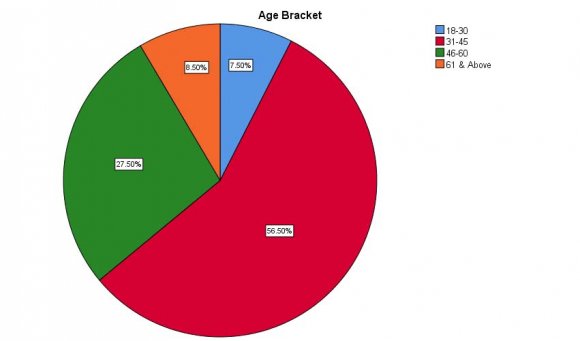
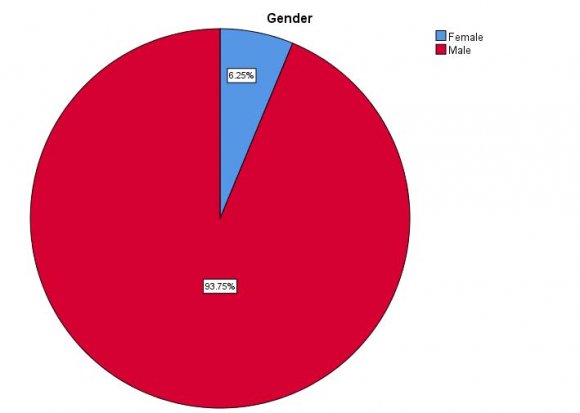
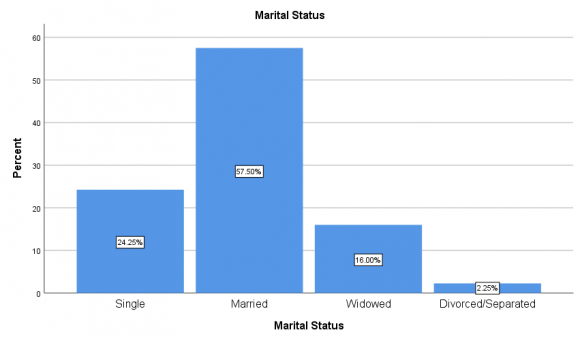
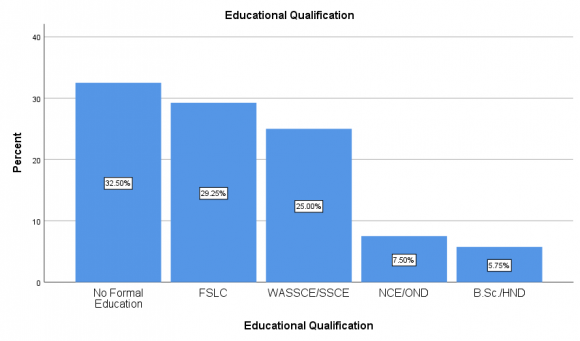
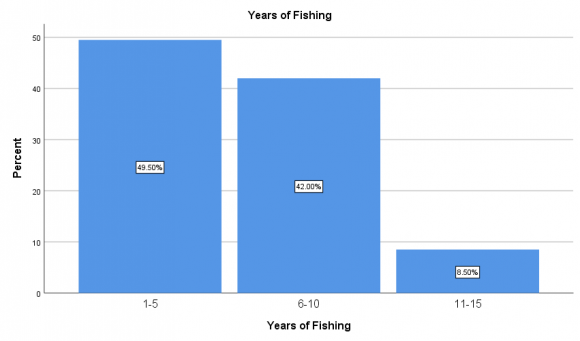
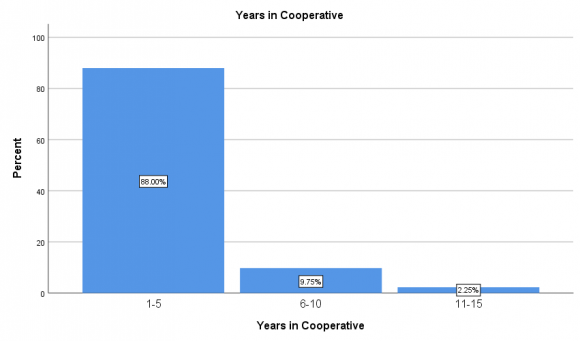
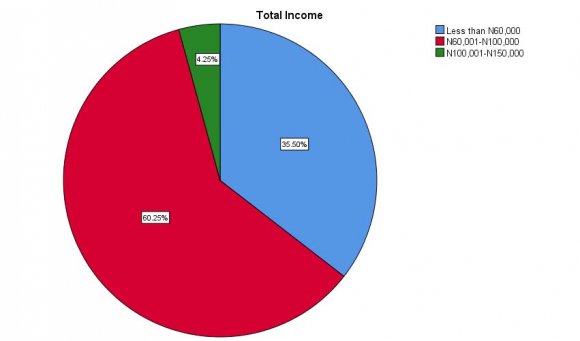
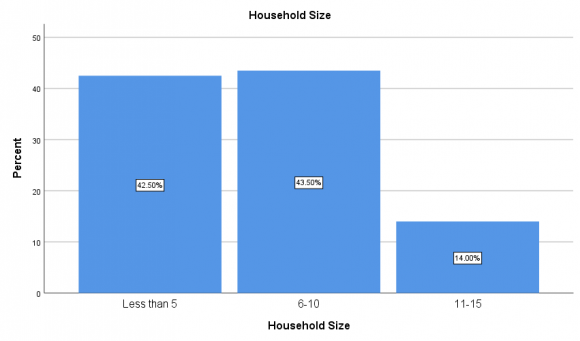
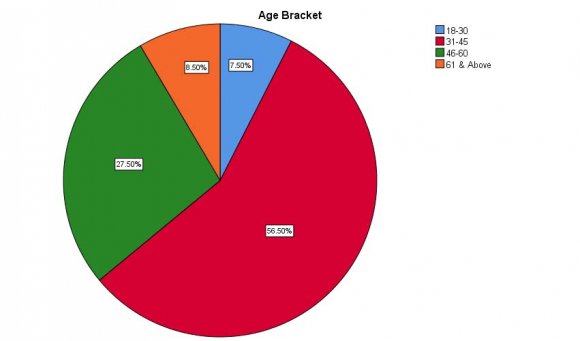
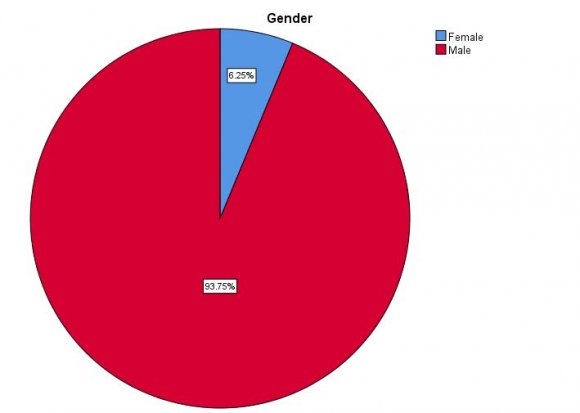
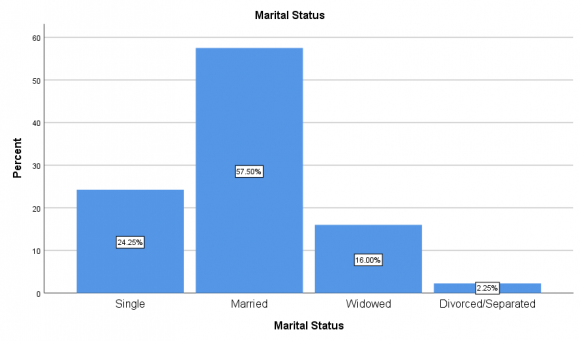
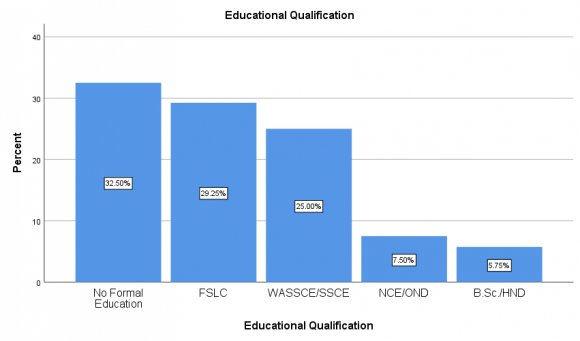
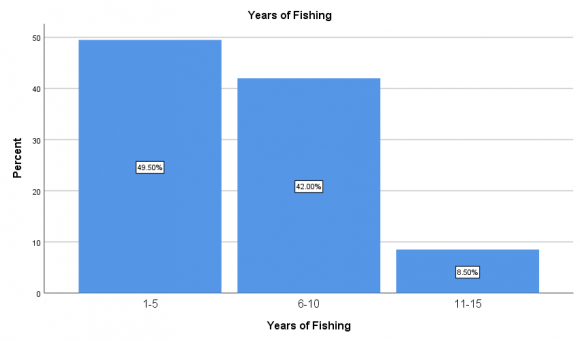
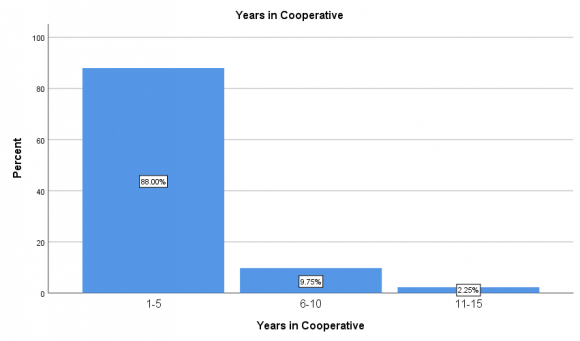
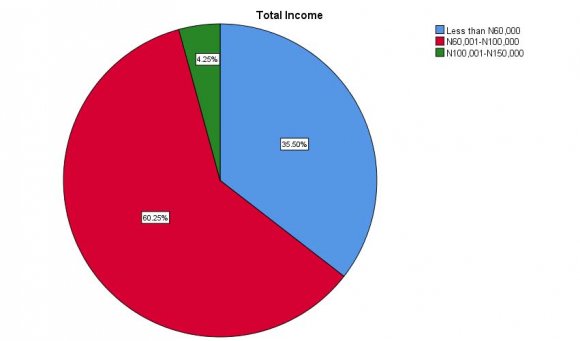
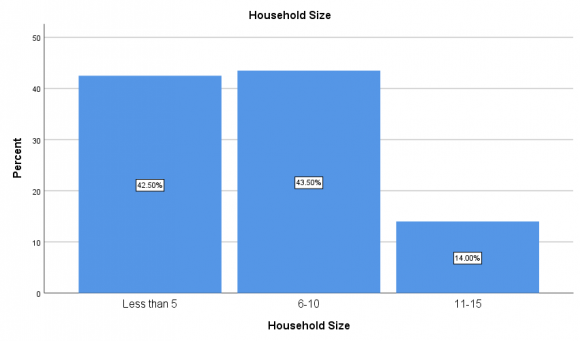
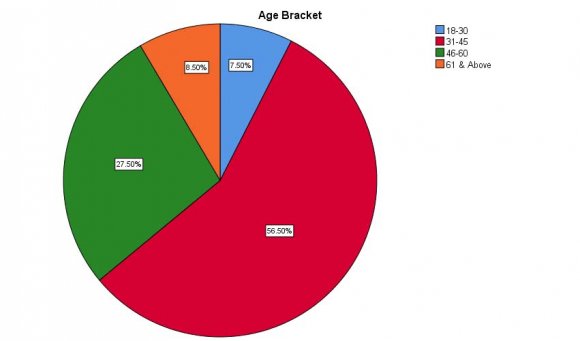
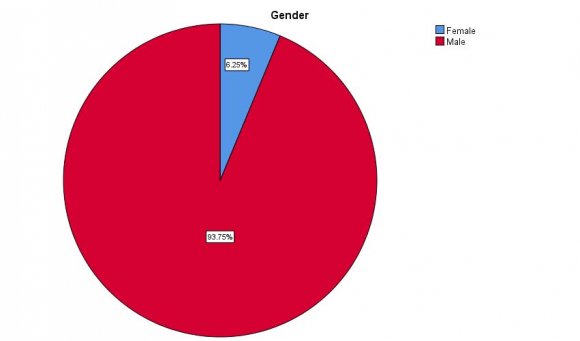
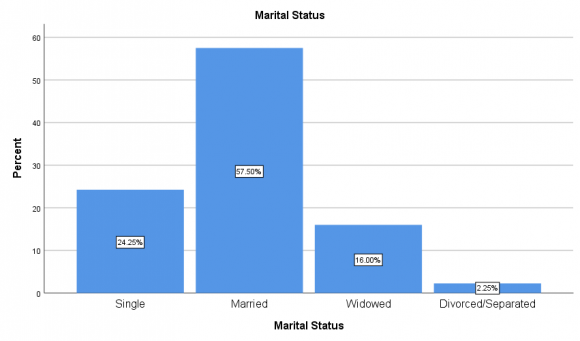
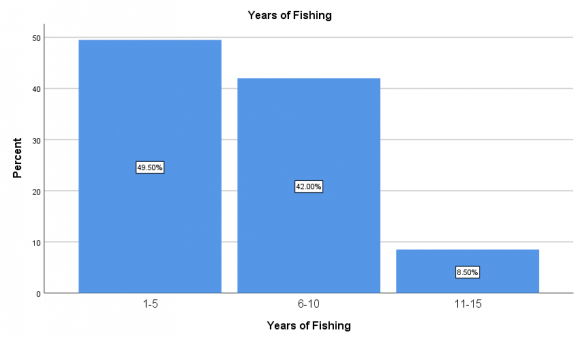
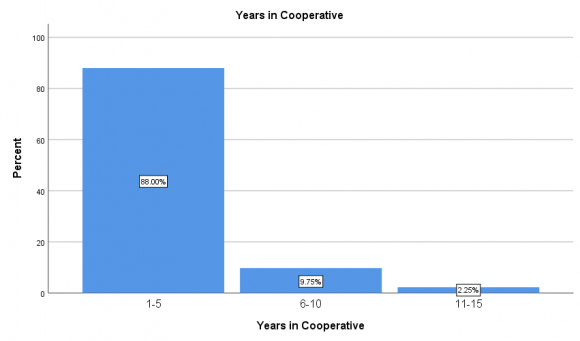
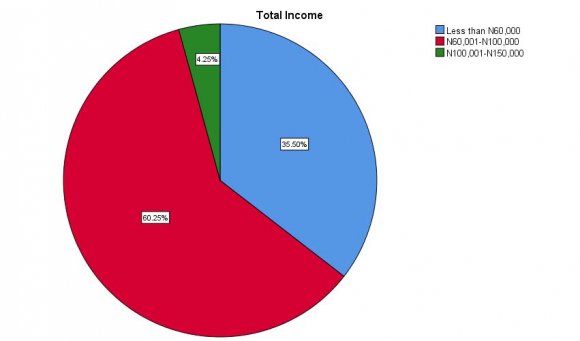
| Method of | |||||
| S./N. Author(s)/Date | Purpose of the Study/Location | Data Collection/In | Method of Data Analysis | Findings | |
| strument | |||||
| 1 | Elhendy&Alzoo m (2001) | To assess the cost of tilapia farming in the central region of Saudi Arabia. | Survey Design/Questi onnaire | Cost-Profit Optimization Method, Net Profit Analysis and Benefit-Cost Ratio (BCR). | The study showed that the minimum average cost of production occurs for 201 tons of tilapia per year per farm and profit is maximized for a production of 300 tons annually per farm. |
| 1: Reliability Statistics | ||
| Cronbach's Alpha | Cronbach's Alpha Based on Standardized Items | N of Items |
| 0.848 | 0.863 | 32 |
| Source: survey data, 2018. | ||
| Coefficients a | ||||||
| Model | Unstandardized Coefficients B Std. Error | Standardized Coefficients Beta | T | Sig. | ||
| (Constant) | -181735.673 | 62191.026 | -2.922 | .004 | ||
| Age Bracket | 6441.454 | 638.450 | .015 | 10.089 | .000 | |
| Gender | 1798.938 | 21659.483 | .002 | .083 | .934 | |
| 1 | Educational Qualification Years in Cooperative | 694.378 3481.116 | 371.799 9735.325 | .002 .008 | 1.868 .358 | .064 .721 |
| Total Investment | .035 | .010 | .020 | 35.867 | .000 | |
| Total Income | 18223.032 | 1373.671 | .030 | 13.266 | .000 | |
| Total Revenue (Sales) | .942 | .024 | .897 | 39.573 | .000 | |
| The Profitability of Fish Production by Co-Operative Society Members in Rivers State, Nigeria | |||||||
| Year 2020 | |||||||
| 72 | |||||||
| Volume XX Issue X Version I | |||||||
| ( ) B | |||||||
| Global Journal of Management and Business Research | v. | Model (Constant) High cost of fishing inputs | Coefficients a Unstandardized Coefficients B Std. Error 1037134.155 223487.712 -22620.738 1655.644 | Standardized Coefficients Beta -.069 | t 4.641 -13.663 | Sig. .000 .000 | |
| 1 | Lack of sufficient capital Storage problems | -19938.986 -7100.295 | 8772.599 21716.166 | -.035 -.016 | -2.273 -.327 | .039 .744 | |
| Spoilage of fish | -22475.463 | 16597.594 | -.068 | -1.354 | .176 | ||
| Poor catch | -6686.288 | 2082.166 | -.016 | -3.211 | .003 | ||
| Poor sales | -35045.332 | 2158.999 | -.082 | -16.232 | .000 | ||
| Oil/Industrial pollution | -52260.682 | 2945.772 | -.089 | -17.741 | .000 | ||
| a. Dependent Variable: Profit Margin | |||||||
| © 2020 Global Journals | |||||||
| 1: Reliability Statistics | ||
| Cronbach's | Cronbach's Alpha Based on | N of Items |
| Alpha | Standardized Items | |
| 0.848 | 0.863 | 32 |
| Source: survey data, 2018. | ||
| Coefficients a | ||||||
| Model | Unstandardized Coefficients | Standardized Coefficients | T | Sig. | ||
| B | Std. Error | Beta | ||||
| (Constant) | -181735.673 | 62191.026 | -2.922 | .004 | ||
| Age Bracket | 6441.454 | 638.450 | .015 | 10.089 | .000 | |
| Gender | 1798.938 | 21659.483 | .002 | .083 | .934 | |
| 1 | Educational Qualification Years in Cooperative | 694.378 3481.116 | 371.799 9735.325 | .002 .008 | 1.868 .358 | .064 .721 |
| Total Investment | .035 | .010 | .020 | 35.867 | .000 | |
| Total Income | 18223.032 | 1373.671 | .030 | 13.266 | .000 | |
| Total Revenue (Sales) | .942 | .024 | .897 | 39.573 | .000 | |
| Coefficients a | ||||||
| Model | Unstandardized Coefficients | Standardized Coefficients | t | Sig. | ||
| B | Std. Error | Beta | ||||
| (Constant) | 1037134.155 | 223487.712 | 4.641 | .000 | ||
| High cost of fishing inputs | -22620.738 | 1655.644 | -.069 | -13.663 | .000 | |
| 1 | Lack of sufficient capital Storage problems | -19938.986 -7100.295 | 8772.599 21716.166 | -.035 -.016 | -2.273 -.327 | .039 .744 |
| Spoilage of fish | -22475.463 | 16597.594 | -.068 | -1.354 | .176 | |
| Poor catch | -6686.288 | 2082.166 | -.016 | -3.211 | .003 | |
| The Profitability of Fish Production by Co-Operative Society Members in Rivers State, Nigeria | ||||||||||||||||
| 40 83 126 169 212 | 4 1 4 2 4 66 198 | 1 1 1 1 0 | 406000 | 3 2 4 2 3 | 1402000 664000 | 2 2 2 1 2 | 55100 306000 | 1 3 3 3 3 38000 56000 | 1 1 2 3 4 17100 250000 | 3 2 3 2 1 | 1384900 414000 | |||||
| S/n. 41 84 127 170 213 42 85 128 171 214 1 43 86 129 172 215 2 44 87 130 173 216 3 45 88 131 174 217 4 46 89 132 175 218 | Statistics of Co-Operators Interviewed Age Gender Marital Status Household Size 3 1 2 2 2 1 2 1 3 1 2 1 3 1 4 1 4 0 4 2 67 1723000 540700 199 675000 835000 481000 3 1 2 2 3 0 4 1 4 0 1 2 3 0 4 2 1 0 3 2 68 648000 58900 200 736000 573000 30300 2 1 2 2 4 0 4 2 2 0 4 2 2 0 3 2 3 1 2 1 2 1 2 1 69 1404000 470900 201 875000 563000 546000 3 1 3 2 1 1 3 1 4 0 3 1 1 0 2 1 4 0 1 2 4 0 2 1 70 1670000 360500 202 859000 1107000 618000 3 1 4 2 4 0 4 2 4 0 3 2 3 1 4 2 1 0 2 1 1 0 4 1 71 555000 608000 203 496000 1999000 62900 1 1 1 1 4 1 3 2 4 0 3 1 4 1 2 1 4 1 1 2 2 0 3 2 72 1900000 558000 204 491000 582000 433000 | Educational Qualification. 1 2 3 3 2 142000 119000 3 3 1 1 2 51000 24000 2 1 3 1 2 3 80000 118000 3 2 2 2 2 2 78000 135000 2 1 1 3 3 3 85000 42000 3 3 1 1 1 2 91000 47000 | Years of Fishing 3 4 2 5 2 398700 362000 4 3 1 5 2 7900 6300 2 4 5 5 4 4 390900 428000 5 3 3 4 1 5 282500 483000 2 1 3 4 5 5 523000 20900 2 3 2 4 4 1 467000 386000 | Years in Coop. 2 4 2 1 473000 1324300 3 Monthly 4 4 4 2 1 566700 640100 Income 2 1 4 2 2 1013100 135000 3 1 4 2 4 1 624000 1387500 2 1 3 3 4 3 1978100 32000 2 4 1 3 3 2 1 1433000 196000 | ||||||||||||
| 5 47 90 133 176 219 | 3 1 3 2 1 3 73 | 1 1 0 1 1 1 | 2 1 3 3 1 3 | 522000 | 2 1 1 1 1 1 | 40200 | 1 3 2 2 1 2 40000 | 3 3 1 2 3 1 | 200 | 3 2 4 4 2 3 | 521800 | |||||
| Year 2020 Year 2020 Year 2020 90 92 94 Volume XX Issue X Version I Volume XX Issue X Version I Volume XX Issue X Version I Global Journal of Management and Business Research ( ) B Global Journal of Management and Business Research ( ) B B ( ) Global Journal of Management and Business Research | 6 7 8 9 48 49 50 51 91 92 93 94 134 135 136 137 177 178 179 180 220 221 222 223 10 52 95 138 181 224 11 12 13 14 15 16 17 18 19 53 54 55 56 57 58 59 60 61 96 97 98 99 100 101 102 103 104 139 140 141 142 143 144 145 146 147 182 183 184 185 186 187 188 189 190 225 226 227 228 229 230 231 232 233 20 21 22 23 24 25 26 27 28 29 30 31 32 33 34 35 62 63 64 65 66 67 68 69 70 71 72 73 74 75 76 77 105 106 107 108 109 110 111 112 113 114 115 116 117 118 119 120 148 149 150 151 152 153 154 155 156 157 158 159 160 161 162 163 191 192 234 193 194 195 196 197 198 199 200 201 202 203 204 205 206 235 236 237 238 239 240 241 243 244 245 246 247 248 249 242 | 2 4 4 3 2 3 3 2 3 2 3 2 1 1 4 1 1 2 3 3 1 3 3 74 75 76 2 77 1 2 3 1 3 4 78 4 2 3 3 2 3 4 1 3 1 2 2 1 2 2 2 2 2 4 2 1 2 1 4 4 4 2 4 4 3 3 4 2 3 3 3 4 2 1 1 2 2 3 3 3 1 2 3 3 2 3 2 2 79 80 81 82 83 84 85 86 3 87 1 1 1 4 3 2 1 2 2 3 4 3 4 2 3 4 3 4 2 1 2 2 4 1 3 4 1 3 2 1 2 1 1 2 4 4 1 2 4 2 3 3 4 4 4 1 3 2 2 4 2 4 1 3 2 4 2 3 2 1 2 3 4 2 3 1 4 88 1 1 4 3 3 1 1 4 2 1 3 3 1 3 2 3 4 1 1 2 2 1 4 4 3 4 3 3 Results of Answers to Interiew Questionnaires 1 2 2 1 4 2 1 3 2 1 3 2 0 3 1 0 2 1 0 1 2 1 1 1 0 1 2 0 4 2 1 2 1 0 4 1 0 4 2 1 1 2 0 2 1 0 4 2 0 2 2 0 1 2 1 2 1 1 3 2 0 2 1 0 1 1 0 3 1 1529000 67800 649000 683000 1746000 658000 1 4 2 762000 343000 1 1 1 1 3 1 0 1 1 0 3 2 1 1 2 1 4 1 659000 643000 1 3 1 1 2 2 1 1 2 1 4 1 0 4 2 1 2 2 0 2 1 1 2 1 1 3 1 0 2 1 0 4 1 0 3 1 0 1 2 1 2 2 1 4 1 0 3 2 0 4 1 1 3 2 0 1 1 0 1 1 1 1 1 1 4 1 0 1 1 0 2 2 0 1 1 0 3 1 0 3 2 1 3 2 1 1 2 0 3 1 0 3 2 1 1 1 1 3 1 0 3 1 1 1 1 1 2 2 0 3 2 1 3 2 0 1 2 1 2 1 0 2 2 1 4 1 1 1 2 0 2 1 1 1 1 0 2 3 1 2 3 1 2 2 0 4 1 0 4 2 0 4 1 1 3 3 1 1 2 1947000 301000 1829000 598000 1643000 433000 867000 363000 690000 655000 839000 392000 1587000 605000 774000 451000 0 4 2 784000 458000 0 2 2 1 2 2 1 1 2 1 1 2 1 3 1 1 1 2 0 4 2 1 3 1 1 1 1 0 2 1 0 1 1 0 2 1 1 4 1 0 2 2 1 4 1 1 3 1 0 2 2 0 4 2 1 2 2 0 4 2 1 4 2 1 1 1 1 1 2 1 3 2 0 2 2 1 3 2 1 1 2 0 4 1 0 3 2 0 3 1 0 4 1 1 4 1 0 4 1 1 1 2 1 2 1 1 3 1 0 1 1 1 1 2 1 4 1 1 1 1 0 4 2 1 4 2 0 2 1 1 4 2 0 1 2 1 2 1 1 1 2 1 2 1 1 4 2 1 2 1 0 4 2 1 3 1 1 1 2 0 3 1 1 4 1 0 1 2 0 4 2 1 4 2 1 1 2 0 4 2 0 4 2 1 3 2 1 4 1 1 2 2 1 2 1 0 1 1 0 3 2 1547000 532000 1 2 1 1 1 2 1 3 2 1 2 2 1 4 1 0 3 2 0 4 1 0 1 1 1 2 1 0 1 2 0 1 1 1 3 1 0 2 1 0 2 1 0 1 2 1 3 3 1 3 3 1 3 3 0 2 1 0 4 3 0 1 2 1 1 1 1 2 2 1 3 2 0 4 1 1 4 1 0 4 2 1 4 3 Appendix Three 3 1 3 1 3 1 3 1 1 2 3 1 1 3 2 1 1 3 3 1 1 2 1 47000 106000 137000 3 77000 3 1 2 3 1 2 101000 3 2 3 3 3 2 2 1 2 2 3 2 3 1 3 2 1 3 3 1 2 3 2 1 2 3 1 2 2 1 3 2 2 1 2 1 2 2 1 3 2 3 2 1 1 3 3 3 1 3 3 3 3 89000 124000 134000 150000 112000 73000 66000 75000 3 138000 2 1 1 3 2 3 3 1 3 2 1 1 3 3 3 3 3 2 1 3 1 3 2 2 1 1 1 3 3 1 2 3 2 1 2 2 2 3 1 2 1 3 3 3 3 2 2 3 1 2 2 1 2 3 1 1 2 1 3 2 3 2 2 3 3 1 2 89000 3 3 1 2 1 2 1 1 2 2 3 1 3 3 2 1 3 3 1 2 2 3 2 1 1 4 2 1 2 0 2 1 2 S/n. FI SC SP SF | PC | 4 5 2 5 5 4 5 4 2 3 1 1 1 3 5 2 1 3 3 4 4 1 2 20800 577000 521000 4 266000 1 5 5 4 2 3 542000 4 3 2 2 2 3 1 5 5 4 4 4 5 3 5 4 1 5 5 2 2 5 1 3 5 2 2 1 5 4 5 4 4 3 2 1 3 5 1 4 1 5 3 1 1 3 4 1 5 3 4 3 3 212000 474000 299000 213000 543000 319000 539000 376000 3 320000 2 1 4 3 3 5 4 1 1 5 1 1 1 3 2 2 2 5 4 1 4 1 4 3 2 4 3 3 3 2 5 2 5 3 3 3 4 2 4 3 2 3 5 1 2 1 3 2 5 3 4 2 3 5 4 1 3 4 3 5 3 5 2 1 3 3 1 443000 4 5 4 2 1 4 2 5 4 1 4 5 5 2 2 5 5 1 2 1 5 1 5 2 5 2 5 2 3 | PS | 4 3 2 1 2 4 4 1 1 4 1 3 3 3 3 1 3 2 1 2 2 2 3 3 4 3 2 3 2 1 3 2 3 3 2 2 1 1 4 4 3 3 2 3 1 1 3 3 3 4 2 4 3 2 1 3 1 1 3 4 3 4 4 2 3 3 4 4 2 4 3 1 1 4 4 2 4 1 1 3 4 4 4 1 4 4 3 1 1 2 2 3 2 4 1 2 3 2 2 2 4 1 1 3 1 1 1 1 3 3 2 2 1 1 1 2 3 4 2 2 2 2 3 1 2 3 1 2 3 2 2 4 4 3 1 3 1 1 1 1 4 3 4 4 2 1 1 4 3 4 2 1 2 1 4 1 4 4 3 2 1 1 1 3 4 3 4 1 2 1 2 1 4 2 1 2 2 1 2 3 | 1508200 72000 1225000 496000 117000 1735000 1355000 1344000 654000 147000 520000 1048000 398000 464000 1104000 OP | Year 2020 Year 2020 91 Volume XX Issue X Version I Global Journal of Management and Business Research ( ) B ( ) B | ||||||||
| 36 78 121 164 207 250 | 4 2 3 3 2 4 | 1 1 1 1 0 0 | 1 3 2 3 1 2 | 2 1 2 1 2 1 | 2 3 2 3 3 4 | 2 1 2 2 1 3 | 4 2 3 2 4 4 | |||||||||
| 37 79 122 165 208 251 | 1 2 4 4 2 4 | 1 1 1 1 0 1 | 3 3 1 3 4 3 | 1 2 1 1 1 1 | 1 1 2 3 3 4 | 2 1 5 1 5 3 | 3 1 4 2 4 1 | |||||||||
| 38 80 123 166 209 252 | 4 3 3 4 4 2 | 0 1 1 1 1 1 | 4 1 2 3 2 4 | 2 2 1 1 2 2 | 3 1 3 2 1 5 | 1 1 3 2 5 4 | 4 1 1 2 3 4 | |||||||||
| 39 81 124 167 210 253 | 2 2 2 2 4 1 | 0 0 0 1 1 0 | 2 3 2 4 2 1 | 2 2 2 2 1 2 | 1 2 3 3 3 3 | 5 3 2 4 1 1 | 3 4 3 1 1 4 | |||||||||
| 82 125 168 211 | 2 3 4 4 | 1 0 1 0 | 1 1 1 1 | 2 2 2 2 | 1 3 1 2 | 2 1 2 4 | 4 4 2 4 | |||||||||
| © 2020 Global Journals © 2020 Global Journals © 2020 Global Journals | © 2020 Global Journals © 2020 Global Journals | |||||||||||||||
| 233 | 277 | 2 | 5 | 3 | 4 | 3 | 3 | 5 | 2 | 2 | 4 | 4 | 1 | 3 | 5 | 2 | 5 | 4 | 4 | ||||
| 234 235 236 322 278 279 280 323 5. What is your educational qualification? 1 5 3 4 3 4 2 2 3 3 4 4 3 61 & Above Total No formal Education [ ] 324 4 3 FSLC [ ] WASSC/SSCE [ ] | 5 3 5 400 34 | 3 4 5 | 2 3 4 | 3 2 4 | 8.5 100.0 | 2 2 1 | 2 2 5 | 5 4 3 | 2 3 3 8.5 4 5 100.0 5 | 5 3 5 | 4 2 5 | 4 2 5 | 2 4 3 100.0 | ||||||||||
| 237 325 281 NCE/OND [ ] | 4 | 4 | 4 | 4 | 4 | 3 | 4 | 4 | 4 | 2 | 2 | 4 | 2 | 4 | 2 | 5 | 5 | 4 | |||||
| Global Journal of Management and Business Research Volume XX Issue X Version I ( ) B 126 Year 2020 | 238 326 282 B.Sc./HND [ ] 239 240 241 242 243 244 245 246 247 248 249 250 251 252 253 254 255 256 257 258 259 260 261 262 263 264 265 266 267 268 269 270 271 272 273 274 316 317 318 360 361 362 Less than 5 [ ] 4. What is your household size? 2 1 4 4 2 1 2 2 3 3 1 2 3 1 5 5 4 2 5 3 5 1 1 2 5 3 4 3 5 1 5 3 1 2 2 4 5 5 3 4 5 Divorce/Separated [ ] Widowed [ ] 283 284 285 286 287 288 289 290 291 292 293 294 295 296 297 298 299 300 301 302 303 304 305 306 307 308 309 310 311 312 313 314 315 327 1 M.Sc./Ph.D [ ] 328 1 Other; specify:???????????????... 4 2 4 3 3 5 5 5 4 3 3 5 4 4 4 5 5 4 2 3 3 3 2 4 4 5 2 3 2 4 2 5 3 4 3 4 2 4 4 4 5 3 5 4 3 4 5 4 5 4 2 4 3 5 4 5 5 3 2 3 5 5 2 3 3 5 2 3 3 5 2 3 4 4 4 3 2 3 3 5 3 5 2 3 4 4 3 2 4 3 5 3 5 3 3 3 2 4 3 3 3 5 3 1 3 2 5 5 4 3 5 2 2 3 2 5 5 3 5 5 2 5 5 2 5 4 2 5 4 2 3 5 3 2 3 2 1 4 5 3 4 5 4 3 3 2 4 5 3 4 2 1 4 2 2 3 4 2 5 2 1 5 2 3 4 4 1 4 2 5 5 3 1 4 4 5 3 5 3 5 4 5 4 5 2 4 3 2 5 3 1 5 3 3 5 5 2 Poor catch 329 1 3 3 330 2 3 3 331 4 5 2 332 1 3 5 333 2 3 3 334 5 4 4 335 4 5 4 336 3 5 2 337 4 5 2 338 5 5 2 339 5 3 5 340 1 4 2 341 4 4 4 342 2 3 5 343 1 3 3 344 4 5 4 345 4 5 5 346 3 3 4 347 1 3 5 348 5 4 4 349 4 5 3 350 4 4 2 351 5 3 3 352 4 5 5 353 2 4 4 354 1 5 2 355 1 4 5 356 1 3 2 357 1 4 4 358 3 3 5 359 2 5 2 Frequency Valid Female 25 Male 375 Total 400 1. Which of these is your age bracket? 18-30 [ ] 31-45 [ ] 46-60 [ ] 61yrs & Above [ ]. 2. What is your gender? Male [ ] Female [ ] 3. What is your marital status? Single [ ] Married [ ] 1. How much did you realize from fish sales in 2018? N_______________ 2. What was your operational cost in 2018? Oil and petrol N _____________ Fish bets N__________________ Net repairs N________________ Boat repairs N_________________ Labour N___________________ Other overheads N_____________ Less than N60, 000 [ ] N60, 001 -N100, 000 [ ] N100, 001 -N150, 000 [ ] N150, 001 and Above [ ]. Various nets [N ] Motorized boat [N] Refrigerated storage room [N] Refrigerated van [N] Others (specify) [N] 1-5 [ ] 6-10 [ ] 11-15 [ ] 16-20 [ ] Above 20yrs [ ] 7. Section B: Substantive Questions 3 3 4 4 3 3 2 4 4 4 2 3 3 5 5 2 2 1 3 2 2 4 4 3 2 2 4 5 3 2 3 4 4 3 5 3 5 5 5 2 4 4 2 1 5 2 5 4 3 5 4 3 4 3 5 2 4 5 5 3 5 3 4 5 5 1 5 4 4 1 3 5 4 4 3 4 5 1 1 4 5 2 2 5 5 4 2 1 4 2 2 5 1 3 2 5 5 2 3 3 4 3 2 3 1 4 1 1 4 5 4 4 5 3 5 5 2 4 1 3 4 3 4 3 3 5 2 1 5 3 4 3 3 1 4 5 3 4 3 2 3 1 5 1 5 5 2 2 3 2 5 1 5 4 2 2 3 2 5 5 3 5 4 4 3 2 3 4 2 1 2 3 2 4 4 1 4 3 2 2 4 3 2 2 3 Gender Percent Valid Percent 5 5 3 2 4 3 3 3 4 2 4 5 2 2 3 2 2 2 5 3 5 4 3 2 2 5 2 2 5 5 2 4 5 4 2 2 4 6.3 6.3 93.8 93.8 100.0 100.0 Above 20yrs [ ] 6. Poor sales How many years have you been fishing? Oil/industrial pollution 1-5 [ ] Other (specify) 6-10 [ ] Other (specify) 11-15 [ ] 16-20 [ ] Other (specify) | 4 3 2 2 3 5 5 2 4 3 5 4 2 5 5 4 2 5 2 3 3 2 4 4 5 2 3 2 4 5 3 3 2 3 4 2 2 | 2 5 3 3 3 5 2 3 5 5 2 5 3 2 2 3 3 5 2 5 5 5 2 5 5 5 4 2 2 5 3 2 5 5 2 2 5 Cumulative 3 3 2 4 2 4 5 3 2 4 4 2 5 4 2 2 4 5 5 4 3 5 5 3 2 4 2 2 2 3 2 2 2 2 5 Percent 6.3 100.0 4 3 | ||||||||||||||||||||
| 6-10 [ | ] | 275 363 319 | 4 | 1 | 3 | 3 | 4 | 3 | 3 | 2 | 2 | 1 | 5 | 5 | 5 | 2 | 2 | 3 | 5 | 5 | |||
| 11-15 [ | ] | 276 364 320 | 4 | 4 | 3 | 4 | 3 | 4 | 4 | 5 | 2 | 1 | 3 | 3 | 4 | 3 | 4 | 2 | 3 | 4 | |||
| © 2020 Global Journals | |||||||||||||||||||||||