1. Introduction
rom the planning point of view, land represents a surface decoration realised to ensure an act in accordance to the built-environment. Ajibola, Olaniyan-Adekola and Simon (2011) also noted that the purpose of land use planning in urban centres is to enable events in urban areas to be well organized and developed in any open space, having put into consideration the protection of people, this which also include environmental quality, social quality amongst others. However, Hardoy and Satlerwaite (1989) and Bernstein (1994)has made it known from their study that the deficiencies in developing country's land use plan and policies and inadequate land management policies amongst others have been identified as major issues revolving around existing uses in land in some countries.
Lack of appropriate tools and weak structures have also been noticed as some of the problems plaguing communities. Aribigbola (2008) further opined that striking urban land control and management most especially in areas where there is growing land problem such as urban sprawl in Nigeria; is significant in .dealing with problems such as slum formation, hike in the land price, congestion and others for the purpose achieving a sustainable city development.
Having critically examined the various cities in Nigeria, it has been revealed that there are plethora of problems associated with land and this cut across land use, allocation, land tenure and ownership. Also problems such as housing, urban sprawl, lack of adequate facilities and infrastructure, lack of accessibility, etc. are issues associated with metropolitan areas/ mega cities. Non-compliance of planning standards has also increased the potentials for environmental degradation within our environs and this has resulted to urban problems such as squalors, slum and sprawls as seen in major cities in Nigeria especially Lagos. It is therefore imperative to scrutinize the effect of land use planning on property values in other to determine the impacts that adherence to land use planning has revealed on residential property values (rental) values in Lagos metropolis and recommend improvement as necessary.
2. II.
3. Literature Review a) Concept of land use Planning
The general idea of planning can be linked to the creation as it always said that God (himself) was the first planner and the originator. God planned land and created the earth in six days. It was obvious that planning process was adopted in the concept of zoning land and its use, separation from water, birds, air and animals. The creation of the world is an example of zoning and planning concepts. Cheshire and Sheppard (2001) noted that land use planning acts in various purposes, control of the spatial structure of residential development can reduce the cost of providing some local public goods and serve to isolate land uses which are likely to generate costly external effects; regulation of building types; regulation of land use can be a method of providing valued public goods and amenities such as planned neighbourhood and open space respectively. They further stated that Land use planning produces a variety of local amenities and regulates industrial land use and separates it from residential land use. Oyesiku (2009) believed that the practice of planning in Nigeria is not forming a spatially sustainable new cities, due to the fact that planning is similar to a preventive medicine, whereas the professional planners in Nigeria have been focusing on curative medicine. Owei, Obinna and Ede (2010) discussed that land use planning is a process targeted for the purpose of achieving an orderly physical development to evolve a functional and habitable environment.
4. b) Land-Use Control Tools
Land use controls are institutional, administrative and/or legal tools put into place by the government to minimize, control and prevent intended excessive human actions on land and its resources (ITRC, 2008). The implementation of controls are usually enforced by government which include zoning restrictions, building permits and other provisions of restrictions on land use.
Zoning: Zoning is a well-understood policy and is applicable to our urban space dimension to eradicate land use conflicts such as the reduction in the environmental issues such as pollution and noise. Zoning is a major tool of country and town planning in our cities and suburban centres to curb urban sprawl and enhance a liveable environment. It has been the practice of the local government to use zoning in urban regulation. Fischel (1985) defines zoning as "the separation of a community into districts or zones with restrictions in certain land-use activities while others are allowed. In recent times, there have been zoning codes that have covered many other restrictions. These codes include setting limits on building size, maximum height, lot size, etc. It has also been used to limit the size of off street parking space and size of trees. Zoning is classified into minimum lot-size, maximum lot-size and building height limitation.
5. c) Effect of Land Use Planning and Control on Property
Value Jaeger (2006) from his study, opined that one of the impact of planning system on land is that it can have an intent impact on the land values. He further explained that a piece of property can worth more than before after the grant of a planning permit. It has been assumed that land use reduces property value, whereas in the actual fact it has positive effect on it. Oni (2008), Oni (2010), and Oni and Ajayi (2011) recommended that government should review laws as regards government intervention in the property market through taxation. They suggested that an appropriate equitable tax should be enacted to ensure a sustainable housing delivery in other to realise the goal vision 20:2020in determining the effects of government intervention in property market through the imposition of property tax on sustainable housing delivery found that government intervention through the imposition of statutory formula for determining the amount payable by property owners as land use charge was inappropriate and that high tax and penalties would discourage investment in new housing and maintenance of existing stock. It recommended a review of the law and suggested an appropriate basis of fair and equitable tax to ensure sustainable housing delivery and the realization of the goal of Vision 20:2020, which was in place to make Nigeria become one of the twenty most advanced countries by year 2020.
Adebayo and Patunola-Ajayi (2017) they also observed that economist recognized three potential effects of land use regulations on land values, these are; restriction effects, amenity effects, and scarcity effects. a. Restriction effects: this has effect on the "highest and best use" of land which in turn will affect the property value. If par venture the prohibited use will not affect the highest and best use of a piece of land. The regulation will have no effect, but it does, it will bring down the value of the property. b. Amenity effects: It has many effects mostly positive and this serves as the bases for the introduction of a land-use regulation. Land use regulation are formulated to enhance the livability of a neigbourhood by eliminating conflicting land uses.
Rules and orders that protect infrastructure (including open spaces) also have similar positive effects. The quality of any surrounding land, has a positive effect on the value of properties. (Adebayo and Patunola-Ajayi, 2017). c. Scarcity effects: when there is a change in the supply of land use as a result of land use regulation, then there will be scarcity effect. If there is a law that restrict the use of land for example, "A" there would be a decrease in the supply of "A" and if the law allows the use of land B, there will be increase in the supply of " B", likewise property that has exception or waiver will also enjoy the benefits B has.
III.
6. Study Area
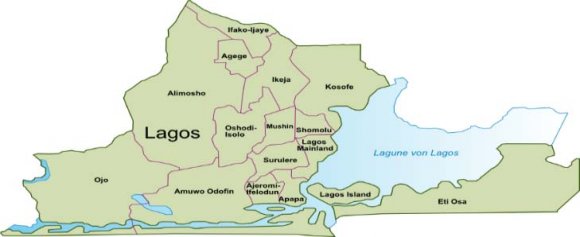
Lagos state can be referred to as one of the populous cities in the world with a population of about 15million. Lagos state is referred to as the commercial nerves of the country, having sea and airports. Over 45% of skilled workers resides in the state. It is located at a latitude 6°34?60?N, 3°19?59? E along the West African coast. It was the capital of the country before and now it has been replaced with Abuja on the 12 th of Dec., 1991. Republic of Benin borders it on the western side, the Atlantic Ocean form the southern boundary, and it borders Ogun state on its North and Eastern boundaries. (Balogun et al, 1999).
Lagos state is the smallest state in Nigeria with highest population over 5% of the National estimate with V. Various impacts of land use planning policies and tools on property values as evidenced in various literatures and physical review of the land use planning and policies were assessed and presented in table 4. From the table, the research revealed that the basic effect of land use planning and policies on property values include: significant impact on land values (4.5032); land use policies ensure planned and controlled developments (4.4904); protect, enhance, or create amenities or services that benefit property owners (4.3248); It also ensures environmental sustainability (4.0127) and population explosion and paucity of resources (3.8280) which have been ranked 1 st , 2 nd , 3 rd , 4 th and 5 th respectively. The least considered were ensures adequate cadastral surveys and detailed land information system (2.4904) and Ensures adequate cadastral surveys and detailed land information system (2.4777) which were ranked 14 th and 15 th respectively. The table above revealed the group statistics and mean rental of residential properties in Ikoyi and Agege axis based on the nature of planning i.e planned and unplanned areas. The mean rental value of a mini flat, one bedroom, 2 bedroom, 3 bedroom and duplex in Ikoyi are #580,000.00; #605,000.00; #995,000; #1,990,000 and #3,350,000.00 respectively. Conversely, the mean rental value of a mini flat, one bedroom, 2 bedroom, 3 bedroom and duplex in Agege are #75,500.00; #85,000.00; #119,500; #221,000 and #1,050,000.00 respectively.
7. Data Analysis and Discussions
8. B
One way ANOVA was conducted to compare the mean rental values of different typology of residential properties based on the nature of planning as either planned area or unplanned area. Analysis of Variance was further used to test for any statistical difference in values between the different typologies of residential properties based on the nature of planning. The results as presented in Table 7 showed that there is a differential statistical values between the properties based on the nature of planning F(1,18)= 342.289, P=.000 for mini flats; F(1,18)= 384.455, P=.000 for 1 bedroom flat; F(1,18)= 389.147, P=.000 for 2 bedroom flats; F(1,18) = 43.386, P = .000 for 3 bedroom apartments and F(1,18)= 77.775, P=.000 for duplexes. There are therefore statistical differences in the mean rental values for the different housing typologies in the planned and unplanned areas. The measure of association and effect size reveals a clue of the size of the difference between the natures of the areas as been planned and unplanned (not just whether the difference could have occurred by chance). The effect size is large as revealed in eta squared. The eta squared for difference in values between the properties based on the nature of land use planning for mini flats is .950 representing 95.0%. This reveals 95.0% of the difference among values is revealed by nature of planning. One bedroom flat is .955 representing 95.5%. This shows that 95.5% of the difference in value is discussed by the nature of land use planning. Eta squared for 2 bedroom flats is .956; 3 bedroom flat is .707 while duplex is 812, thus showing a significant contribution of the nature of land use planning to the changes in values. Table 10shows that the correlation coefficient "R" (Linear Relationship) is 0.723 while the coefficient of determination "R 2 " (i.e. the strength or magnitude of the relationship) is 0.522. With R value of 0.723 and R 2 value of 0.522 it is evident that there is statistically significant relationship between land use planning and property values. In other words, 52.2% of the variation in the dependent (property values) variable can be explained by variations in the independent variable land use planning policies and tools.
9. Global
10. Conclusion
Land use planning and policy control tools are veritable instrument used by government authorities to design, guide and regulate land use. The importance of urban land use planning in the world over today cannot be underestimated with the resulting urban explosion and morphological changes in the country. Nigeria, a developing and environmentally conscious country is not left out of this dire need for effective land use planning and control measures. There are many challenges confronting effective implementation and enforcement of land use planning in Nigeria. Hence, this research amongst other also assesses the effects of land use planning on property values in Lagos. The study revealed that the major land use planning and policy tools used and implemented in Lagos are building permit/ approval, zoning, land use charge, town ordinances and building codes. The study also revealed that inadequate implementation, inadequate monitoring and evaluation; cost of compliance with planning and development standards, inadequate access to residential land and existing land use pattern and master plan were the major challenges of land use planning and policies in Lagos. The effects of land use planning on property values also revealed that land use planning have significant impact on land values; ensure planned and controlled developments, protect, enhance, or create amenities or services that benefit property owners; also ensures environmental sustainability and population explosion and paucity of resources. The study shows that land use planning leads to increased property values. In other words, the study establishes that there is a statistically significant relationship between land use planning and property values in the study area through the results of the ANOVA, T-Test, eta squared and the linear regression been conducted in the course of the research.
11. VII.
12. Recommendation
The need for adequate implementation and monitoring of land use planning and policies in the society cannot be over-emphasized. In a bid to ensuring adequate and efficient land use policies and a better sustainable environment; the following were recommended: i. Implementation and monitoring of land use planning and policies. ii. Ensure enforcement of land use planning by the society. iii. Cost of enforcement of planning policies should be reviewed. iv. It is also recommended that Estate Surveyors and Valuers should be carried along in the town and country planning processes. v. Adequate development standards should be created and enforced. vi. Existing master plan should be enforced and where necessary be reviewed. vii. There should be provision of the technical facilities for effective land use planning.
viii. The use of computer technology should be adopted and combined with political will to enforce land use planning and policies. ix. Strengthening auditing of the tax records. x. All government agencies involved in land use planning and policies should be coordinated for effective and sustainable development. xi. A corrupt-free and efficient administrative machinery wit well trained personnel should be put in place.
| Year 2021 | ||||||||
| ( ) B | ||||||||
| Land Use Planning and Policy Tools | MU | U | UD | UU | MUU | Mean | Std. Dev. | Rank |
| Building Permit /Approval | 147(93.6) | 7(4.5) | - | 2(1.3) | 1(0.6) | 4.8917 | .50102 | 1 st |
| Zoning | 131(83.4) | 19(12.1) | 2(1.3) | 3(1.9) | 2(1.3) | 4.7452 | .69710 | 2 nd |
| Land Use charge | 115(73.2) | 18(11.5) | 15(9.6) | 4(2.5) | 5(3.2) | 4.4904 | .99110 | 3 rd |
| Town Ordinances | 88(56.1) | 49(31.2) | 13(8.3) | 6(3.8) | 1(0.6) | 4.3822 | .84379 | 4 th |
| Building Codes | 88(56.1) | 27(17.2) 33(21.0) | 6(3.8) | 3(1.9) | 4.2166 | 1.02731 | 5 th | |
| Sub-Division Regulations | 70(44.6) | 37(23.6) 50(31.8) | - | - | 4.1274 | .86770 | 6 th | |
| Power of Esheat | 98(62.4) | 11(7.0) | 19(12.1) 24(15.3) | 5(3.2) | 4.1019 | 1.28195 | 7 th | |
| Taxation | 93(59.2) | 23(14.6) | 8(5.1) | 25(15.9) | 8(5.1) | 4.0701 | 1.32101 | 8 th |
| Police power | 93(59.2) | 20(12.7) | 13(8.3) | 21(13.4) | 10(6.4) | 4.0510 | 1.33875 | 9 th |
| Building Height Control | 61(38.9) | 69(43.9) | 5(3.2) | 15(9.6) | 7(4.5) | 4.0318 | 1.10024 | 10 th |
| Contravention | 91(58.0) | 18(11.5) | 4(2.5) | 18(11.5) 26(16.6) | 3.8280 | 1.59397 | 11 th | |
| Easement and wayleaves | 32(20.4) | 51(32.5) 20(12.7) 39(24.8) | 15(9.6) | 3.2930 | 1.30217 | 12 th | ||
| Public Right of way | 10(6.4) | 63(40.1) 40(25.5) 32(20.4) | 12(7.6) | 3.1720 | 1.06926 | 13 th | ||
| Rent Control | 12(7.6) | 55(35.0) 20(12.7) 62(39.5) | 8(5.1) | 3.0064 | 1.12373 | 14 th | ||
| Eminent Domain | 27(17.2) | 18(11.5) 41(26.1) 55(35.0) 16(10.2) | 2.9045 | 1.24953 | 15 th | |||
| Effect of land use planning and policies on residential property values | SA | A | UD | DA | SDA | Mean Std. Dev | Rank | |
| Significant impact on land values | 105(66.9) 26(16.6) | 26(16.6) | - | - | 4.5032 | .76480 | 1 st | |
| Land use policies ensure planned and controlled developments | 77(49.0) | 80(51.0) | - | - | - | 4.4904 | .50151 | 2 nd |
| protect, enhance, or create amenities or services that benefit property owners. | 64(40.8) | 80(51.0) | 13(8.3) | - | - | 4.3248 | .62241 | 3 rd |
| It also ensures environmental sustainability | 53(33.8) | 53(33.8) | 51(32.5) | - | - | 4.0127 | .81640 | 4 th |
| Population explosion and paucity of resources | 38(24.2) | 67(42.7) | 39(24.8) | 13(8.3) | - | 3.828 | .8928 | 5 th |
| Curbs the nefarious and corrupt practices amongst land officers | 40(25.5) | 53(33.8) | 38(24.2) | 26(16.6) | - | 3.6815 | 1.0318 | 6 th |
| Policies ensure planned and controlled developments | 26(16.6) | 91(58.0) | 17(10.8) | 6(3.8) | 17(10.8) 3.6561 | 1.1363 | 7 th | |
| Equitable distribution and accessibility to land | 26(16.6) | 91(58.0) | 17(10.8) | 6(3.8) | 17(10.8) 3.6561 | 1.1363 | 7 th | |
| The equitable distribution and accessibility to land | 51(32.5) | 26(16.6) | 42(26.8) | 25(15.9) | 13(8.3) | 3.4904 | 1.3137 | 9 th |
| Ensures adequate cadastral surveys and detailed land information system. | 38(24.2) | 13(8.3) | 68(43.3) | 38(24.2) | - | 3.3248 | 1.0932 | 10 th |
| Provides avenue for legal and defensible titles to land | 39(24.8) | 27(17.2) | 13(8.3) | 78(49.7) | - | 3.1720 | 1.2819 | 11 th |
| Effective utilization of land | 25(15.9) | 52(33.1) | 80(51.0) | - | - | 3.1401 | 1.2113 | 12 th |
| Increased cases of squatting and unplanned developments | 51(32.5) | 54(34.4) | 52(33.1) | - | - | 2.6433 | 1.6909 | 13 th |
| Ensures adequate cadastral surveys and detailed land information system | - | 30(19.1) | 18(11.5) | 108(68. 8) | 1(0.6) | 2.4904 | .80557 | 14 th |
| Ensures adequate cadastral surveys and detailed land information system | 12(7.6) | 65(41.4) | 54(34.4) | 26(16.6) | - | 2.4777 | 1.0227 | 15 th |
| Planned and Unplanned | Mini Flat | 1 Bedroom | 2 Bedroom | 3 Bedroom | Duplex | |
| Mean | 580000.0000 | 605000.0000 | 995000.0000 | 1990000.000 | 3350000.0000 | |
| N | 10 | 10 | 10 | 10 | 10 | |
| Std. Dev. 85634.88386 | 83166.49967 | 138343.3731 | 847807.6301 | 753141.56851 | ||
| Ikoyi | Median Sum | 575000.0000 5800000.00 | 600000.0000 6050000.00 | 1000000.000 9950000.00 | 1900000.000 19900000.00 | 3100000.0000 33500000.00 |
| Minimum | 450000.00 | 500000.00 | 800000.00 | 900000.00 | 2500000.00 | |
| Maximum | 700000.00 | 750000.00 | 1200000.00 | 3200000.00 | 4500000.00 | |
| Range | 250000.00 | 250000.00 | 400000.00 | 2300000.00 | 2000000.00 | |
| Mean | 75500.0000 | 85000.0000 | 119500.0000 | 221000.0000 | 1105000.0000 | |
| N | 10 | 10 | 10 | 10 | 10 | |
| Std. Dev. 10124.22837 | 10801.23450 | 23623.19952 | 49988.88765 | 284263.18009 | ||
| Agege | Median Sum | 77500.0000 755000.00 | 82500.0000 850000.00 | 120000.0000 1195000.00 | 225000.0000 2210000.00 | 1100000.0000 11050000.00 |
| Minimum | 60000.00 | 70000.00 | 90000.00 | 150000.00 | 750000.00 | |
| Maximum | 90000.00 | 100000.00 | 150000.00 | 300000.00 | 1500000.00 | |
| Range | 30000.00 | 30000.00 | 60000.00 | 150000.00 | 750000.00 | |
| Mean | 327750.0000 | 345000.0000 | 557250.0000 | 1105500.000 | 2227500.0000 | |
| N | 20 | 20 | 20 | 20 | 20 | |
| Std. Dev. 265520.7148 | 272927.5978 | 459391.6887 | 1079431.990 | 1277999.56758 | ||
| Total | Median Sum | 270000.0000 6555000.00 | 300000.0000 6900000.00 | 475000.0000 11145000.00 | 600000.0000 22110000.00 | 2000000.0000 44550000.00 |
| Minimum | 60000.00 | 70000.00 | 90000.00 | 150000.00 | 750000.00 | |
| Maximum | 700000.00 | 750000.00 | 1200000.00 | 3200000.00 | 4500000.00 | |
| Range | 640000.00 | 680000.00 | 1110000.00 | 3050000.00 | 3750000.00 | |
| So urce: Field Survey, 2020 | ||||||
| Sum of Squares | df | Mean Square | F | Sig. |
| Eta | Eta Squared |
| Model | R | R Square | Adjusted R Square | Std. Error of the Estimate |
| 1 | .723 a | .522 | .471 | 815713.76489 |
| Source: Field Survey, 2020 | ||||
| Model | Sum of Squares | df | Mean Square | F | Sig. | |
| Regression | 102523936605857.500 | 15 | 6834929107057.173 | 10.272 | .000 b | |
| 1 | Residual | 93819841419620.120 | 141 | 665388946238.441 | ||
| Total | 196343778025477.720 | 156 | ||||
| Source: Field Survey, 2018 | ||||||
| shows that the between-group mean |
| square (the variation explained by the model or |
| regression) is 102523936605857.500 (i.e. 102523 |
| 936605857.500÷1), and the within-group mean square (the variation unexplained or residual) is 665388946238.441 (93819841419620.120÷141). The P-value<0.05. VI. |